City:
Type:
 Attraction
Seoul
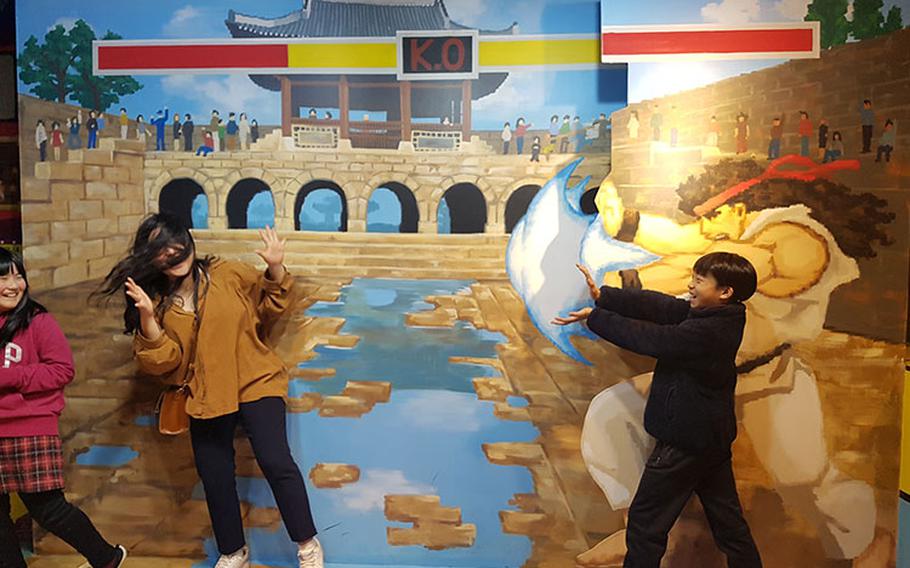
Alive Museum + Dynamic Maze
Alive Museum and Dynamic Maze are two highly interactive indoor attractions located together in the basement of the Deokhung Building in Insa-dong, Seoul. Combined, they offer a mix of optical illusion photo zones and physical obstacle course challenges.
 Attraction
Busan
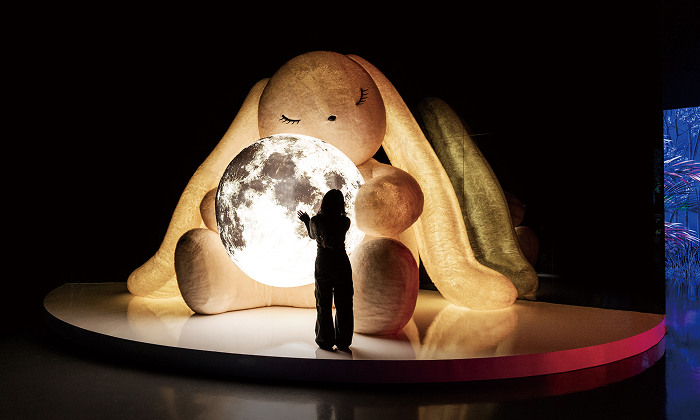
Arte Museum
Arte Museum Busan is the world's largest immersive digital media art space, spanning 5,600 square meters. It explores the theme of "Eternal Nature" through breathtaking projection mapping, harmonizing light, sound, and customized fragrances with the region's dynamic coastal and mountainous landscapes.Key HighlightsStarry Busan: A massive-scale, exclusive media piece inspired by the dynamic history and iconic landmarks of the port city.Wave: Features the famous colossal wave crashing within a giant glass tank, utilizing anamorphic techniques. Other Signature Zones: Includes visually stunning spaces like Waterfall Infinite, Rain, and a Garden section blending media art with classics from the Musée d'Orsay.New Exclusives: The Busan location features 16 brand-new, never-before-seen exhibits, including Circle, Ice, Seed, and Tornado.
 Attraction
Busan
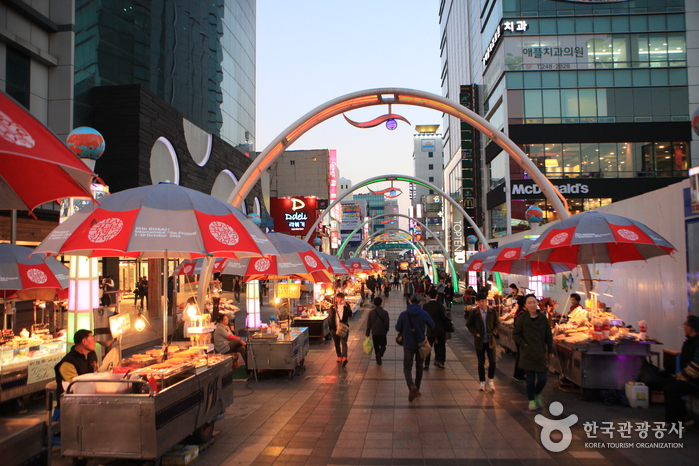
BIFF Square
BIFF Square (Busan International Film Festival Square) is a vibrant 428-meter-long cultural and entertainment district located in Nampo-dong, Jung-gu, Busan, South Korea.
BIFF Square transforms daily into an open-air culinary market. It is most famous for Ssiat Hotteok—a crispy, sweet Korean pancake fried in butter, split open, and heavily stuffed with sunflower, pumpkin, and sesame seeds. Other popular local snacks include tteokbokki (spicy rice cakes), fish cakes, and octopus skewers
BIFF Square transforms daily into an open-air culinary market. It is most famous for Ssiat Hotteok—a crispy, sweet Korean pancake fried in butter, split open, and heavily stuffed with sunflower, pumpkin, and sesame seeds. Other popular local snacks include tteokbokki (spicy rice cakes), fish cakes, and octopus skewers
 Attraction
Seoul
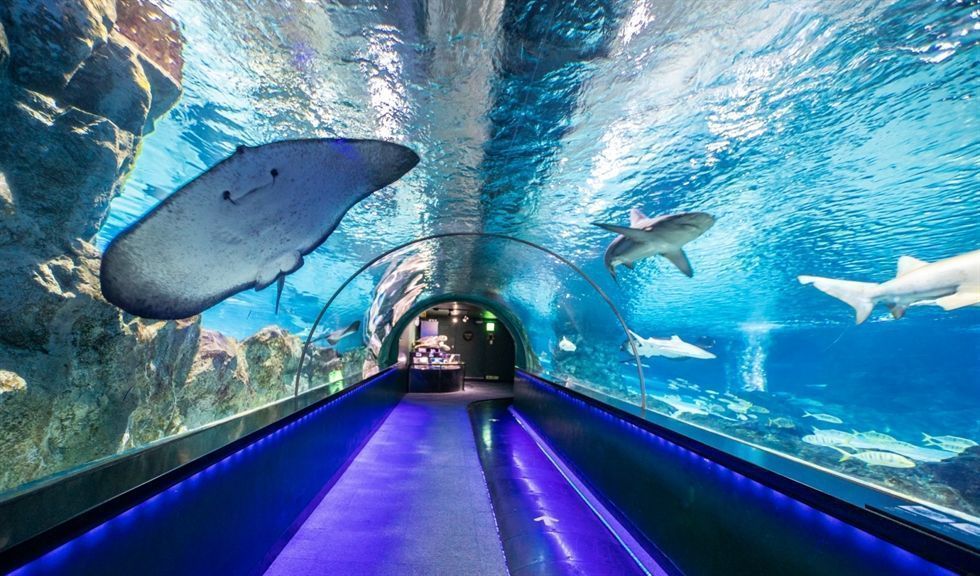
Coex Aquarium
COEX Aquarium is an aquarium located within the Starfield COEX Mall in the Gangnam District of Seoul, the aquarium features 90 exhibition tanks grouped in 14 “discovery zones,” including six themed areas.
 Attraction
Seoul
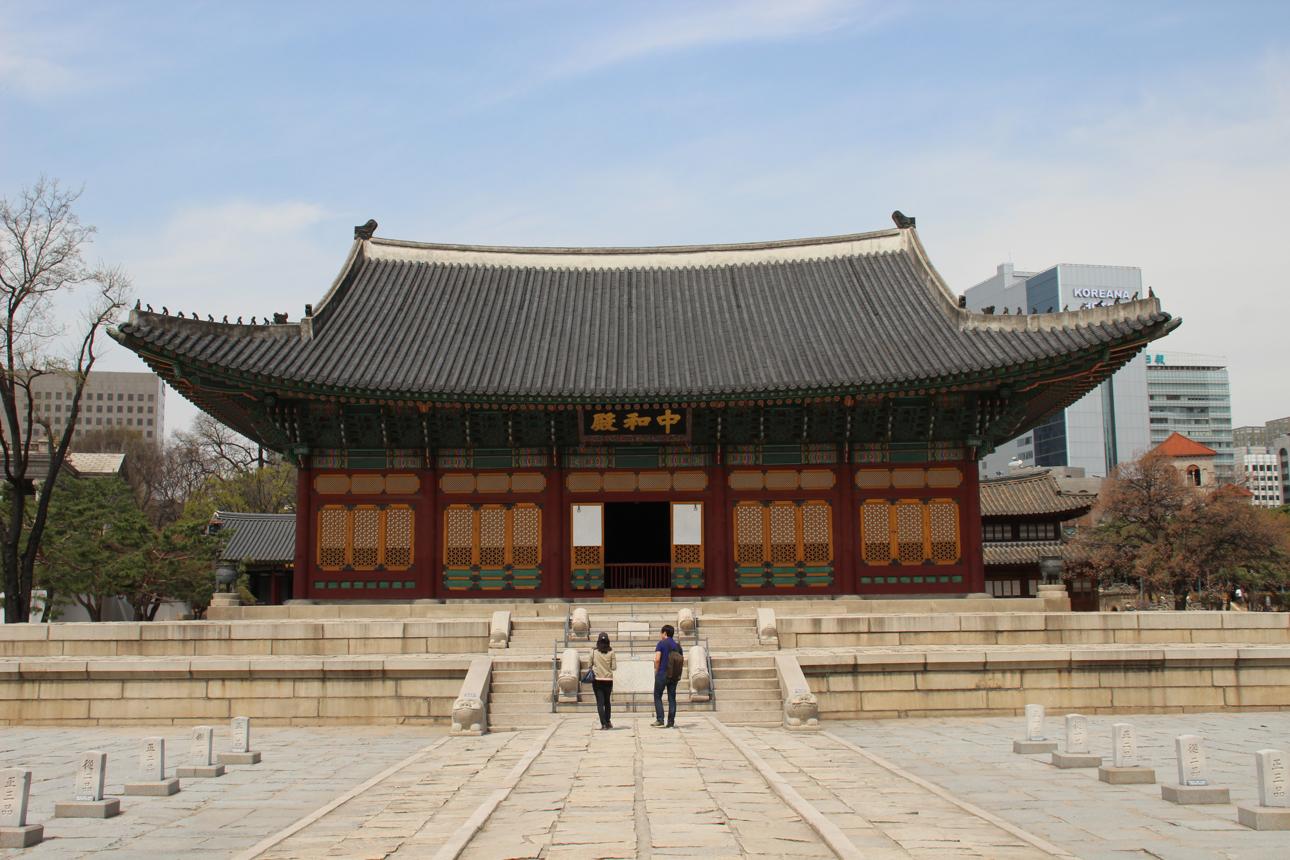
Deoksugung Palace
Deoksugung Palace is one of the most unique royal palaces in Seoul because it combines traditional Korean palace architecture with Western-style buildings and gardens. Located in the center of the city near Seoul City Hall, the palace became especially important during the late Joseon Dynasty and the early modern period of Korea. Unlike other palaces that are surrounded mainly by mountains and quiet grounds, Deoksugung stands beside modern skyscrapers, creating a striking contrast between Korea’s historical heritage and contemporary urban life.
The palace is well known for its elegant stone-wall road, peaceful courtyards, colorful wooden halls, and changing-of-the-guard ceremony, which attracts many visitors every day. One of its most famous structures is Seokjojeon Hall, a Western-style stone building that reflects the influence of international culture during the Korean Empire era. Walking through the palace allows visitors to experience both royal history and the transition of Korea into the modern age. During autumn and evening hours, the palace grounds become especially beautiful, with illuminated pathways and seasonal colors creating a calm and memorable atmosphere.
The palace is well known for its elegant stone-wall road, peaceful courtyards, colorful wooden halls, and changing-of-the-guard ceremony, which attracts many visitors every day. One of its most famous structures is Seokjojeon Hall, a Western-style stone building that reflects the influence of international culture during the Korean Empire era. Walking through the palace allows visitors to experience both royal history and the transition of Korea into the modern age. During autumn and evening hours, the palace grounds become especially beautiful, with illuminated pathways and seasonal colors creating a calm and memorable atmosphere.
 Attraction
Paju
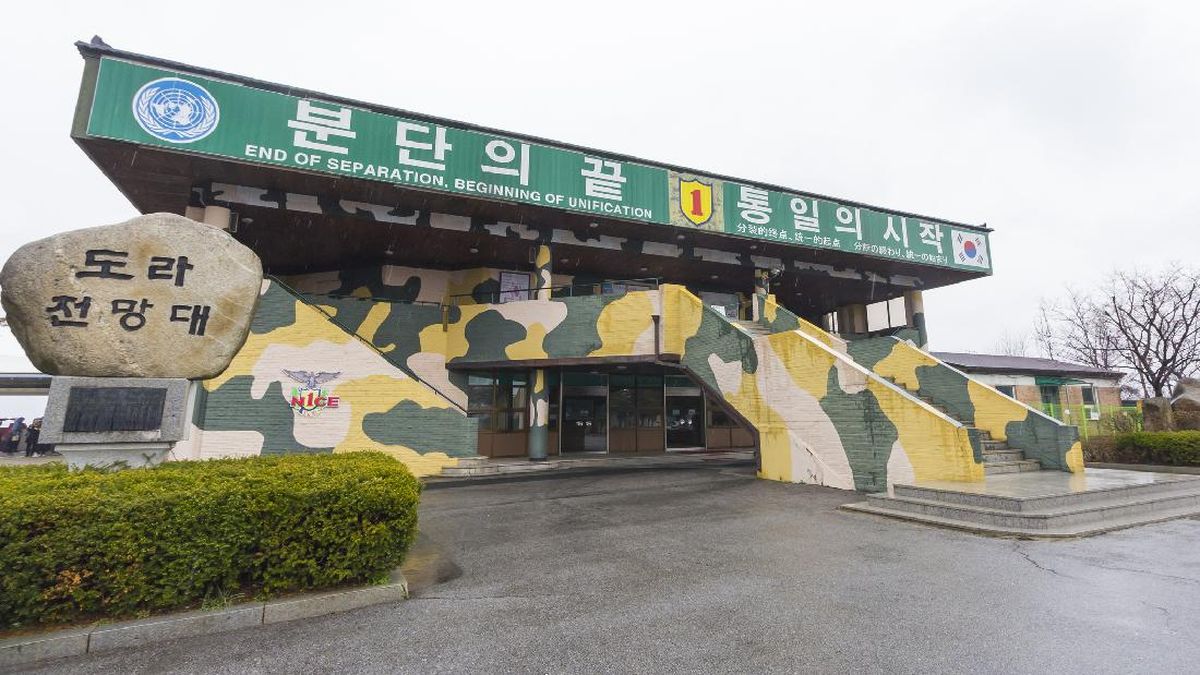
Dora Observatory
Dora Observatory is a South Korean building on the 38th parallel, situated on top of Dorasan (Mount Dora) in Paju. It provides scenic views across the Demilitarized Zone (DMZ). Visitors can see the North Korean territory through binoculars
 Attraction
Gyeonggi-do
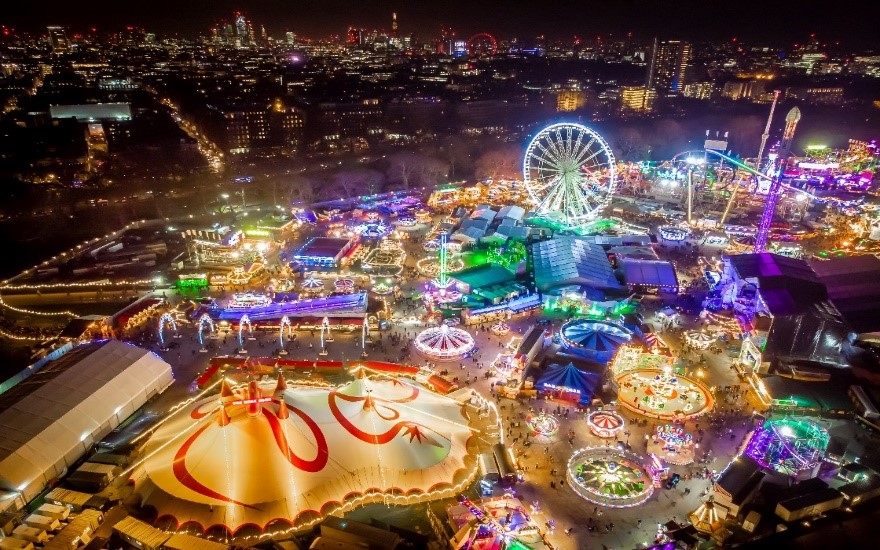
Everland Amusement Park
Located in Yongin near Seoul, Everland is South Korea’s largest theme park and one of the country’s top tourist attractions. It features thrilling roller coasters, themed zones, animal safaris, seasonal festivals, parades, gardens, and family-friendly attractions. The park first opened in 1976 and is operated by Samsung.
Main Highlights
T-Express – One of the world’s steepest wooden roller coasters.
Safari World & Lost Valley – Ride through animal habitats featuring lions, bears, giraffes, elephants, and more.
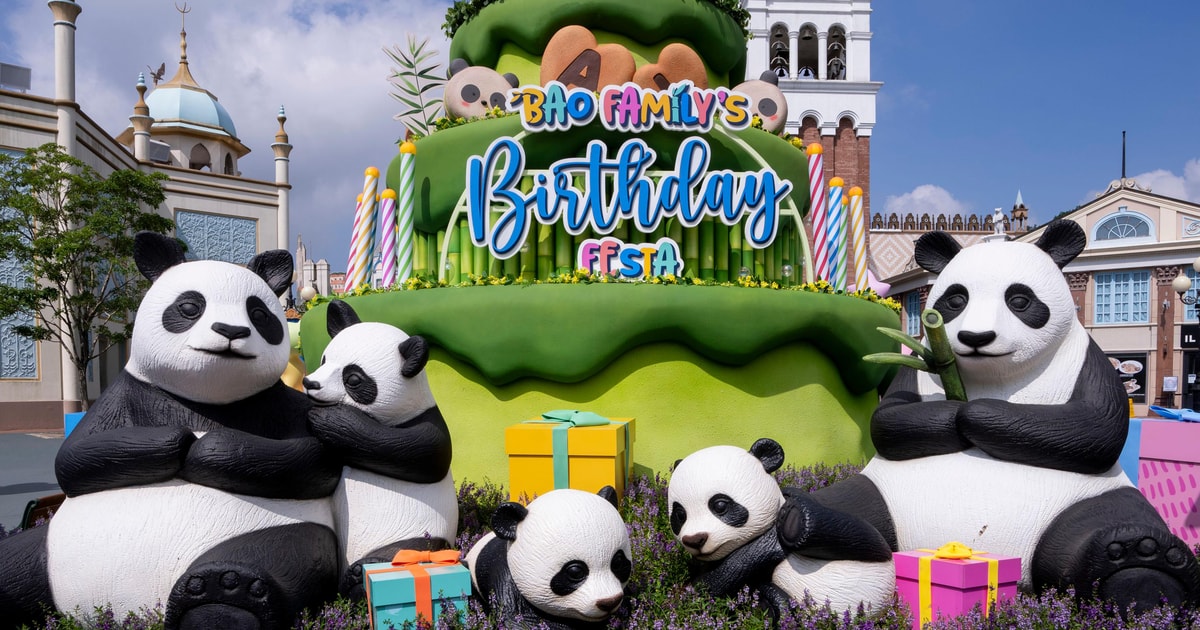
Zootopia – Famous panda exhibits and family attractions.
European Adventure Zone – Castle-style scenery and thrill rides.
Night Parades & Fireworks – Spectacular illuminated evening performances.
Seasonal Festivals – Tulip Festival, Halloween, Christmas Fantasy, and Winter Wishes events.
Main Highlights
T-Express – One of the world’s steepest wooden roller coasters.
Safari World & Lost Valley – Ride through animal habitats featuring lions, bears, giraffes, elephants, and more.
Zootopia – Famous panda exhibits and family attractions.
European Adventure Zone – Castle-style scenery and thrill rides.
Night Parades & Fireworks – Spectacular illuminated evening performances.
Seasonal Festivals – Tulip Festival, Halloween, Christmas Fantasy, and Winter Wishes events.
 Attraction
Seoul
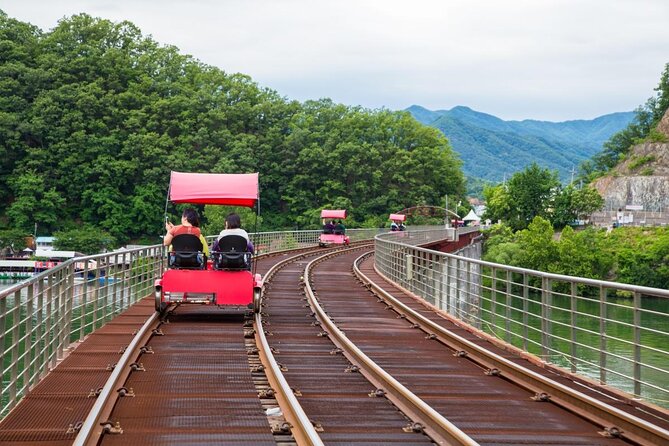
Gangchon Rail Biking
 Attraction
Seoul
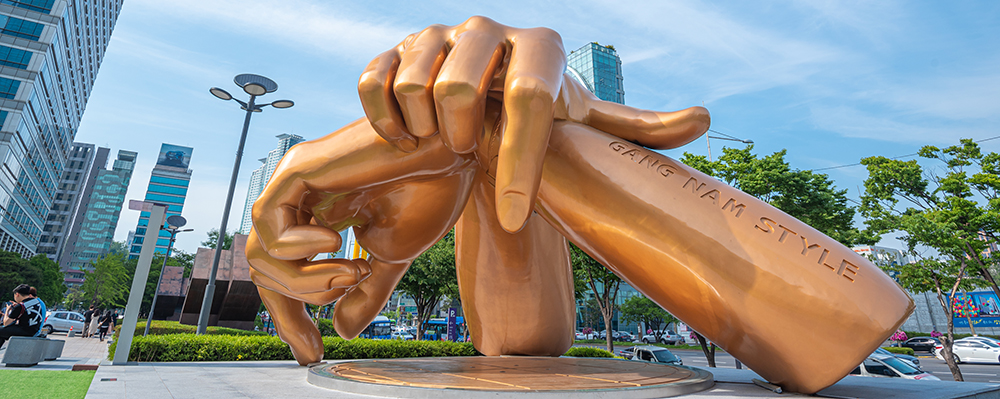
Gangnam Style Statue
The Statue of Gangnam Style is a bronze sculpture located in the Gangnam district of Seoul, South Korea. It was created to pay homage to the 2012 hit song “Gangnam Style” by South Korean artist Psy. The statue depicts the iconic hand gesture from the song.
 Attraction
Busan
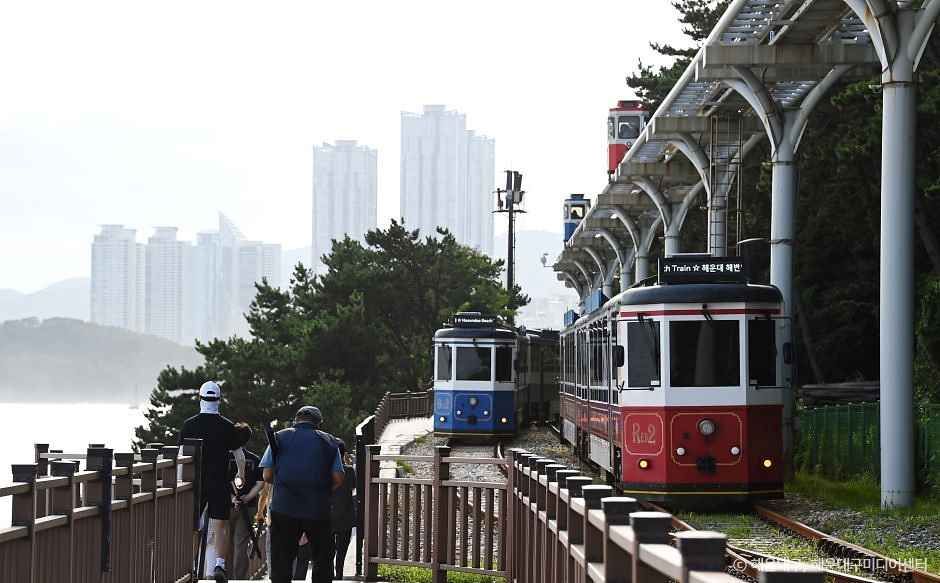
Haeundae Blueline Park
The Haeundae Blueline Park in Busan features two iconic coastal rides: the Sky Capsule and the Beach Train. The Sky Capsule features cute, colorful monorails gliding 10 meters in the air, while the Beach Train runs on tracks alongside the East Sea coast. Buy a combo pass to ride one-way in the Sky Capsule and return on the Beach Train to enjoy all the scenic stops.
 Attraction
Seoul
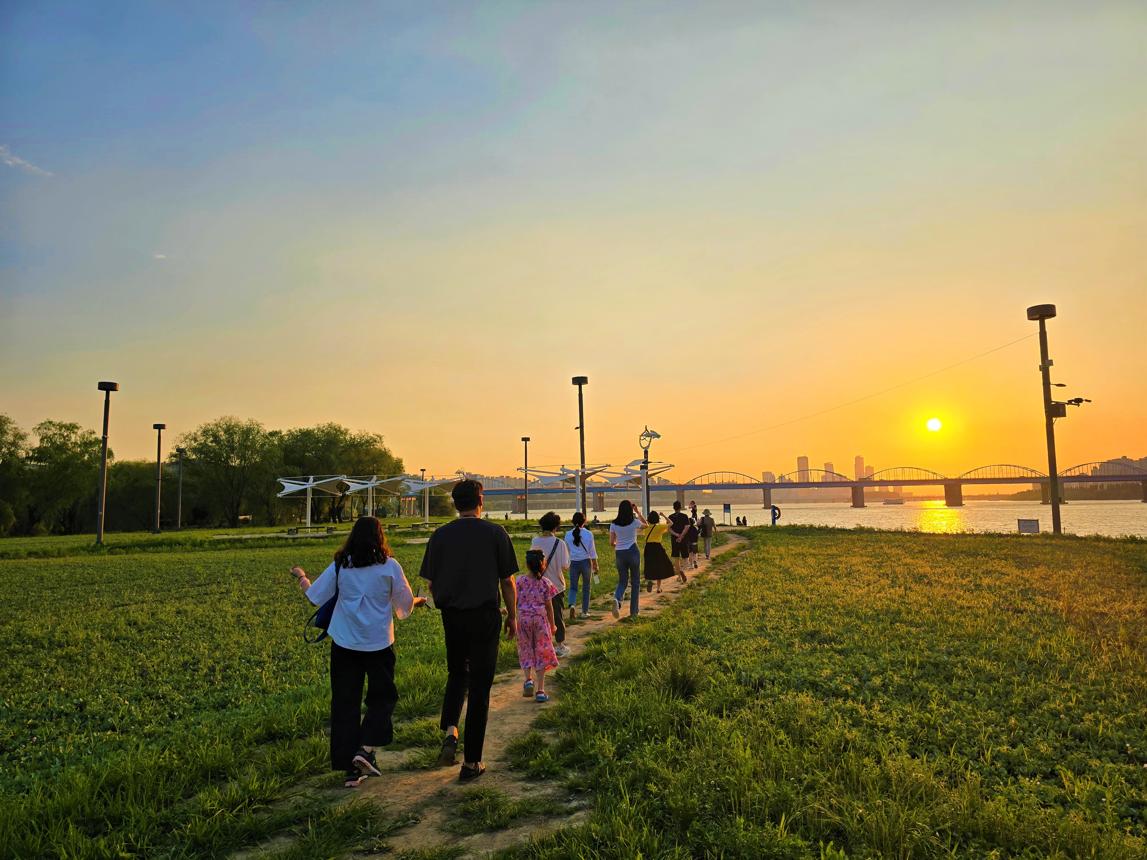
Han River Side walk
Walking beside Seoul’s Han River is one of the most peaceful and memorable experiences in the city. The riverside pathways offer a perfect blend of modern skyline views, fresh breeze, sparkling water, and vibrant local life. Whether during the golden sunset, a calm morning, or the beautifully illuminated nightscape, the atmosphere feels relaxing and refreshing. From couples enjoying quiet moments to cyclists, musicians, and families spending time together, the Han River captures the true lifestyle and charm of Seoul in the most scenic way.
Seoul
Hanbok Rental
 Attraction
Seoul
Hangang River cruise
 Attraction
Seoul
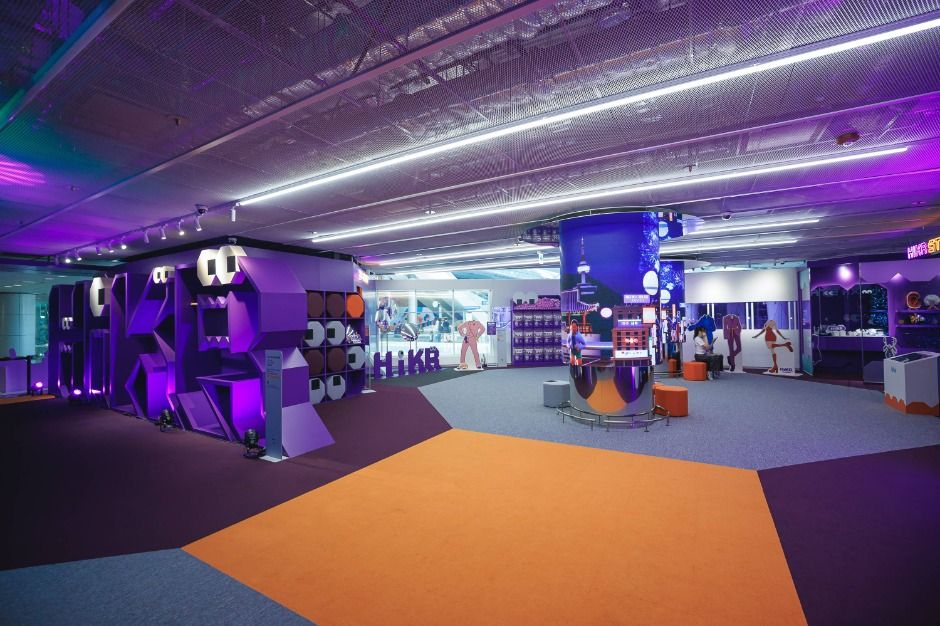
Hikr Ground
Hikr Ground is a tourist information and cultural center, the center has a 4-storey interactive space with a K-Pop museum.
Seoul
Hyundai Motostudio
Seoul
K-star Road Tour
Seoul
Moonlight River Cruise
 Attraction
Seoul
Nanta Show
Nanta Show in Seoul is one of Korea’s most iconic non-verbal performances—a high-energy blend of comedy, acrobatics, music, and culinary chaos. Set in a kitchen, the show features chefs frantically preparing a wedding banquet, using kitchen utensils as percussion instruments to create a rhythmic spectacle. No Korean language skills needed—it's universally entertaining! Watch the talented troupe perform songs from traditional folk pieces to modern numbers.
 Attraction
Seoul
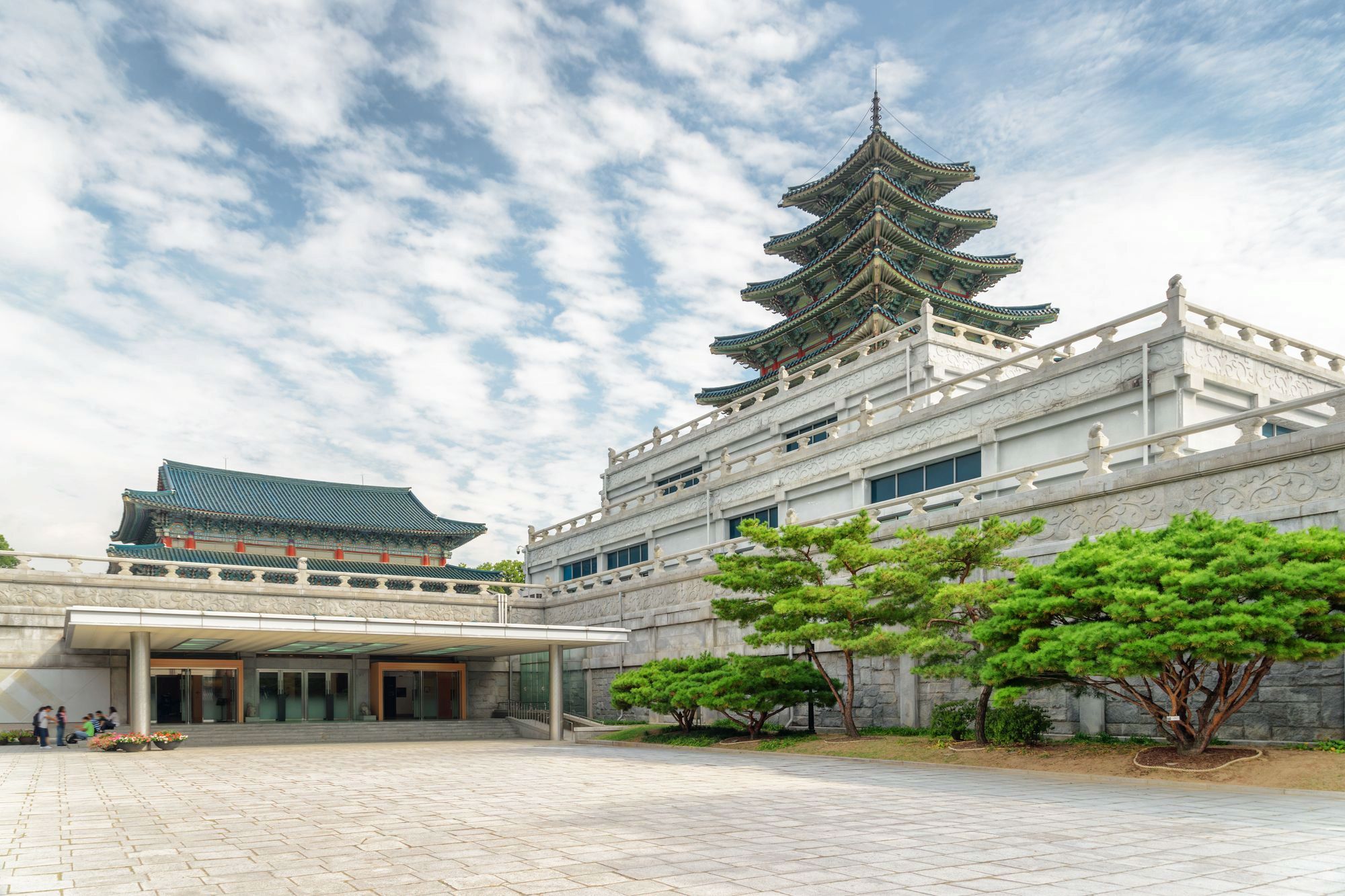
National Folk Museum
The National Folk Museum of Korea is a museum dedicated to sharing the traditional ways of life of the Korean people with the world. It is located inside the Gyeongbokgung Palace in Seoul.
 Attraction
Busan
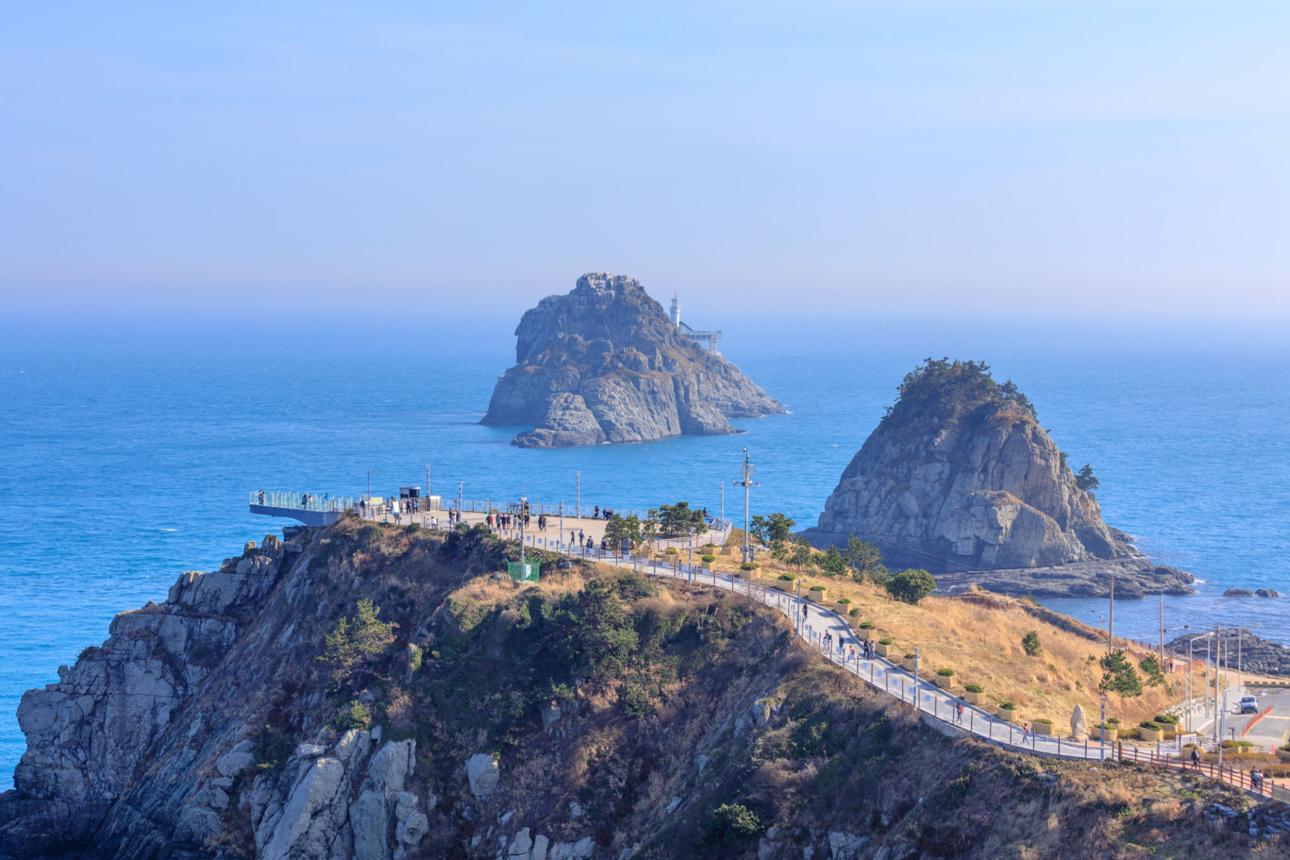
Oryukdo Skywalk
Oryukdo Skywalk is one of Busan’s most thrilling coastal attractions, offering breathtaking panoramic views of the sea and rocky cliffs. The transparent glass walkway extends over the edge of a seaside cliff, creating an exciting experience as waves crash beneath your feet. Surrounded by dramatic ocean scenery and fresh sea breeze, it is a perfect spot for photography and sightseeing. The skywalk also marks the starting point of the famous Igidae Coastal Walk, loved by nature enthusiasts and hikers. Its stunning natural beauty and unique cliffside setting make it a must-visit destination in Busan.
 Attraction
Gyeonggi-do
Panda World-Everland
Seoul
Riverside Spa Land : mineral bath + charcoal + red clay + multiple sauna rooms
 Attraction
Jeju City
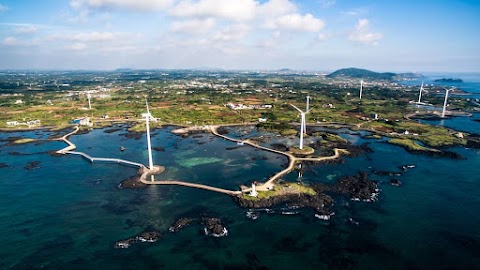
Singgyemul park
Singgyemul Park, located along the Sinchang Windmill Coastal Road in Jeju, South Korea, is a scenic waterfront park famous for its walking bridges, natural tidal springs, and panoramic ocean views framed by giant wind turbines. The park features a unique bridge extending over the water, offering visitors the sensation of walking directly on the sea. It is one of the island's premier locations for sunset photography, with unobstructed views of the horizon and silhouettes of the offshore wind turbines.
 Attraction
Seoul
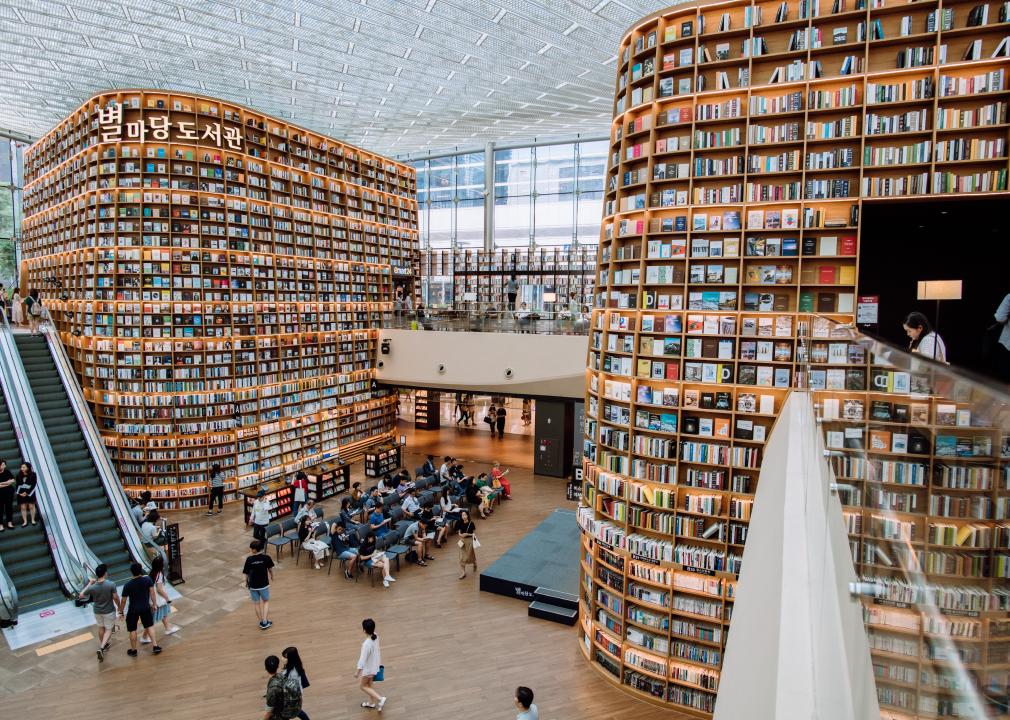
Starfield Library
Starfield Library is a two-story library, it offers visitors a perfect reading space with 13-meter-tall bookshelves and soft lighting. The library has more than 50 000 books ranging from literature to hobbies, as well as over 400 types of magazines.
 Attraction
Seoul
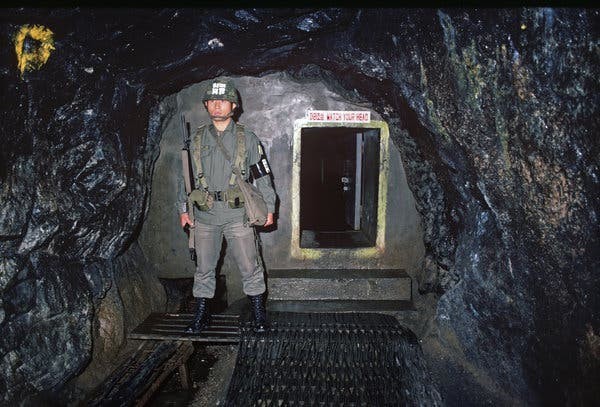
The 3rd Infiltration Tunnel
The Third Tunnel in Paju is one of the most striking and sobering sites along the Korean Demilitarized Zone (DMZ). Discovered in 1978, this underground passage was secretly dug by North Korea with the intent to infiltrate South Korea. 30,000 soldiers per hour could have moved through it.
 Palace
Seoul
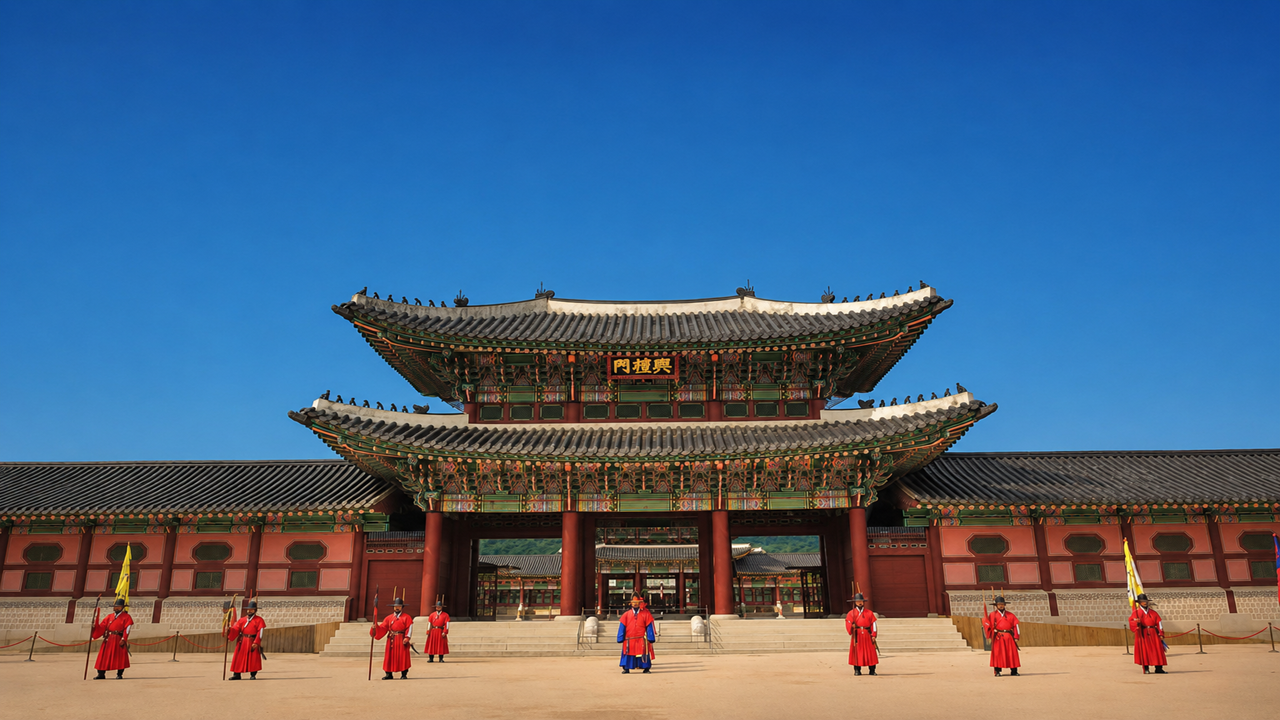
Gyeongbokgung Palace
Gyeongbokgung Palace stands like a silent storyteller in the middle of modern Seoul. Surrounded by mountains and busy city streets, the palace feels like a doorway into Korea’s royal past. The wide stone courtyards, colourful wooden halls, and carefully painted roofs reflect the elegance of the Joseon Dynasty, which ruled Korea for centuries.
Walking through its giant gates gives a feeling that time moves differently there. In the early morning, the palace looks calm and dignified, while during sunset, the golden light touches the palace roofs and creates a peaceful atmosphere that many visitors never forget. The sound of footsteps on the stone paths, the sight of guards in traditional uniforms, and the view of the mountains behind the palace together create a scene that feels almost cinematic.
What makes Gyeongbokgung special is not only its beauty, but also its resilience. The palace has survived wars, destruction, and rebuilding over hundreds of years. Today, it stands as a symbol of Korean identity, pride, and cultural heritage. Even among Seoul’s modern skyscrapers and advanced technology, the palace reminds people that history still lives at the heart of the city.
For many travellers, visiting Gyeongbokgung is more than sightseeing — it is an experience of stepping into the spirit of old Korea.
Walking through its giant gates gives a feeling that time moves differently there. In the early morning, the palace looks calm and dignified, while during sunset, the golden light touches the palace roofs and creates a peaceful atmosphere that many visitors never forget. The sound of footsteps on the stone paths, the sight of guards in traditional uniforms, and the view of the mountains behind the palace together create a scene that feels almost cinematic.
What makes Gyeongbokgung special is not only its beauty, but also its resilience. The palace has survived wars, destruction, and rebuilding over hundreds of years. Today, it stands as a symbol of Korean identity, pride, and cultural heritage. Even among Seoul’s modern skyscrapers and advanced technology, the palace reminds people that history still lives at the heart of the city.
For many travellers, visiting Gyeongbokgung is more than sightseeing — it is an experience of stepping into the spirit of old Korea.
 Heritage Site
Seoul
Changdeokgung Palace & Secret Garden
Changdeokgung is one of the most beautiful and historically significant royal palaces in South Korea. Constructed in 1405 during the Joseon Dynasty, it later became the principal royal residence for nearly 250 years after other palaces were damaged during invasions. Unlike many traditional palaces built in strict symmetry, Changdeokgung was carefully designed to blend naturally with the surrounding hills, forests, and landscape. Because of its exceptional architectural and cultural value, it was designated a UNESCO World Heritage Site in 1997.
Why Changdeokgung is Special
• Regarded as the best-preserved royal palace from the Joseon Dynasty in Seoul
• Celebrated for its perfect harmony with nature and mountainous surroundings
• Home to the famous Secret Garden, also known as Huwon or Biwon
• Considered one of Korea’s most picturesque and photogenic historical sites
• Historically linked with nearby Changgyeonggung as part of the “East Palace” complex
Main Attractions Inside the Palace
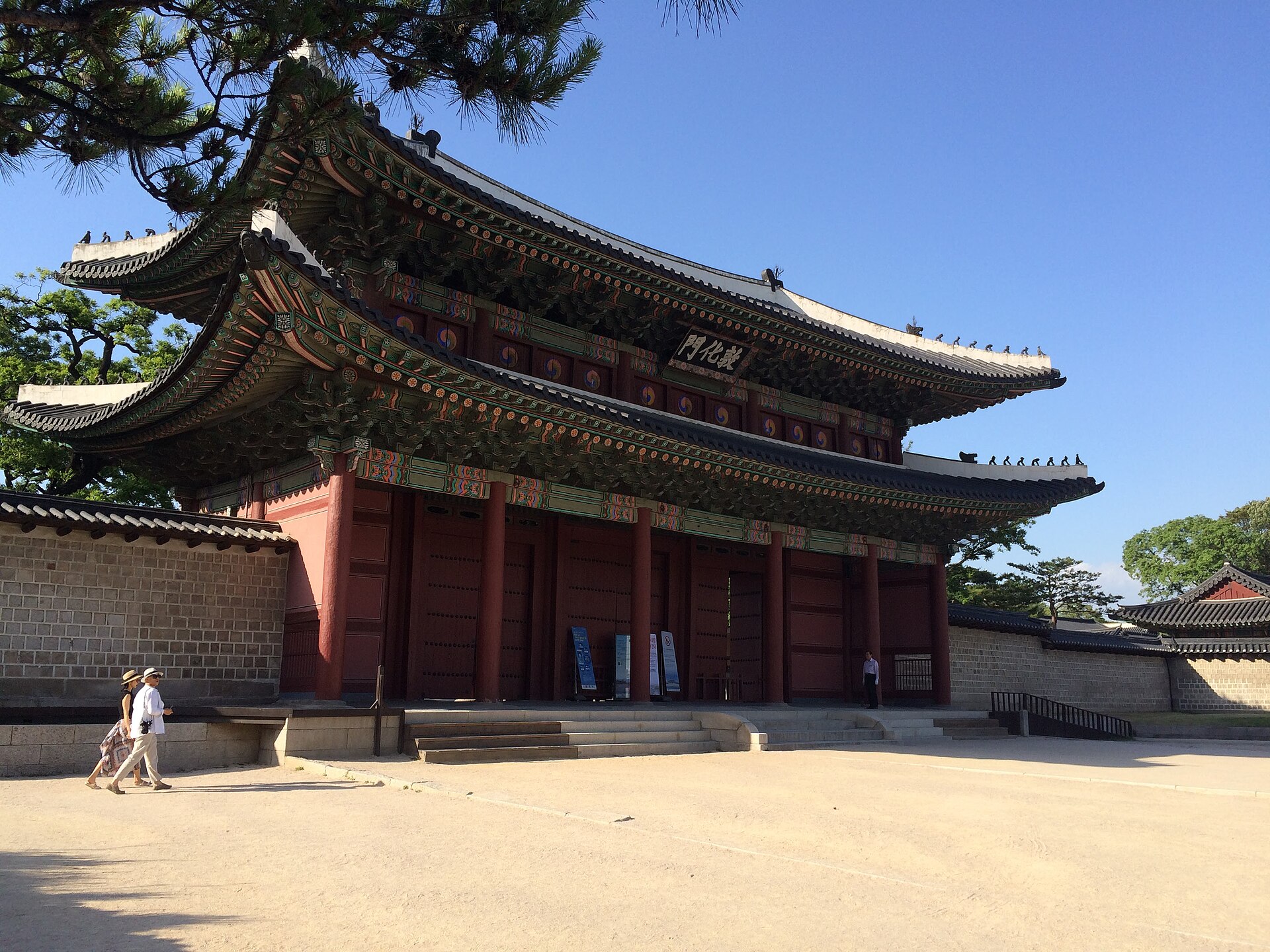
Donhwamun Gate
The magnificent main entrance gate of the palace, originally built in the early 15th century. It remains one of the oldest surviving palace gates in Korea.
Injeongjeon Hall
The grand throne hall where kings conducted official ceremonies, royal meetings, and important state affairs.
Seonjeongjeon Hall
The king’s administrative office where daily government duties and political discussions were carried out.
Huijeongdang & Daejojeon
Royal residential quarters traditionally used by the king and queen.
Secret Garden (Huwon / Biwon)
The palace’s most celebrated area, this vast rear garden was once reserved exclusively for the royal family. The garden features:
• Elegant lotus ponds
• Traditional Korean pavilions
• Ancient trees and landscaped greenery
• Peaceful forest walking trails
• Historic study halls and resting areas
Today, the Secret Garden is considered the highlight of Changdeokgung and one of the finest examples of traditional Korean garden design.
Why Changdeokgung is Special
• Regarded as the best-preserved royal palace from the Joseon Dynasty in Seoul
• Celebrated for its perfect harmony with nature and mountainous surroundings
• Home to the famous Secret Garden, also known as Huwon or Biwon
• Considered one of Korea’s most picturesque and photogenic historical sites
• Historically linked with nearby Changgyeonggung as part of the “East Palace” complex
Main Attractions Inside the Palace
Donhwamun Gate
The magnificent main entrance gate of the palace, originally built in the early 15th century. It remains one of the oldest surviving palace gates in Korea.
Injeongjeon Hall
The grand throne hall where kings conducted official ceremonies, royal meetings, and important state affairs.
Seonjeongjeon Hall
The king’s administrative office where daily government duties and political discussions were carried out.
Huijeongdang & Daejojeon
Royal residential quarters traditionally used by the king and queen.
Secret Garden (Huwon / Biwon)
The palace’s most celebrated area, this vast rear garden was once reserved exclusively for the royal family. The garden features:
• Elegant lotus ponds
• Traditional Korean pavilions
• Ancient trees and landscaped greenery
• Peaceful forest walking trails
• Historic study halls and resting areas
Today, the Secret Garden is considered the highlight of Changdeokgung and one of the finest examples of traditional Korean garden design.
 Heritage Site
Seoul
Bukchon Hanok Village
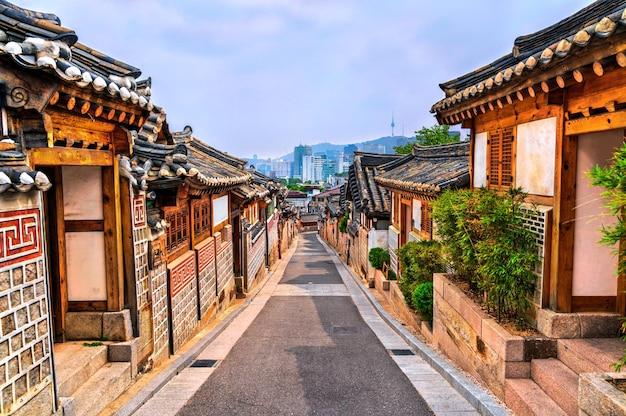
Bukchon Hanok Village sits in the heart of Seoul and is celebrated for its beautifully preserved hanok—traditional Korean homes that echo the elegance of the Joseon Dynasty. Unlike much of the city’s modern skyline, this neighbourhood offers a rare glimpse into centuries-old architecture and the refined lifestyle once associated with Korea’s aristocracy. Positioned between Gyeongbokgung Palace and Changdeokgung Palace, and framed by gentle hills, it also provides picturesque views of the surrounding cityscape.
Walking through Bukchon’s narrow lanes, you’ll find rows of wooden houses topped with curved tile roofs, forming a distinctive and serene environment. These homes were constructed using natural materials and designed to harmonise with nature. A notable feature is ondol, a traditional underfloor heating system that channels warmth from the kitchen, ensuring comfort during Korea’s cold winters.
Today, Bukchon is more than a preserved heritage site—it’s an immersive cultural hub. Visitors can explore workshops, galleries, and cultural centres offering hands-on experiences in crafts like calligraphy, pottery, and weaving. Many hanok have been thoughtfully repurposed into cafés, museums, and guesthouses, allowing guests to experience traditional Korean living firsthand.
The village continues to draw history enthusiasts, culture seekers, artists, and photographers alike. With its timeless charm and authentic character, Bukchon Hanok Village stands as a living bridge between Korea’s past and present, where every street reflects the enduring legacy of its cultural heritage.
Walking through Bukchon’s narrow lanes, you’ll find rows of wooden houses topped with curved tile roofs, forming a distinctive and serene environment. These homes were constructed using natural materials and designed to harmonise with nature. A notable feature is ondol, a traditional underfloor heating system that channels warmth from the kitchen, ensuring comfort during Korea’s cold winters.
Today, Bukchon is more than a preserved heritage site—it’s an immersive cultural hub. Visitors can explore workshops, galleries, and cultural centres offering hands-on experiences in crafts like calligraphy, pottery, and weaving. Many hanok have been thoughtfully repurposed into cafés, museums, and guesthouses, allowing guests to experience traditional Korean living firsthand.
The village continues to draw history enthusiasts, culture seekers, artists, and photographers alike. With its timeless charm and authentic character, Bukchon Hanok Village stands as a living bridge between Korea’s past and present, where every street reflects the enduring legacy of its cultural heritage.
 Attraction
Seoul
N Seoul Tower (Namsan Tower)
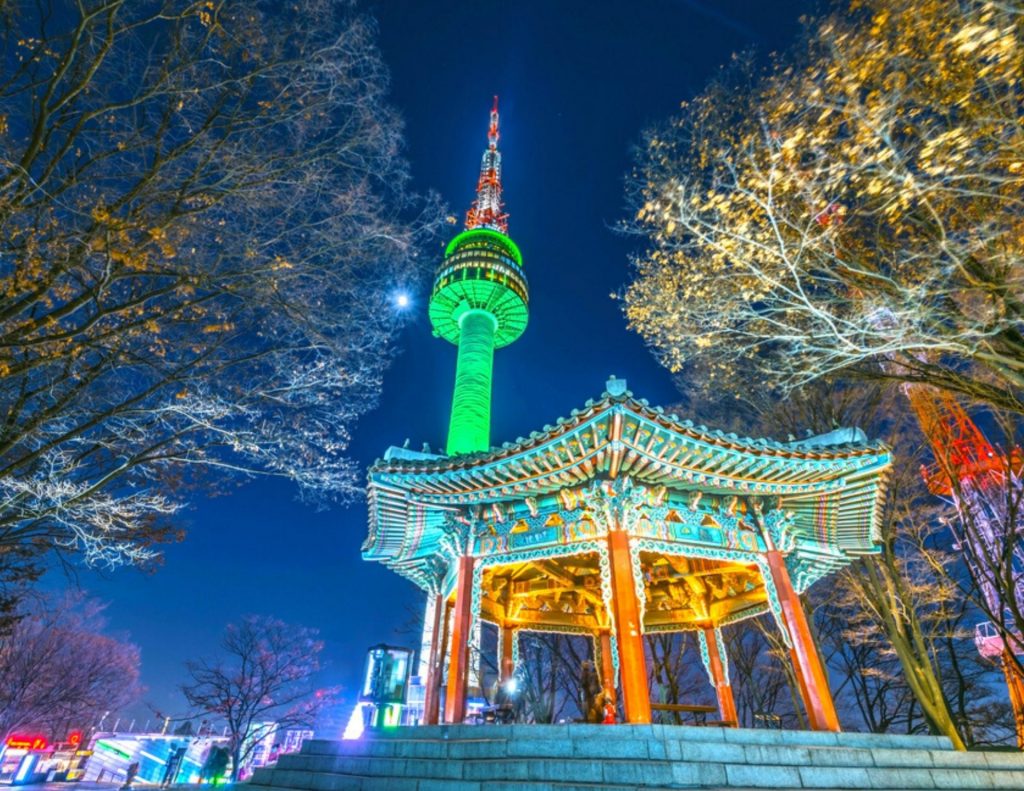
N Seoul Tower, perched atop Namsan Mountain at 479.7 metres above sea level, is Seoul's most recognisable landmark. Built in 1969 and opened to the public in 1980, the tower offers 360-degree panoramic views of the entire Seoul metropolitan area. The outdoor observation deck, indoor observatory, and revolving restaurant attract millions of visitors yearly. The base of the tower is famous for the Love Locks Fence where couples attach padlocks as symbols of commitment. The Namsan Cable Car provides a scenic ascent, while hiking trails through Namsan Park lead to the summit.
 Market
Seoul
Myeongdong Shopping & Street Food District
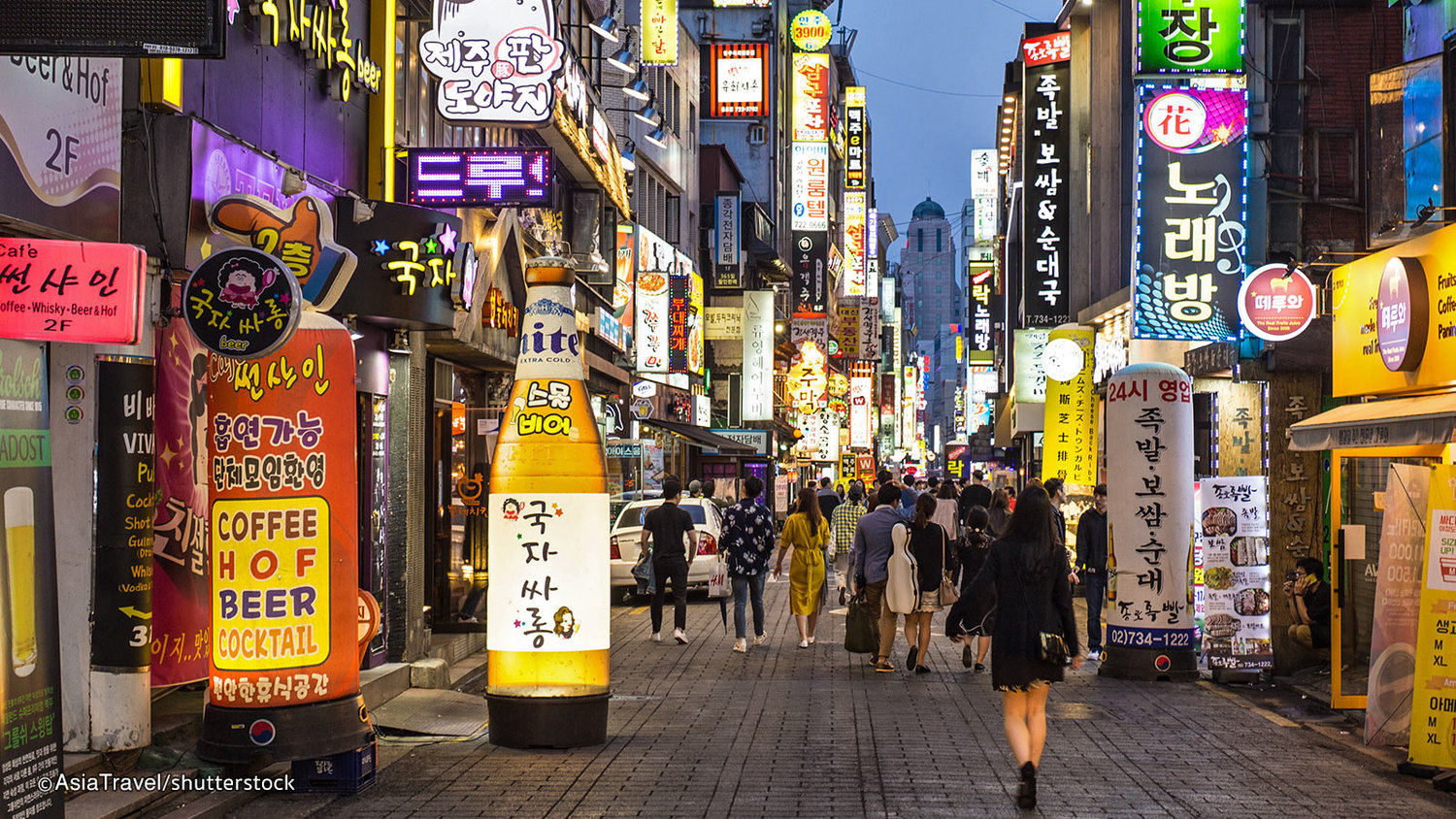
Myeong-dong is one of the liveliest and most energetic areas in Seoul, famous for its shopping streets, bright lights, and endless variety of food and fashion. From the moment visitors enter the area, they are surrounded by colourful signboards, music, street performers, and the exciting atmosphere of a city that never seems to slow down.
The streets of Myeongdong are especially popular for Korean skincare, cosmetics, trendy clothing, and local snacks. The smell of grilled street food fills the air, while friendly shopkeepers invite travellers to explore the latest Korean products. During the evening, the area becomes even more vibrant as food stalls line the streets and crowds gather to enjoy the lively environment.
Despite its modern and busy character, Myeongdong also reflects an important part of Seoul’s culture and lifestyle. It is a place where local trends, youth culture, tourism, and entertainment all come together in one district. For many travellers, visiting Myeongdong is not only about shopping — it is about experiencing the fast-moving, colourful, and exciting spirit of modern Korea.
The streets of Myeongdong are especially popular for Korean skincare, cosmetics, trendy clothing, and local snacks. The smell of grilled street food fills the air, while friendly shopkeepers invite travellers to explore the latest Korean products. During the evening, the area becomes even more vibrant as food stalls line the streets and crowds gather to enjoy the lively environment.
Despite its modern and busy character, Myeongdong also reflects an important part of Seoul’s culture and lifestyle. It is a place where local trends, youth culture, tourism, and entertainment all come together in one district. For many travellers, visiting Myeongdong is not only about shopping — it is about experiencing the fast-moving, colourful, and exciting spirit of modern Korea.
 Attraction
Seoul
Insadong Cultural Street
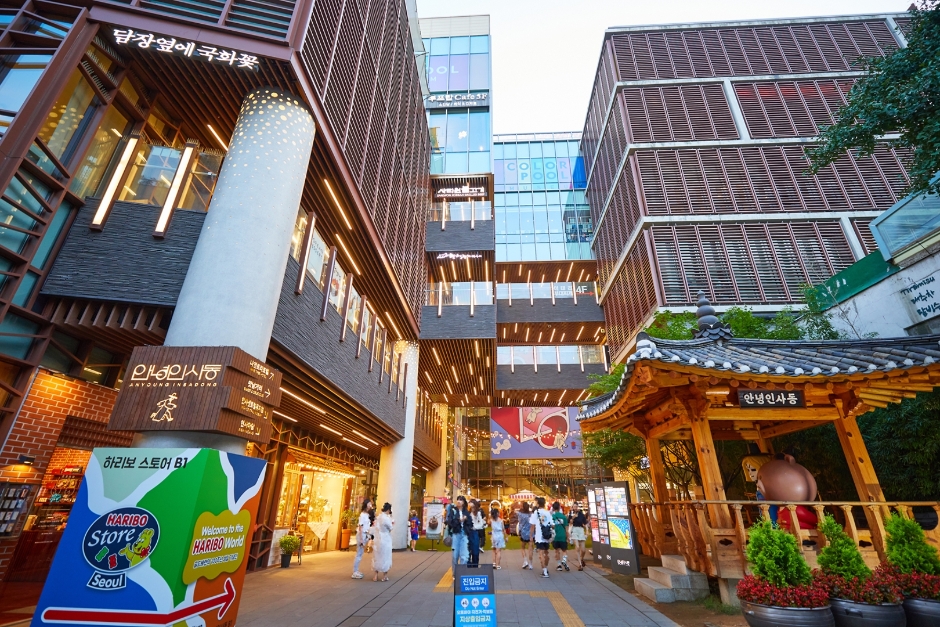
Insadong is one of the few places in Seoul where traditional Korean culture can still be felt in everyday life. The streets are filled with small art galleries, handmade craft shops, tea houses, and local street food, creating an atmosphere that feels warm, creative, and deeply connected to Korea’s heritage. Walking through Insadong feels different from the fast-moving modern parts of Seoul. Instead of towering buildings and crowded business streets, visitors find narrow lanes filled with the scent of traditional tea, the sound of music from local performers, and colourful displays of Korean artwork and souvenirs. Every corner seems to carry a small piece of Korean history and artistic spirit.
What makes Insadong special is the way it blends old traditions with modern energy. Young artists, travellers, local families, and elderly shop owners all share the same streets, giving the area a lively but comfortable feeling. For many visitors, Insadong is not just a shopping district — it is a place to slowly experience the cultural heart of Seoul and enjoy the charm of old Korea in a modern city.
What makes Insadong special is the way it blends old traditions with modern energy. Young artists, travellers, local families, and elderly shop owners all share the same streets, giving the area a lively but comfortable feeling. For many visitors, Insadong is not just a shopping district — it is a place to slowly experience the cultural heart of Seoul and enjoy the charm of old Korea in a modern city.
 Attraction
Seoul
Dongdaemun Design Plaza (DDP)
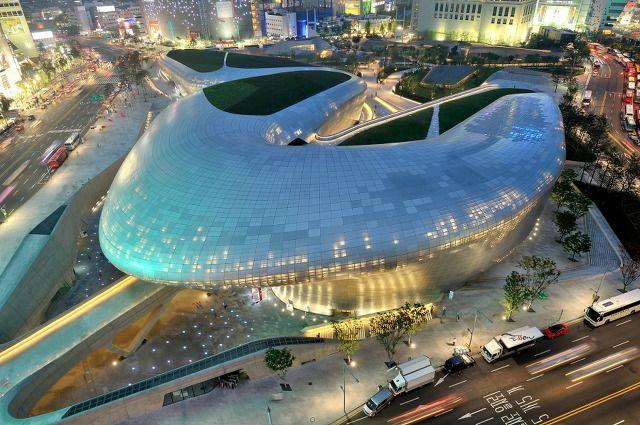
The Dongdaemun Design Plaza is one of the world's largest buildings devoted to design — a futuristic undulating structure designed by Zaha Hadid, opened in 2014. Clad in 45,133 uniquely shaped aluminium panels, the building houses design museums, exhibition halls, a design market, and event spaces. The DDP was built on the site of the historic Dongdaemun Stadium, and Joseon Dynasty artefacts discovered during construction are displayed underground. The surrounding Dongdaemun area is Seoul's 24-hour fashion and wholesale market district with Gwangjang Market nearby.
 Museum
Seoul
War Memorial of Korea
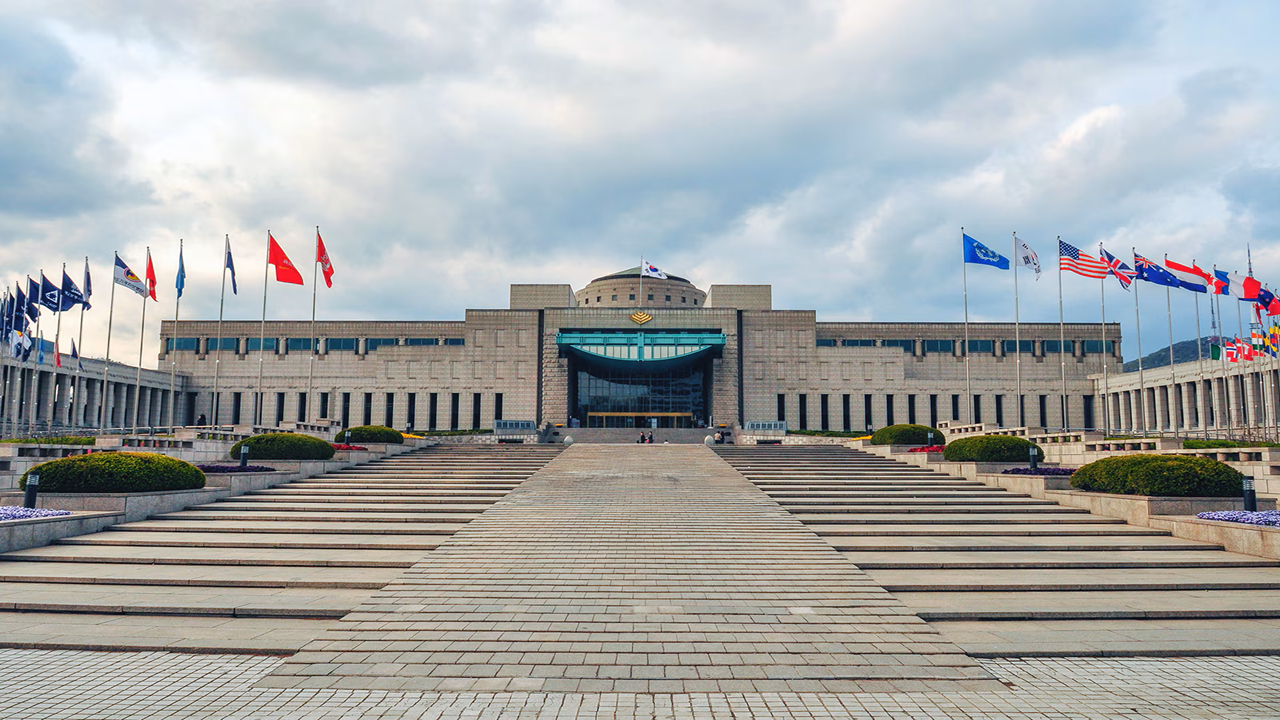
The War Memorial of Korea is one of the most meaningful historical museums in South Korea, dedicated to preserving the memory of the Korean War and the sacrifices made by soldiers and civilians. Located in Seoul, the memorial was established on the former site of the Korean Army headquarters and serves as both a museum and a place of remembrance. The large outdoor exhibition area displays military tanks, aircraft, missiles, and war monuments, while the indoor galleries present detailed stories about Korea’s military history, ancient battles, and modern defence systems.
The memorial is not only about war, but also about peace, courage, and national resilience. Visitors can explore interactive exhibits, memorial halls, and emotional displays that explain how Korea recovered from conflict and developed into a modern nation. The site is especially popular among international visitors because it provides a deeper understanding of Korean history and the impact of the Korean War on the Korean Peninsula.
The memorial is not only about war, but also about peace, courage, and national resilience. Visitors can explore interactive exhibits, memorial halls, and emotional displays that explain how Korea recovered from conflict and developed into a modern nation. The site is especially popular among international visitors because it provides a deeper understanding of Korean history and the impact of the Korean War on the Korean Peninsula.
 Nature
Seoul
Bukhansan National Park
Bukhansan National Park rises dramatically from the northern edge of Seoul and is one of the world's most visited national parks by area. The park encompasses granite peaks — Baegundae (836.5m), Insubong (810.5m), and Mangyeongdae — numerous temples, ancient mountain fortresses, and crystal-clear streams. The 8,760-acre park offers over 70 km of hiking trails ranging from gentle forest walks to challenging climbs. Historic Bukhan Mountain Fortress (Bukhansanseong), built in 132 AD and expanded in the Joseon Dynasty, winds for 8.5 km along the ridgeline.
 Attraction
Seoul
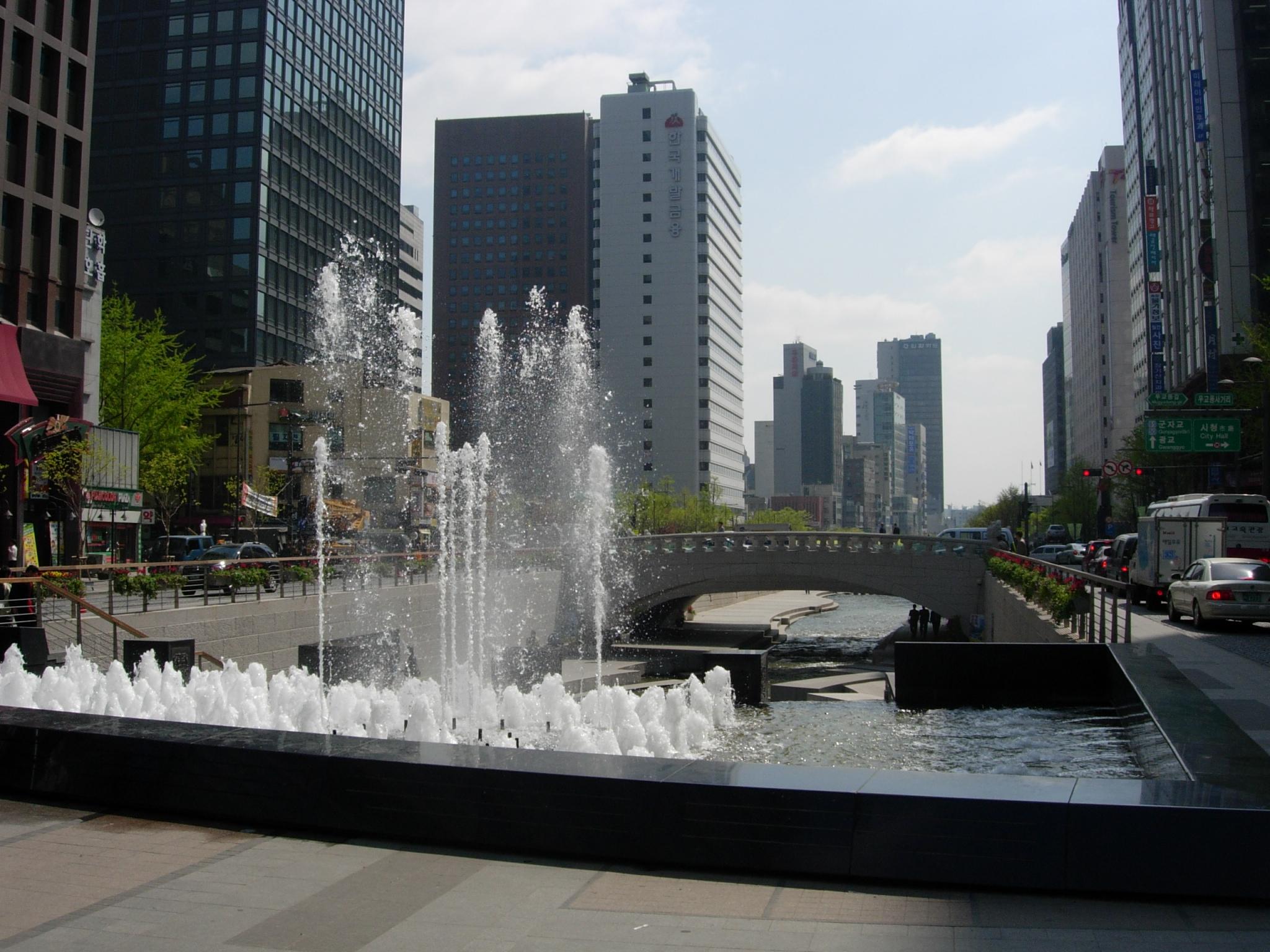
Cheonggyecheon Stream
Cheonggyecheon is an 11 km elevated urban stream and greenway running through the heart of downtown Seoul, restored in 2005 after being covered by concrete highways for decades. The restoration is celebrated as one of the world's great urban renewal projects. The stream corridor passes under 22 bridges and transforms into an outdoor gallery during the Seoul Lantern Festival (November). Nearby Gwangjang Market, established in 1905, is one of Korea's oldest markets.
 Attraction
Seoul
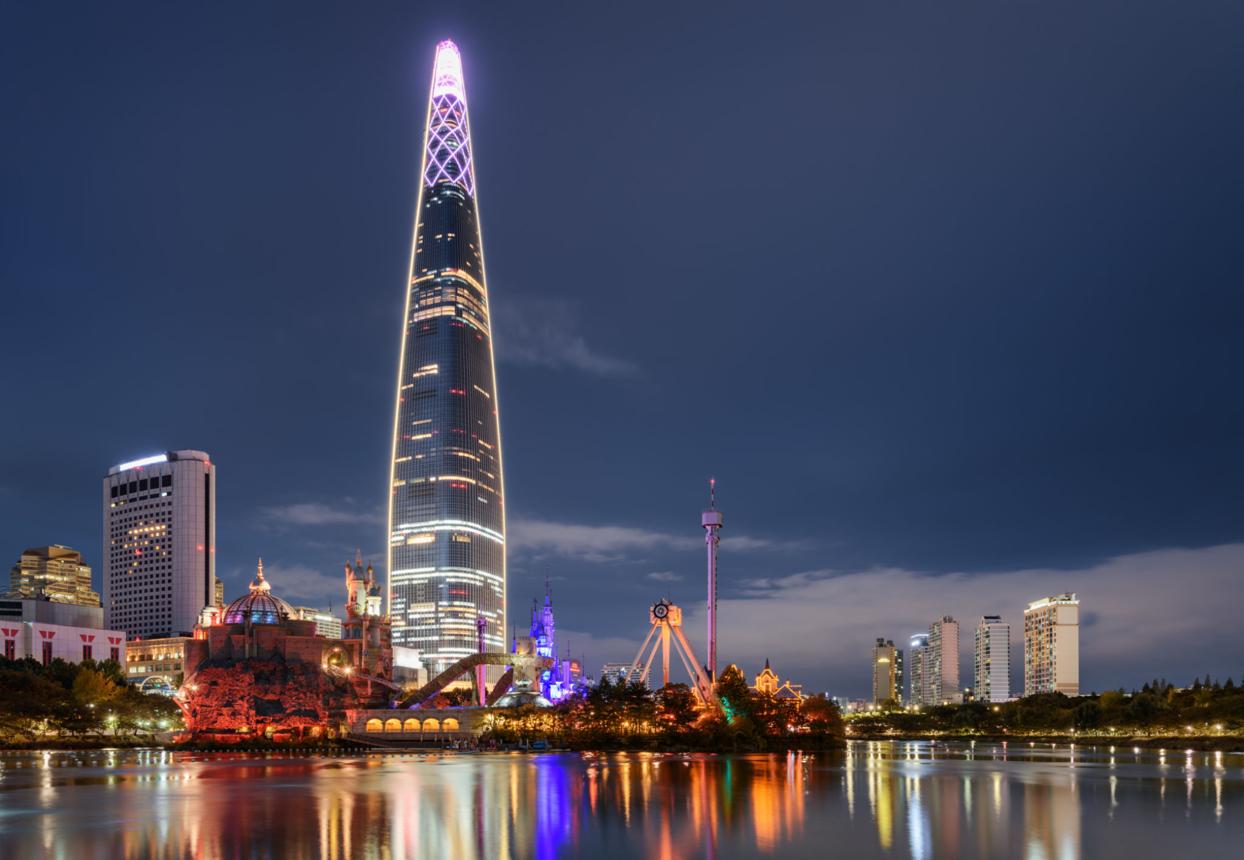
Lotte World Tower & Seoul Sky
Lotte World Tower is a 123-floor, 555-metre supertall skyscraper completed in 2017 — the fifth tallest building in the world. The Seoul Sky observation deck on floors 117-123 offers unparalleled panoramic views from 478 metres including a glass-floored section. The connected Lotte World Mall houses over 700 stores, a cinema, and restaurants. Nearby COEX Mall is Asia's largest underground shopping mall, housing the beloved Starfield Library — a three-storey open-plan public library with floor-to-ceiling bookshelves. Lotte World Adventure is one of the world's largest indoor theme parks.
 Attraction
Seoul
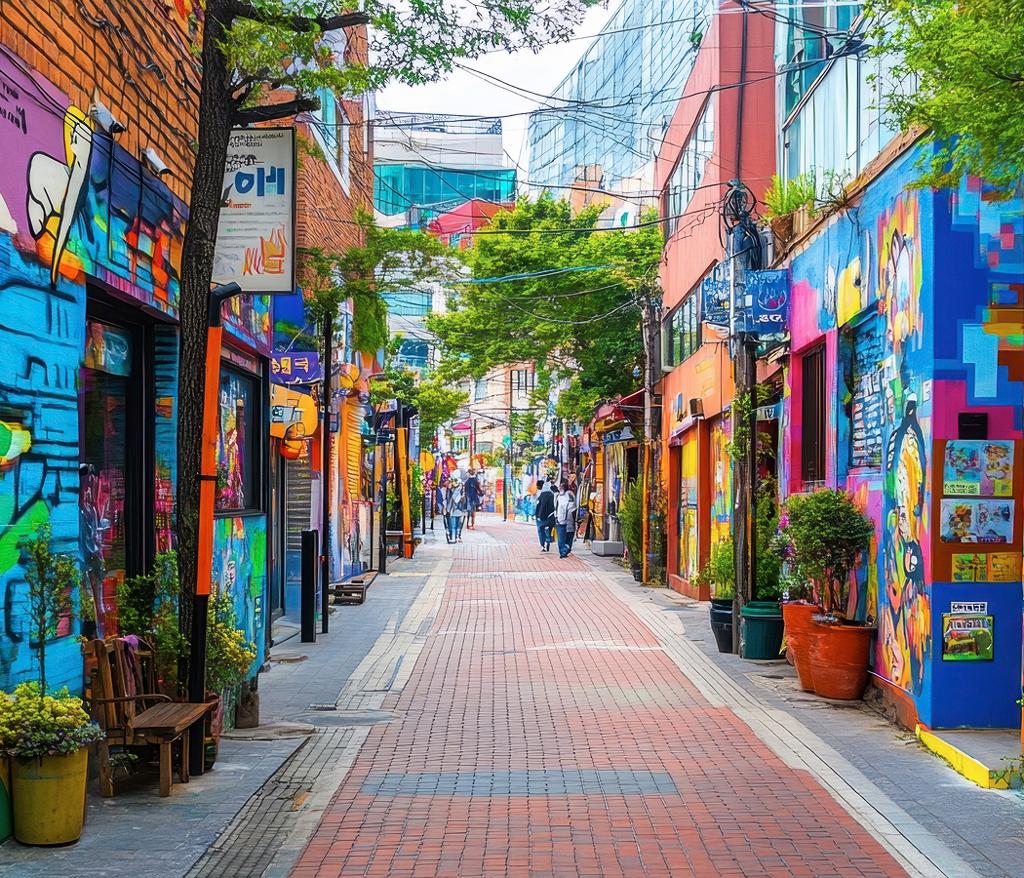
Hongdae Arts & Entertainment District
Hongdae is Seoul's most vibrant and creative youth district, centred around Hongik University — Korea's premier fine arts university. The neighbourhood buzzes with indie music clubs, street performances, unique concept cafes, vintage clothing stores, and art galleries. The famous busking zone near Hongdae playground hosts street musicians and performers every evening. The nearby Hongdae Club Street is Seoul's premier live music and nightlife area. Gyeongui Line Forest Park, a linear park converted from an old railway line, runs through the area and connects to Sinchon and Hapjeong neighbourhoods.
 Palace
Seoul
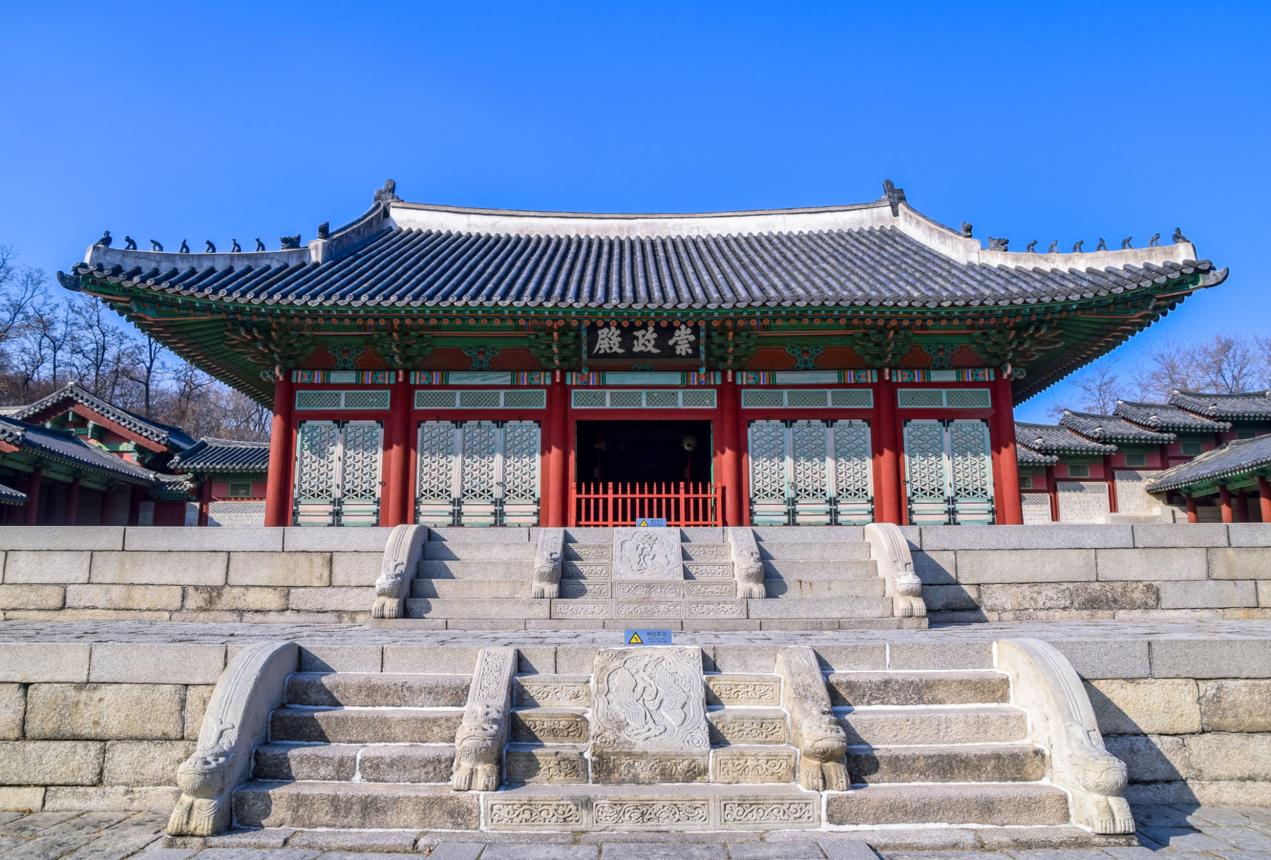
Gyeonghuigung Palace
Gyeonghuigung (Palace of Serene Harmony) is a restored Joseon royal palace with the Sungjeongjeon throne hall and Heunghwamun gate. The adjacent Seoul Museum of History traces the city's development from prehistoric times to the present. Deoksugung Palace nearby is notable for its mix of traditional Korean and Western-style architecture and the famous Stone Wall Road (Deoksugung Dol-dam-gil) walk around its perimeter — said by Seoul legend to guarantee a romantic breakup for couples who walk it together.
 Temple
Busan
Haedong Yonggungsa Temple
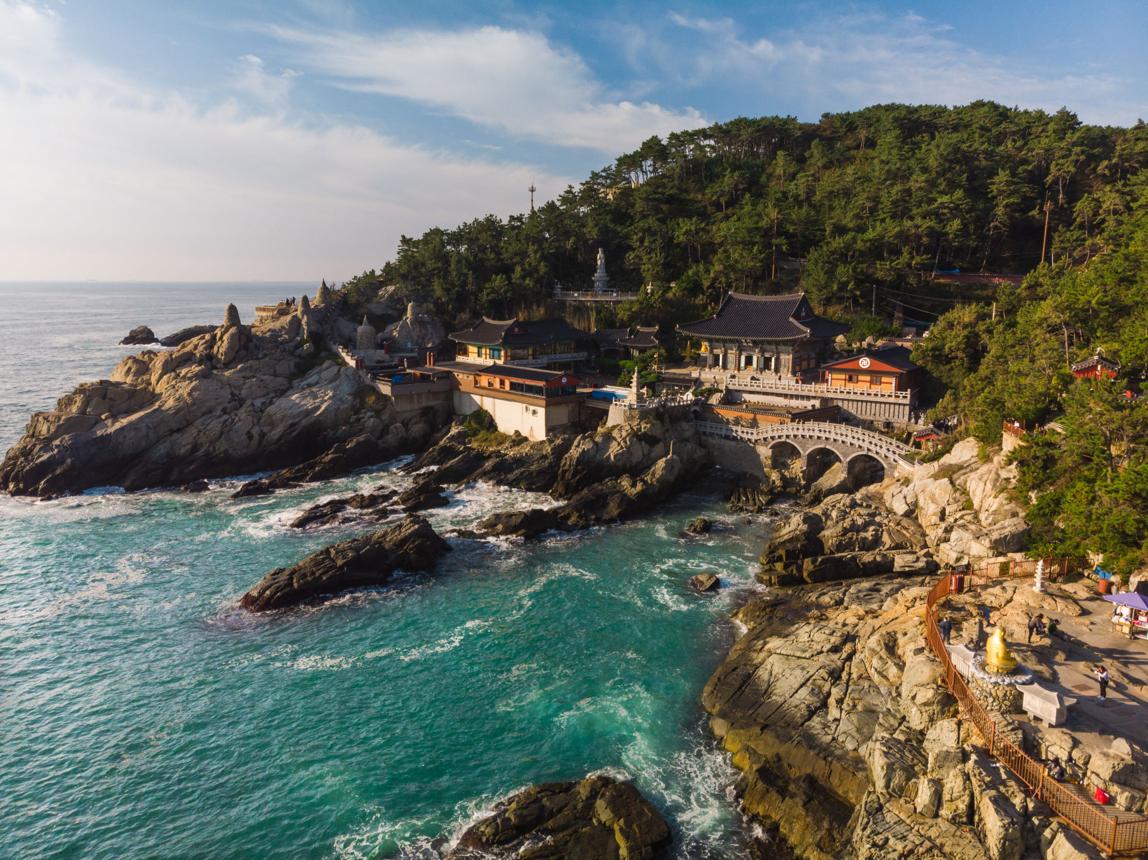
Haedong Yonggungsa is one of Korea's most uniquely situated temples — built directly on a rocky seaside cliff overlooking the East Sea, extraordinarily rare among Korean Buddhist temples which are typically in mountain settings. Originally constructed in 1376 during the Goryeo Dynasty, the temple was rebuilt in 1930. The approach along a stone-paved coastal path lined with statues of the 12 zodiac animals is itself a spiritual experience. The main hall sits perched above crashing waves. The 108 stone steps leading down to the temple are said to grant wishes. The Haesu Gwaneum Daebul white stone Buddha overlooking the sea is a landmark.
 Attraction
Busan
Gamcheon Culture Village
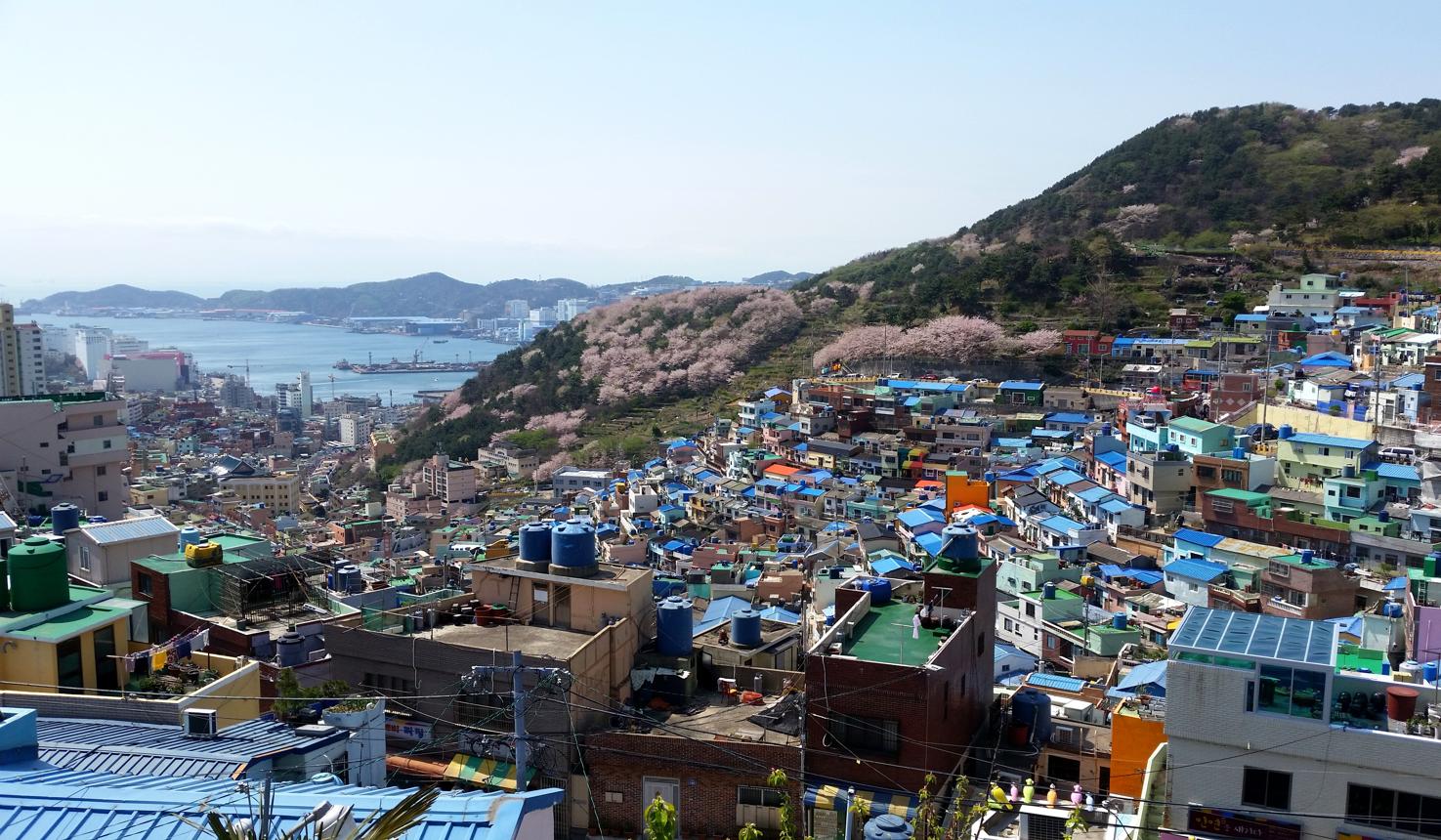
Gamcheon Culture Village is Busan's most colourful and photogenic neighbourhood — a maze of pastel-painted houses cascading down a steep hillside above Busan Harbour, earning it the nickname the Machu Picchu of Busan. Originally settled by refugees during the Korean War in the 1950s, the village was transformed into an outdoor art gallery from 2009. Narrow stairway alleys are decorated with murals, sculptures, and art installations. The famous Little Prince statue and mural are must-see stops. Numerous cafes, galleries, and souvenir shops are tucked into the hillside homes. Panoramic views of Busan Harbour from the rooftop terraces are stunning.
 Nature
Busan
Haeundae Beach
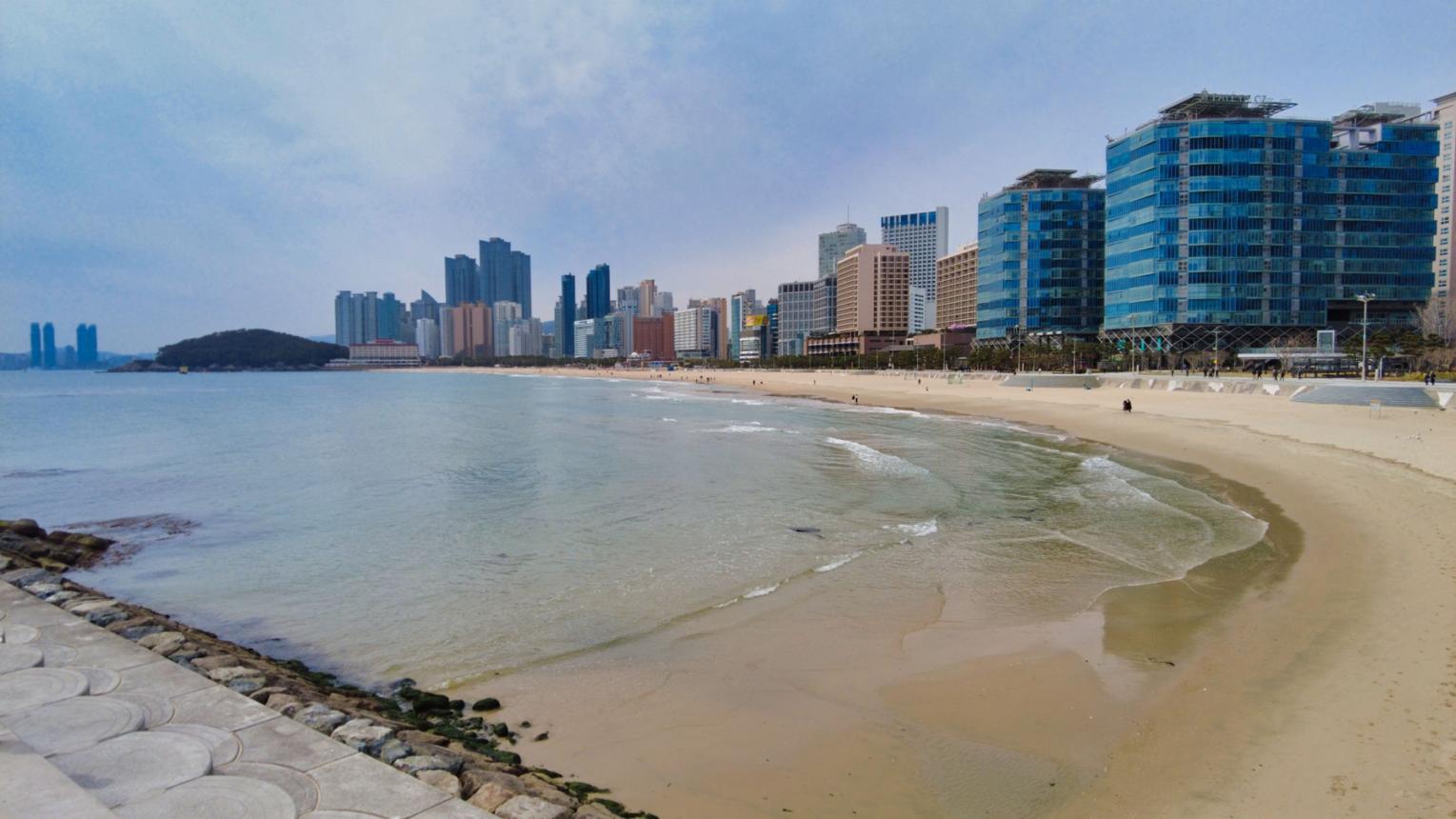
Haeundae Beach is the most famous beach in Busan and one of the most visited coastal destinations in South Korea. Known for its long sandy shoreline, modern skyline, and lively atmosphere, the beach attracts visitors throughout the year. During summer, the area becomes a major tourist centre filled with festivals, water activities, cafés, and night views, while winter offers a quieter and more relaxing seaside experience.
The beach is surrounded by luxury hotels, restaurants, shopping streets, and scenic walking paths. Haeundae is also famous for sunrise views, cultural events, and nearby attractions such as Dongbaek Island and the Busan Blue Line Park. The combination of urban scenery and ocean views makes it one of the most recognisable landmarks in Busan.
The beach is surrounded by luxury hotels, restaurants, shopping streets, and scenic walking paths. Haeundae is also famous for sunrise views, cultural events, and nearby attractions such as Dongbaek Island and the Busan Blue Line Park. The combination of urban scenery and ocean views makes it one of the most recognisable landmarks in Busan.
 Market
Busan
Jagalchi Fish Market
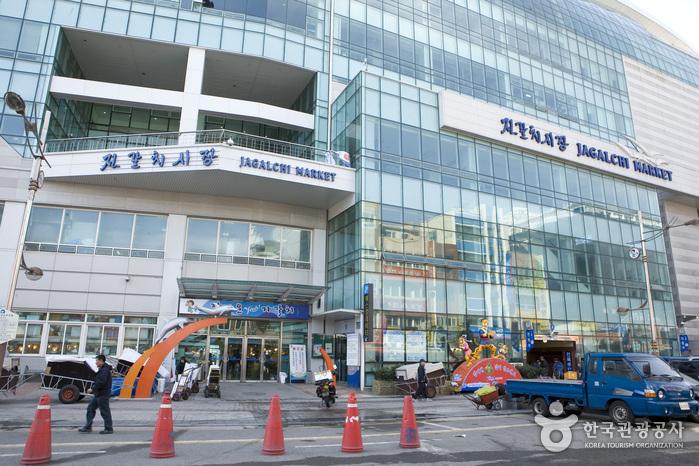
Jagalchi Market is Korea's largest seafood market and Busan's most celebrated food destination — a sprawling complex of indoor market buildings and outdoor stalls along Nampo-dong's waterfront. The outdoor stalls overflow with tanks of live octopus, crab, abalone, sea cucumber, and every variety of seafood imaginable. The indoor building houses dozens of restaurants where you can buy seafood from the floor below and have it prepared immediately (preparation fee applies). The Jagalchi Cultural Tourism Festival held in October celebrates the market's heritage with cooking demonstrations and performances.
 Nature
Busan
Taejongdae Natural Park
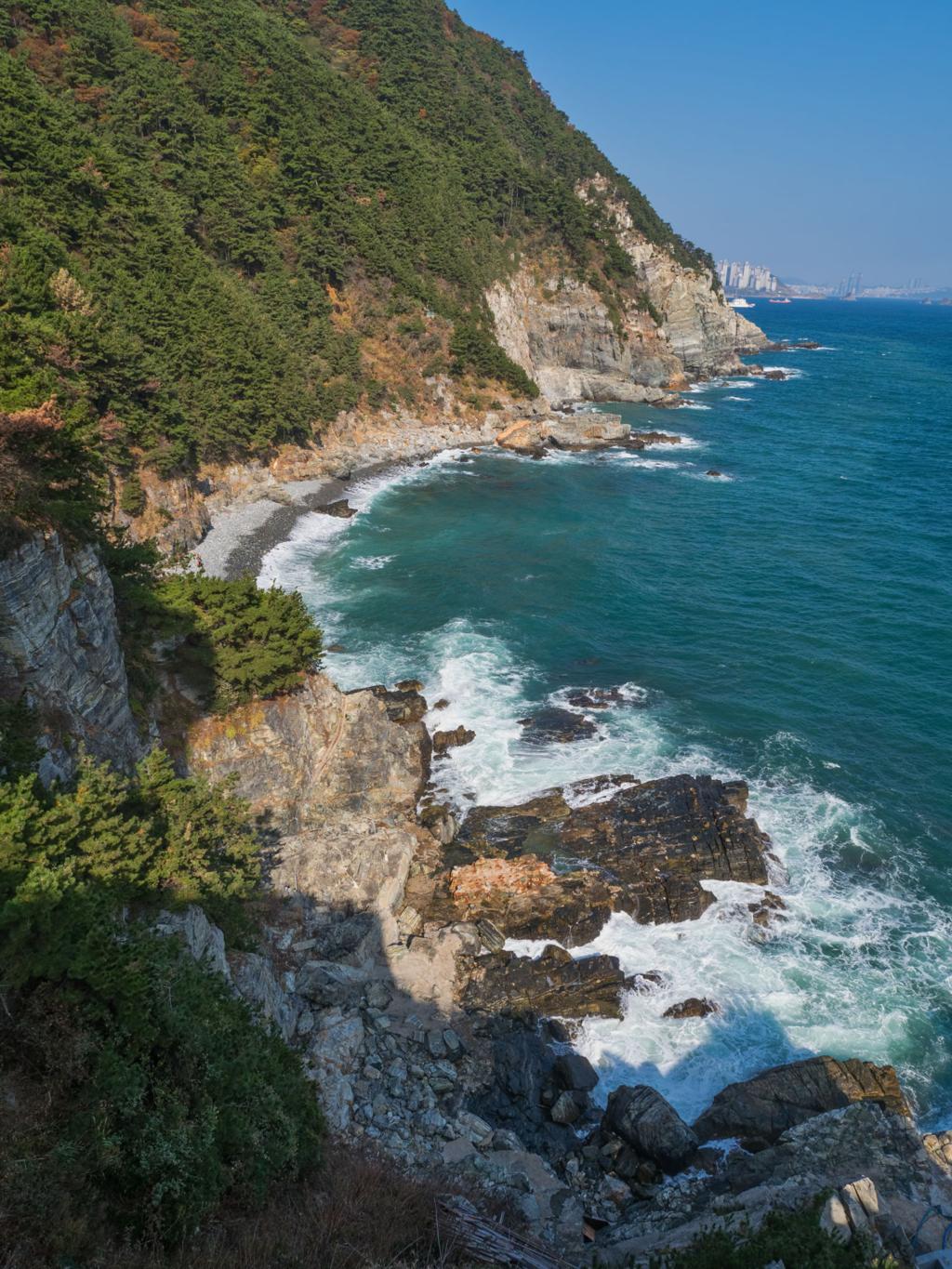
Taejongdae is a scenic natural park at the southern tip of Yeongdo Island — a rocky headland where dramatic sea cliffs plunge 60 metres into the Korea Strait amid dense forest of silver magnolia and black pine. The park is named after King Taejong of Silla who reputedly enjoyed archery here. Main attractions include the Dangsando lighthouse cliffs offering vertiginous ocean views, the Youngdo Observation Platform, and the Amnam Park shoreline. The Danuri Train, a small tourist train, circuits the main sights. Rocky walking paths along the cliff edge offer close-up views of the rugged coastline.
 Temple
Busan
Beomeosa Temple
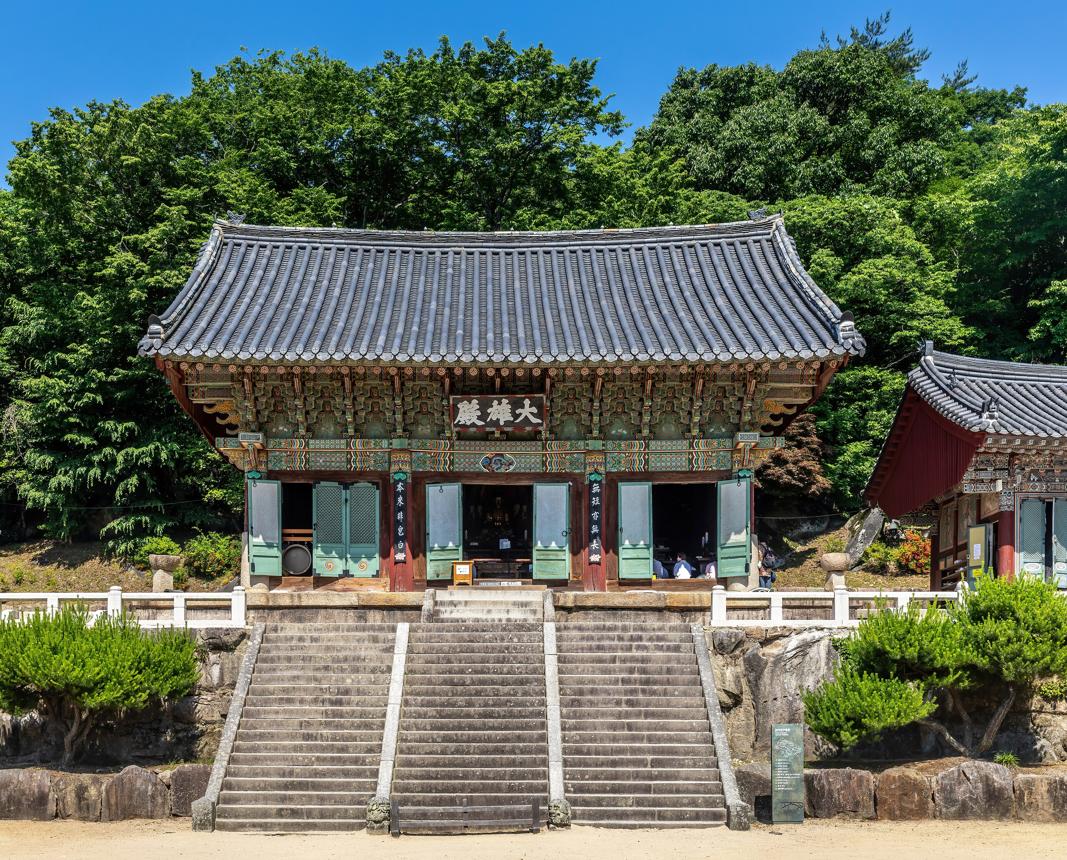
Beomeosa Temple is one of the three great temples of the Yeongnam region, founded in 678 AD by the monk Uisang during the Silla Kingdom on the slopes of Geumjeongsan Mountain. The temple complex contains over 20 buildings including the Three-storey Stone Pagoda (National Treasure No. 250) and the magnificent Daeungjeon main hall with elaborate dancheong paintwork. The approach through ancient forest and along the stream is meditative. The surrounding Geumjeongsan Mountain offers excellent hiking trails including access to Geumjeongsanseong Fortress. Temple Stay programmes are available for immersive monastic experiences.
 Nature
Busan
Gwangalli Beach & Diamond Bridge
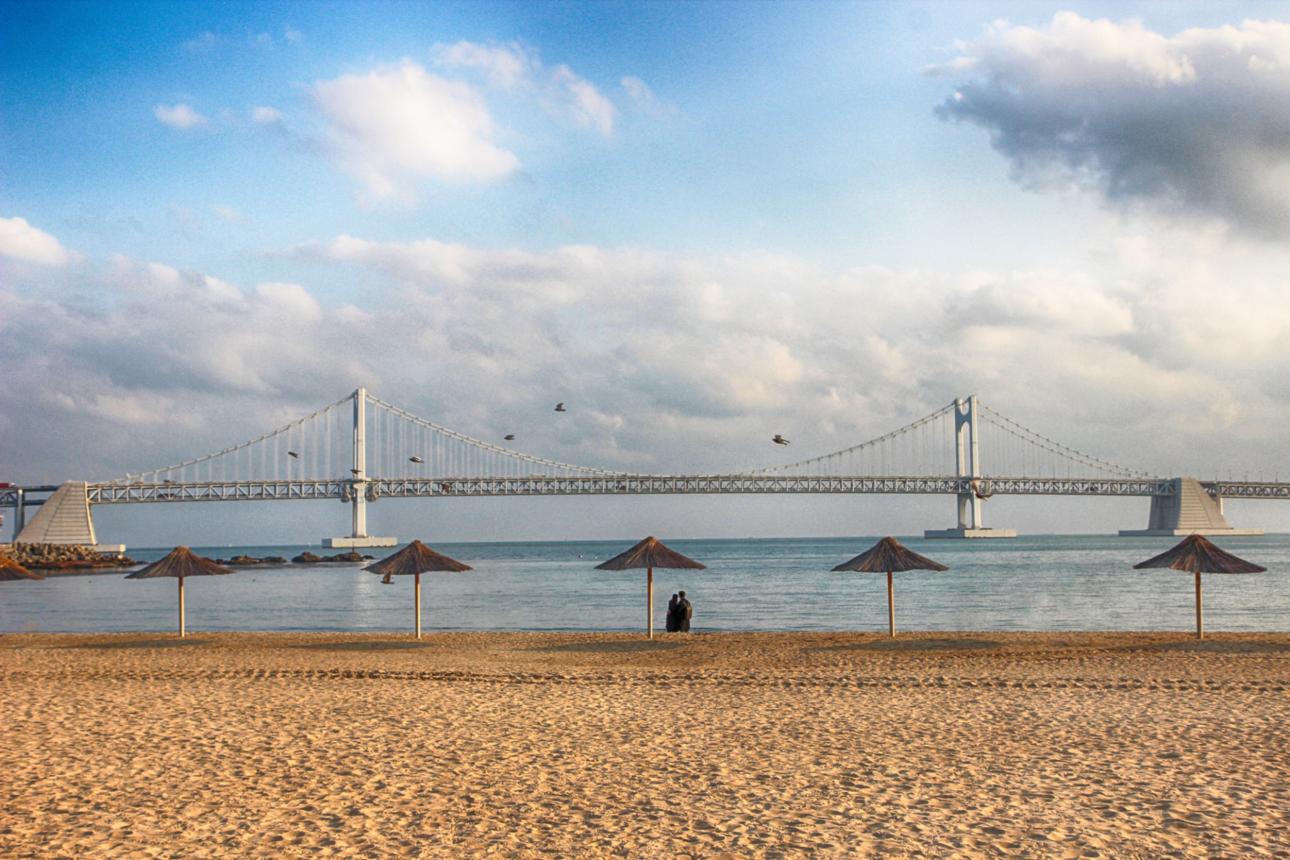
Gwangan Bridge, also called Diamond Bridge, is a large suspension bridge connecting different parts of Busan across the sea. It is one of the city’s most recognizable landmarks and becomes especially impressive after sunset when colorful LED lighting illuminates the structure. The bridge is best viewed from Gwangalli Beach, where visitors can enjoy panoramic ocean and skyline scenery.
Lighting / Viewing Hours
The bridge itself operates continuously for traffic.
Decorative evening illumination is usually visible from around sunset until late night, depending on season and special events.
Gwangalli Beach
Gwangalli Beach is one of Busan’s most popular seaside destinations, famous for its soft sandy shoreline, cafés, restaurants, and spectacular night views of Gwangan Bridge. The beach offers a more relaxed atmosphere compared to Haeundae and is especially known for evening walks, drone shows, and waterfront dining. At night, the illuminated skyline and reflections on the water create one of the most beautiful urban coastal scenes in South Korea.
Lighting / Viewing Hours
The bridge itself operates continuously for traffic.
Decorative evening illumination is usually visible from around sunset until late night, depending on season and special events.
Gwangalli Beach
Gwangalli Beach is one of Busan’s most popular seaside destinations, famous for its soft sandy shoreline, cafés, restaurants, and spectacular night views of Gwangan Bridge. The beach offers a more relaxed atmosphere compared to Haeundae and is especially known for evening walks, drone shows, and waterfront dining. At night, the illuminated skyline and reflections on the water create one of the most beautiful urban coastal scenes in South Korea.
 Heritage Site
Gyeongju
Bulguksa Temple
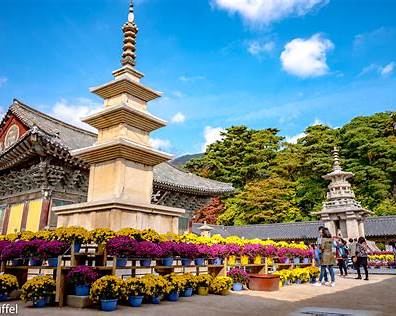
Bulguksa Temple is arguably Korea's most celebrated Buddhist temple and finest example of Silla Kingdom architecture — a UNESCO World Heritage Site since 1995. Constructed in 528 AD and massively expanded in 751 AD, the temple complex represents the Buddhist paradise on earth, with architecture symbolising different levels of the Buddhist cosmos. Two stone staircases — Cheongungyo (Blue Cloud Bridge) and Baengungyo (White Cloud Bridge) — lead to the main Daeungjeon hall. The complex houses the two most celebrated stone pagodas in Korea: Dabotap and Seokgatap — both National Treasures. The temple's 11 National Treasures are the largest concentration at any single Korean site.
 Heritage Site
Gyeongju
Seokguram Grotto
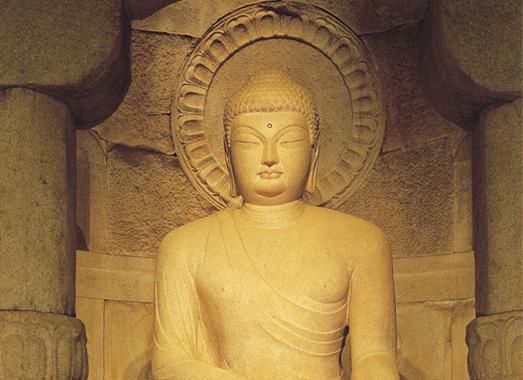
Seokguram Grotto is a masterpiece of Buddhist art — an artificial stone grotto enshrining a monumental 3.5-metre seated granite Buddha, constructed in the mid-8th century during the unified Silla Kingdom and a UNESCO World Heritage Site. Built on Tohamsan Mountain facing east toward the sea, positioned so the rising sun illuminates the Buddha's face at dawn. The main Buddha is surrounded by 38 smaller relief sculptures carved into curved granite walls. The technical achievement — creating a domed stone rotunda with perfect humidity control through natural ventilation — is considered one of the wonders of ancient Korean engineering.
 Heritage Site
Gyeongju
Tumuli Park (Daereungwon Royal Tombs)
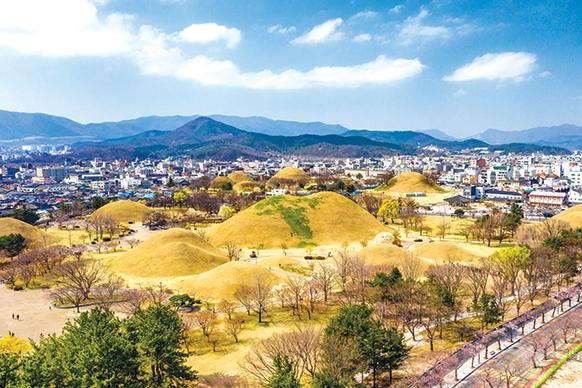
Tumuli Park (Daereungwon) is an open parkland in the heart of Gyeongju containing 23 enormous dome-shaped burial mounds of Silla Kingdom royalty, dating from the 5th-6th centuries. The grassy tumuli rise up to 22 metres in height and 80 metres in diameter. The Cheonmachong (Heavenly Horse Tomb) is the only tumulus open to the interior, displaying a cross-section of the burial structure and replicas of the famous Cheonma painting — the only Silla painting ever discovered. The park's landscape, with tidy mounds rising from lush grass amid pine trees, is uniquely beautiful at dusk.
 Heritage Site
Gyeongju
Cheomseongdae Observatory
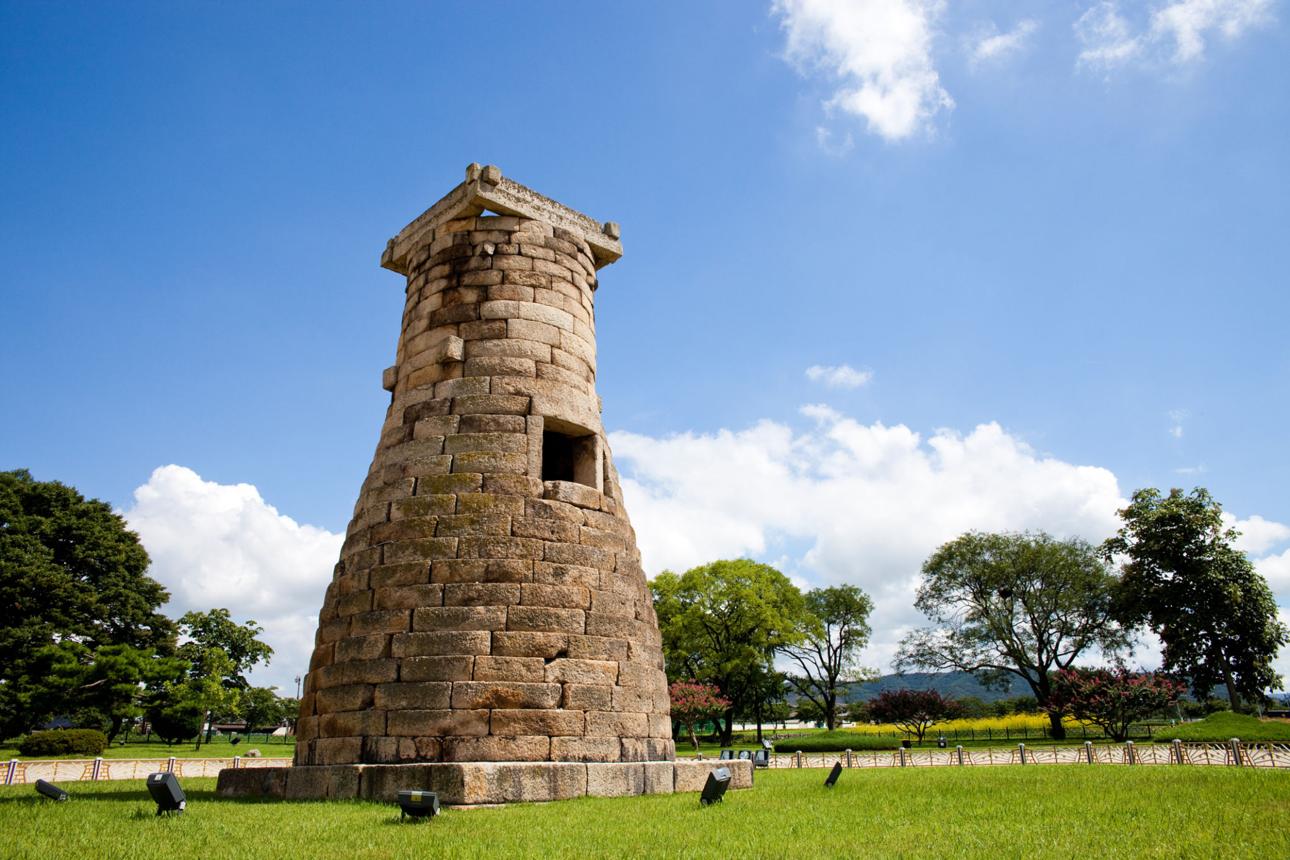
Cheomseongdae is Asia's oldest surviving astronomical observatory, constructed around 632 AD during the reign of Queen Seondeok of Silla. The elegant bottle-shaped stone tower, built from 362 precisely cut granite blocks, stands 9.17 metres tall and was used to observe the stars and predict seasonal changes. The structure is itself a calendar — 12 stones in the base represent months, 30 layers of stone for days of the month, and 365 stones total represent days of the year. The observatory is surrounded by fields of rape flowers in spring (March-April) and cosmos flowers in autumn — creating one of Gyeongju's most photographed scenes.
 Heritage Site
Gyeongju
Anapji Pond (Donggung Palace & Wolji Pond)
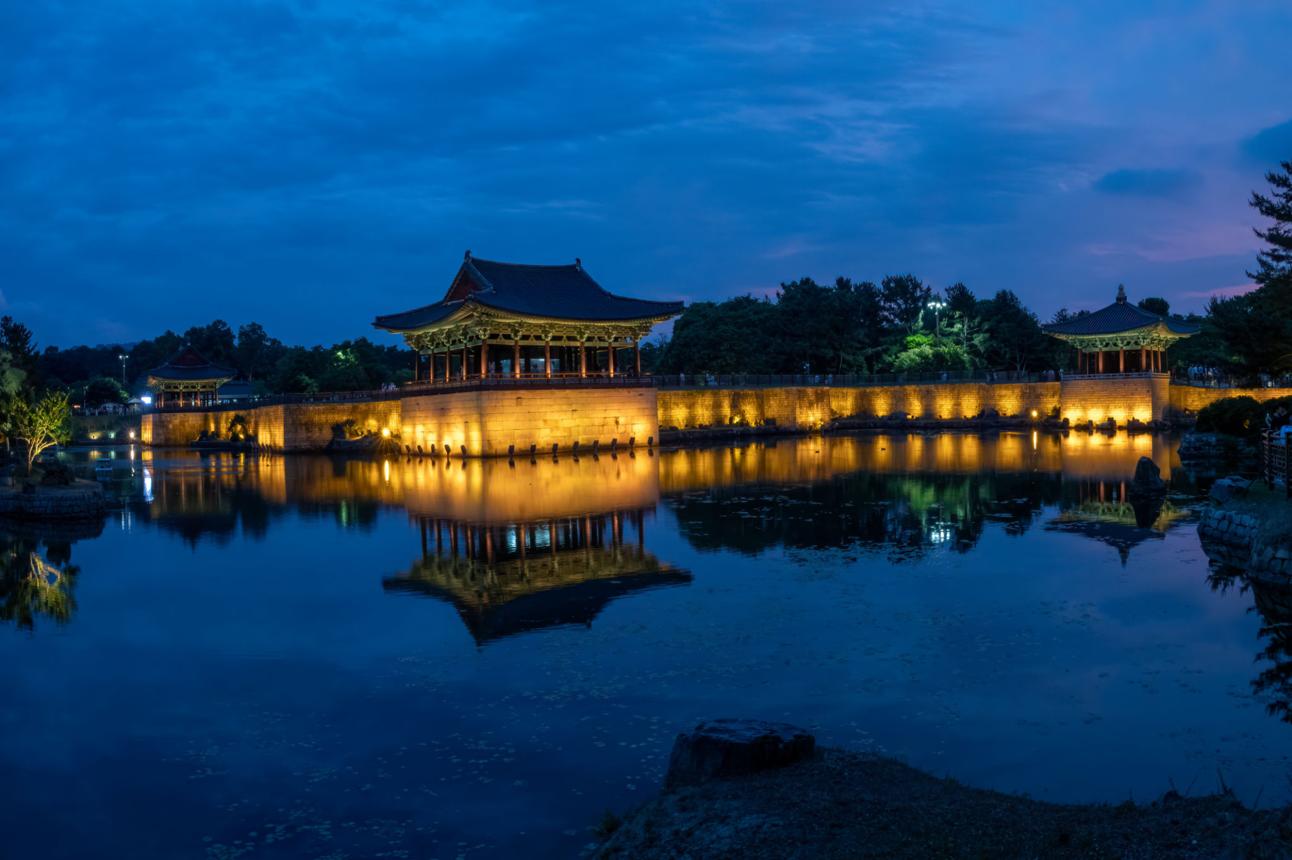
Anapji (officially Donggung-Wolji) is an artificial palace pond and garden complex built in 674 AD during the Silla Kingdom. The T-shaped pond covers 15,658 square metres and is surrounded by three artificial islands and a reconstructed palace complex. The pond was buried and forgotten for over 1,000 years until excavation in the 1970s revealed thousands of artefacts now displayed in the National Museum of Gyeongju. The reconstructed Imhaejeon Hall and Wolsangjeon Hall are reflected perfectly in the still waters. The complex is at its most magical after dark when the buildings are illuminated in the still water.
 Museum
Gyeongju
Gyeongju National Museum
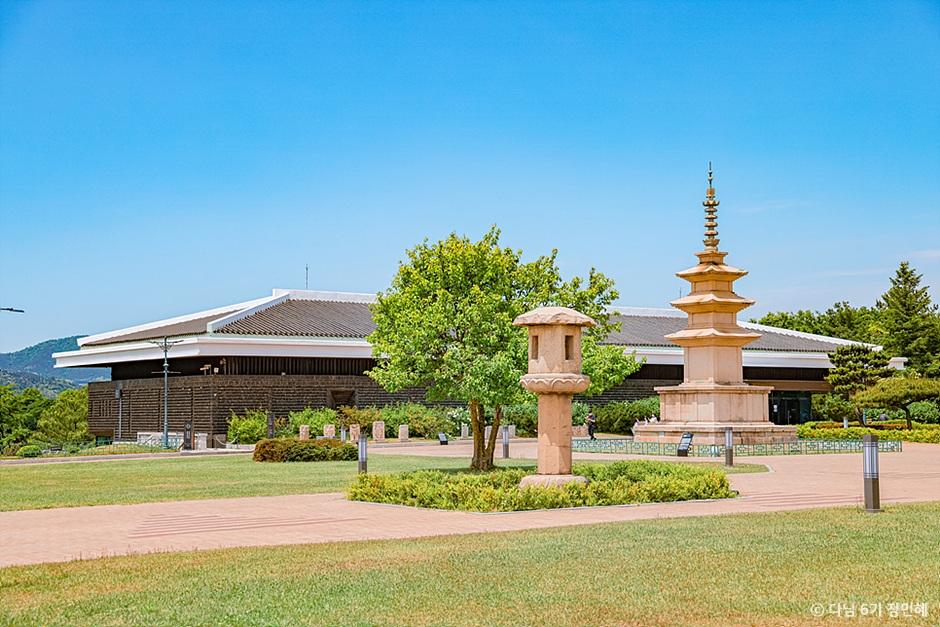
The Gyeongju National Museum is one of Korea's most important museums, housing the finest collection of Silla Kingdom artefacts — the treasures of the ancient capital city. The extraordinary gold crowns, gold belts, glass vessels, and jewellery excavated from the tumuli reveal the sophistication of Silla civilisation. The museum's courtyard displays the Sacred Bell of King Seongdeok (Emille Bell), cast in 771 AD and considered one of the world's finest examples of bell casting. The Wolseong and Tumuli sections explain the layout of ancient Gyeongju. The museum grounds also contain stone artefacts and pagodas relocated from archaeological sites across the city.
 Heritage Site
Andong
Hahoe Folk Village
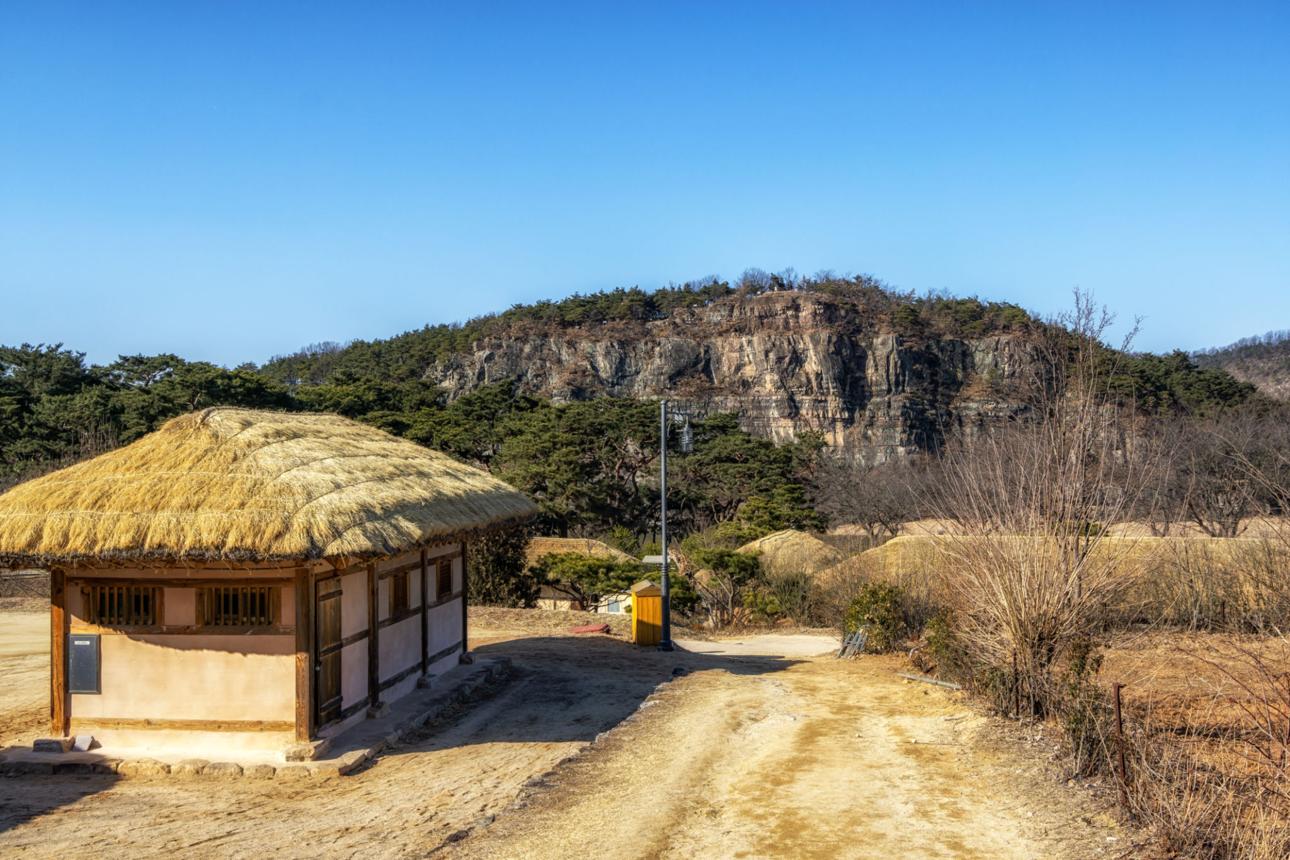
Hahoe Folk Village is a UNESCO World Heritage-listed Joseon Dynasty village continuously inhabited for over 600 years, cradled in a dramatic bend of the Nakdong River and backed by forested mountains. The village is the ancestral home of the Ryu clan and preserves over 100 tile-roofed and thatched-roof traditional Korean houses in their original positions. The Hahoe Byeolsingut Talnori (Mask Dance Drama), a satirical theatrical tradition over 500 years old using world-famous Hahoe masks, is performed on weekends. The village features perfect Confucian spatial planning with the Yangjindang manor and Chunghyodang pavilion as centrepieces. Views from Buyongdae Cliff across the river bend are breathtaking.
 Heritage Site
Gyeongsan
Dosan Seowon Confucian Academy
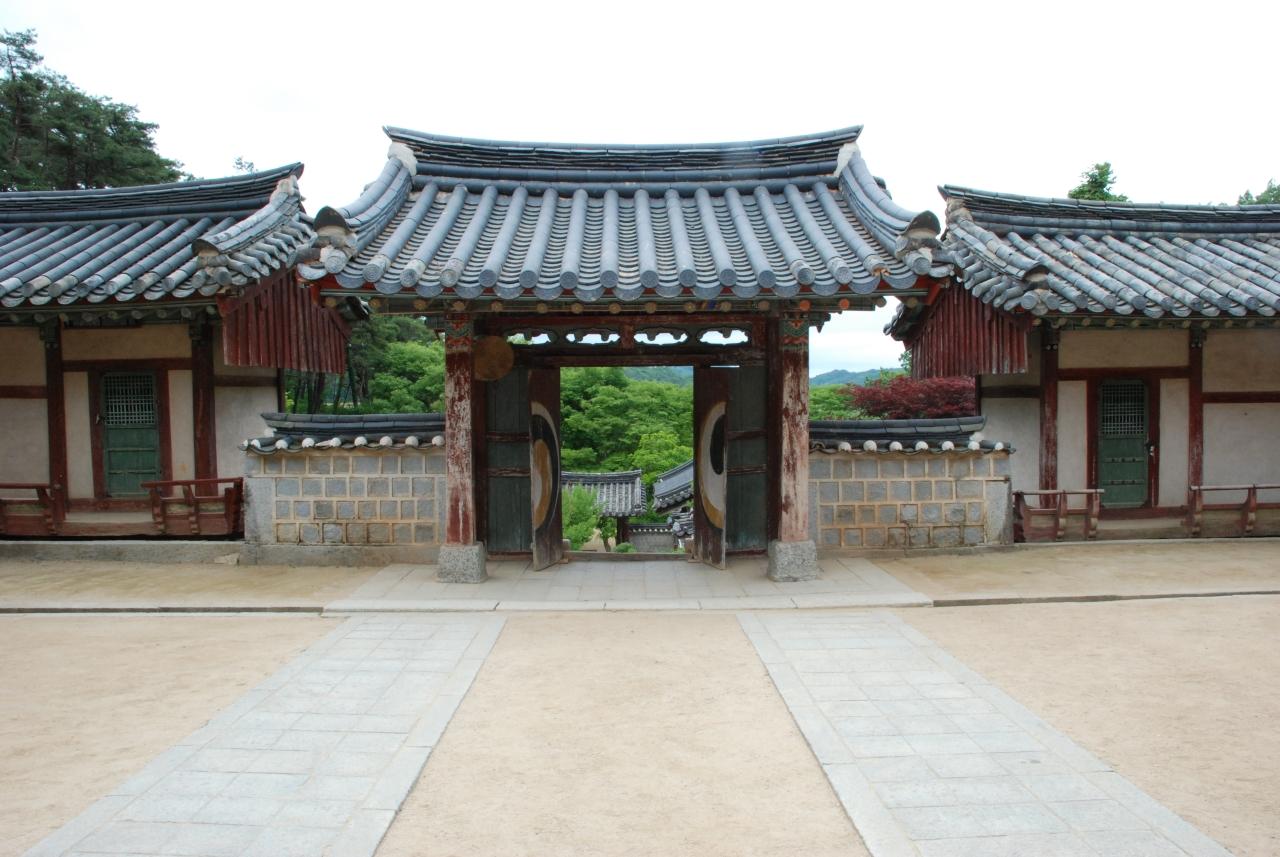
Dosan Seowon is the most celebrated Confucian academy in Korea, founded in 1574 to honour Yi Hwang (pen name Toegye, 1501-1570) — the greatest Confucian scholar of the Joseon Dynasty whose portrait graces the 1,000 Won banknote. Set on a slope overlooking Andong Lake, the academy complex of examination halls, lecture halls, dormitories, and a library is a masterpiece of understated Joseon academic architecture designed to foster scholarly concentration and communion with nature. The adjacent Dosan Seodang, constructed by Toegye himself, is particularly revered. Dosan Seowon is a UNESCO World Heritage Site (inscribed 2019).
 Museum
Andong
Andong Hahoe Mask Museum
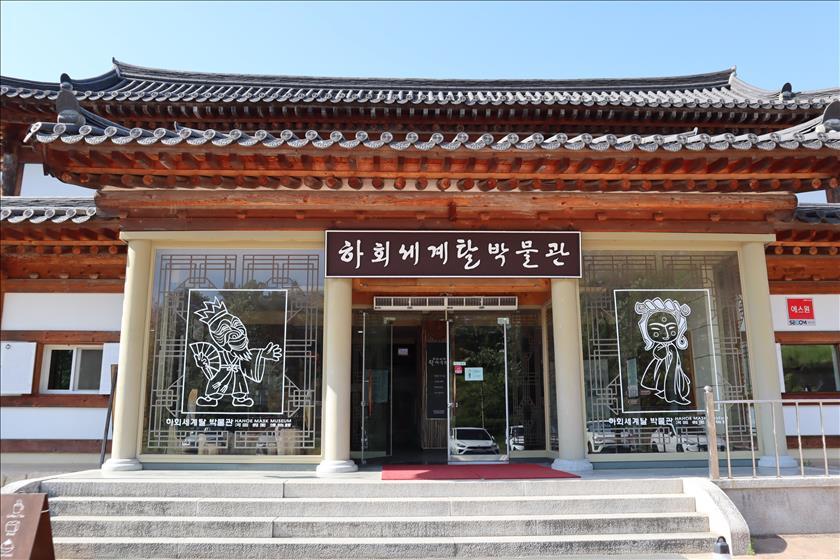
The Andong Hahoe Mask Museum is dedicated to the world-famous Hahoe masks — stylised wooden masks used in the Hahoe Byeolsingut Talnori mask dance drama. The permanent collection includes authentic Hahoe masks (12 traditional types including the Yangban nobleman, Gaksi bride, and Bune aristocratic woman) as well as masks from 47 countries worldwide. The Hahoe mask has become one of Korea's most recognisable cultural symbols and is considered a masterpiece of Korean folk art. Interactive exhibits explain the history and symbolism of each character in the mask dance.
 Nature
Gangwon-do
Seoraksan National Park
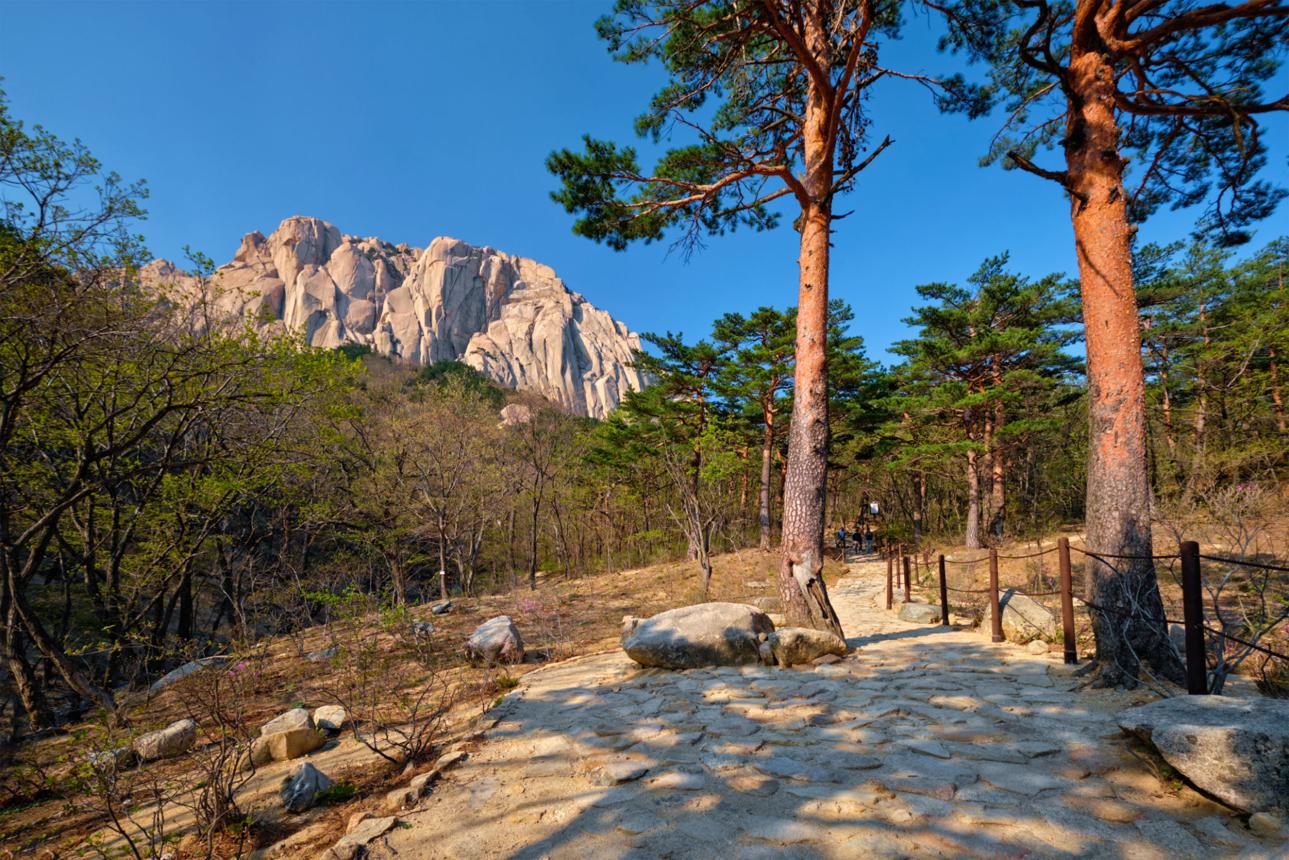
Seoraksan National Park is South Korea's most spectacular mountain national park — a dramatic landscape of granite peaks, dense ancient forest, Buddhist temples, crystal waterfalls, and hot spring valleys in the Taebaek Mountain Range of eastern Gangwon Province. The peak Daecheongbong (1,708m) is Korea's third highest mountain. Key sights include the sheer granite Ulsanbawi Rock (reached by 808 rock-cut steps), Biryong Falls, Heundeulbawi (rocking stone), Sinheungsa Temple, and the dramatic Towangseong Falls. The autumn foliage (early October) is among Korea's most celebrated — red maples and golden ginkgos against the granite peaks are iconic.
 Temple
Gangwon-do
Sinheungsa Temple
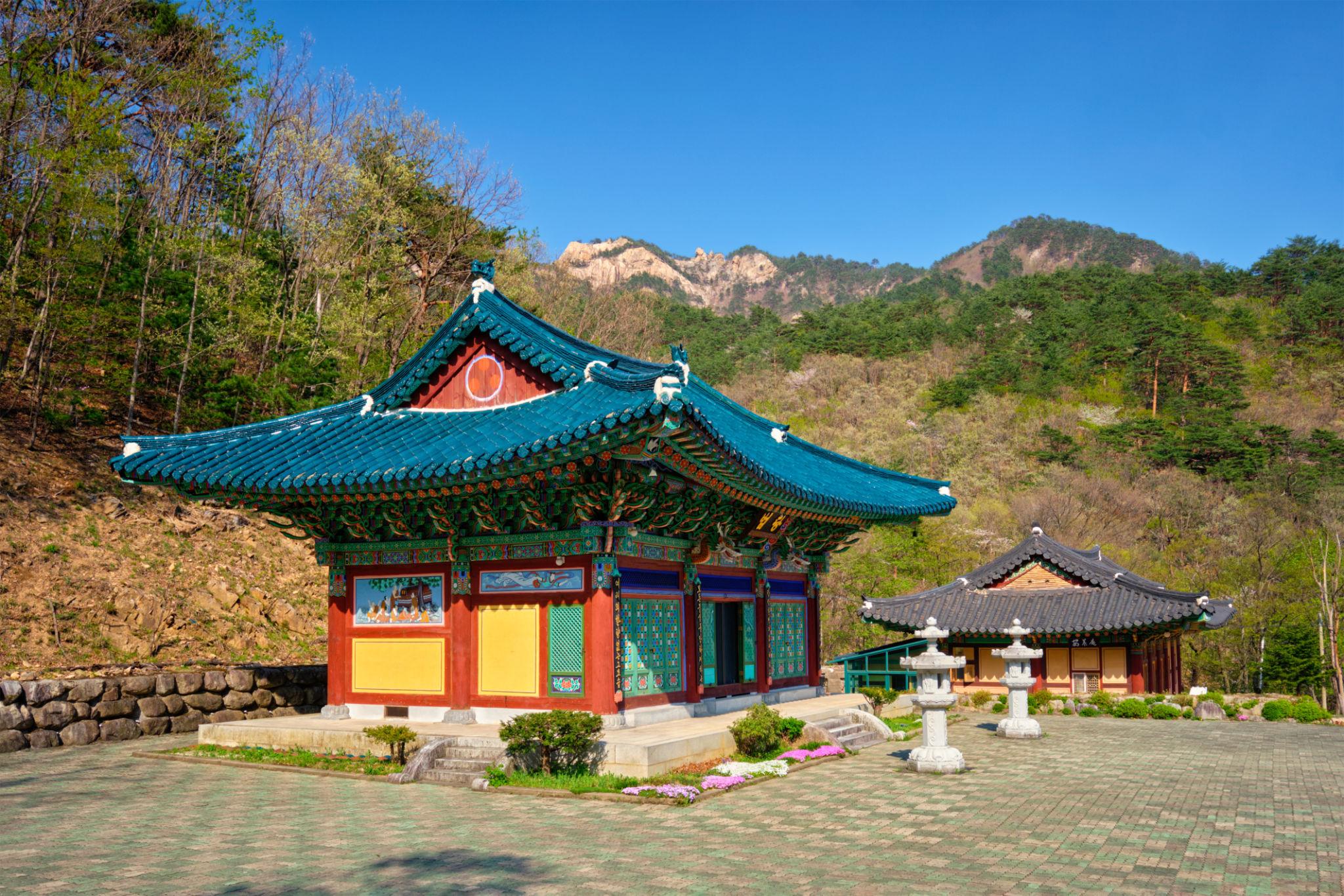
Sinheungsa Temple, nestled at the entrance to Seoraksan National Park, is one of Korea's oldest temples — originally founded in 653 AD. The temple was rebuilt numerous times following fires and now presents a harmonious collection of traditional halls set among magnificent ancient trees at the foot of the Seoraksan granite peaks. The most dramatic element is the 14.6-metre seated bronze Unification Buddha statue (Tongil Daebul), consecrated in 1997, which dominates the temple approach and is visible from far down the valley. The Sacheonwang Gate houses four fearsome guardian deity statues. Temple Stay programmes are available.
 Nature
Gangwon-do
Sokcho Beach & Abai Village
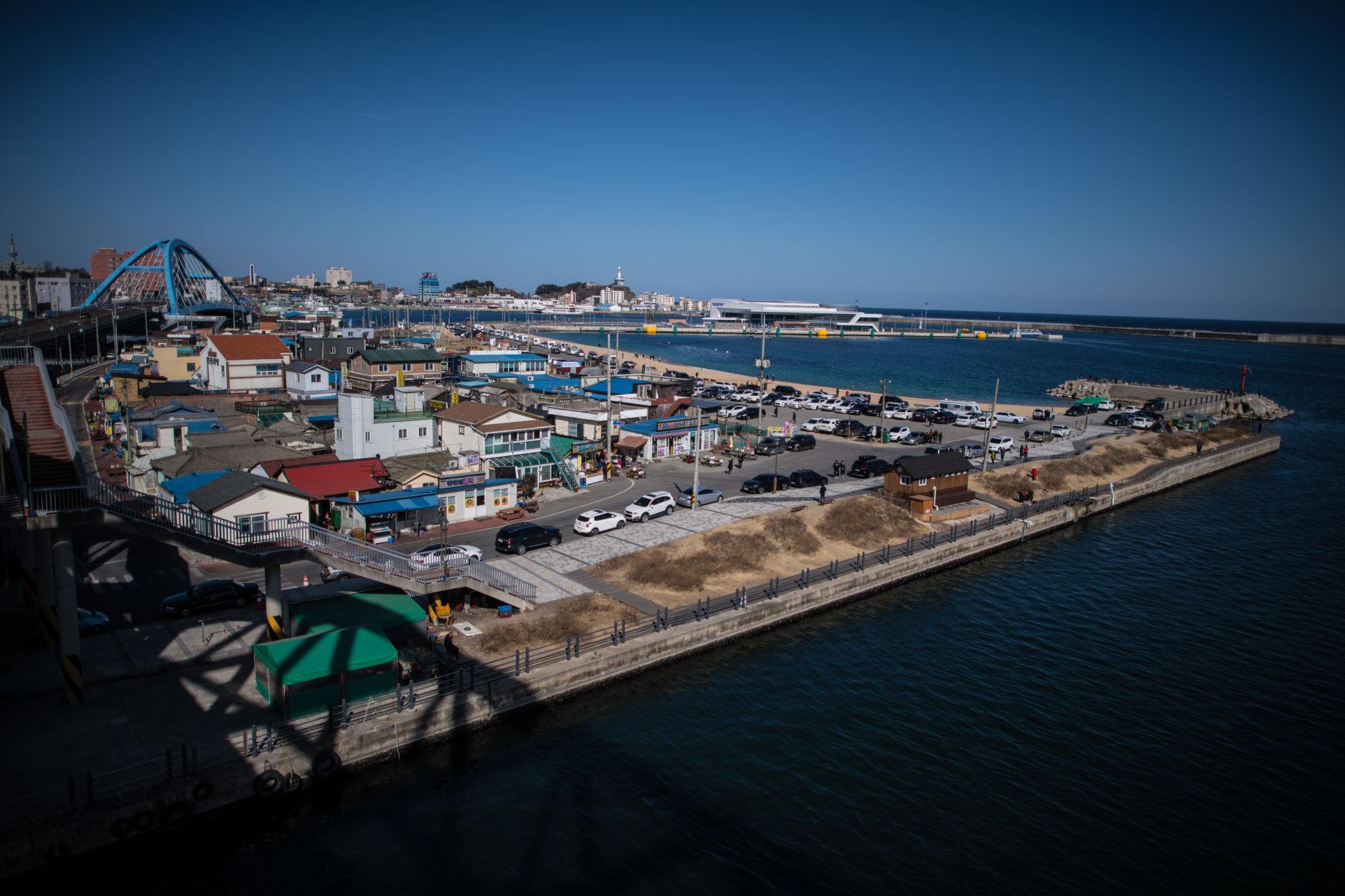
Sokcho Beach is a beautiful stretch of sand on the East Sea coast of Gangwon Province — a wide clean beach with turquoise waters and the dramatic backdrop of Seoraksan's granite peaks inland. The beach is far less crowded than Haeundae, with a relaxed local atmosphere. Adjacent Abai Village, just across the lagoon, is a community founded by North Korean refugees after the Korean War — now famous for its spicy pork blood sausage (aegi sundae) and squid dishes. The hand-pulled ferry (yuseondo) across the narrow channel is a beloved local experience. The lagoon area between Sokcho Beach and Cheongchoho Lake is picturesque at any season.
 Nature
Seoul
Nami Island (Namiseom)
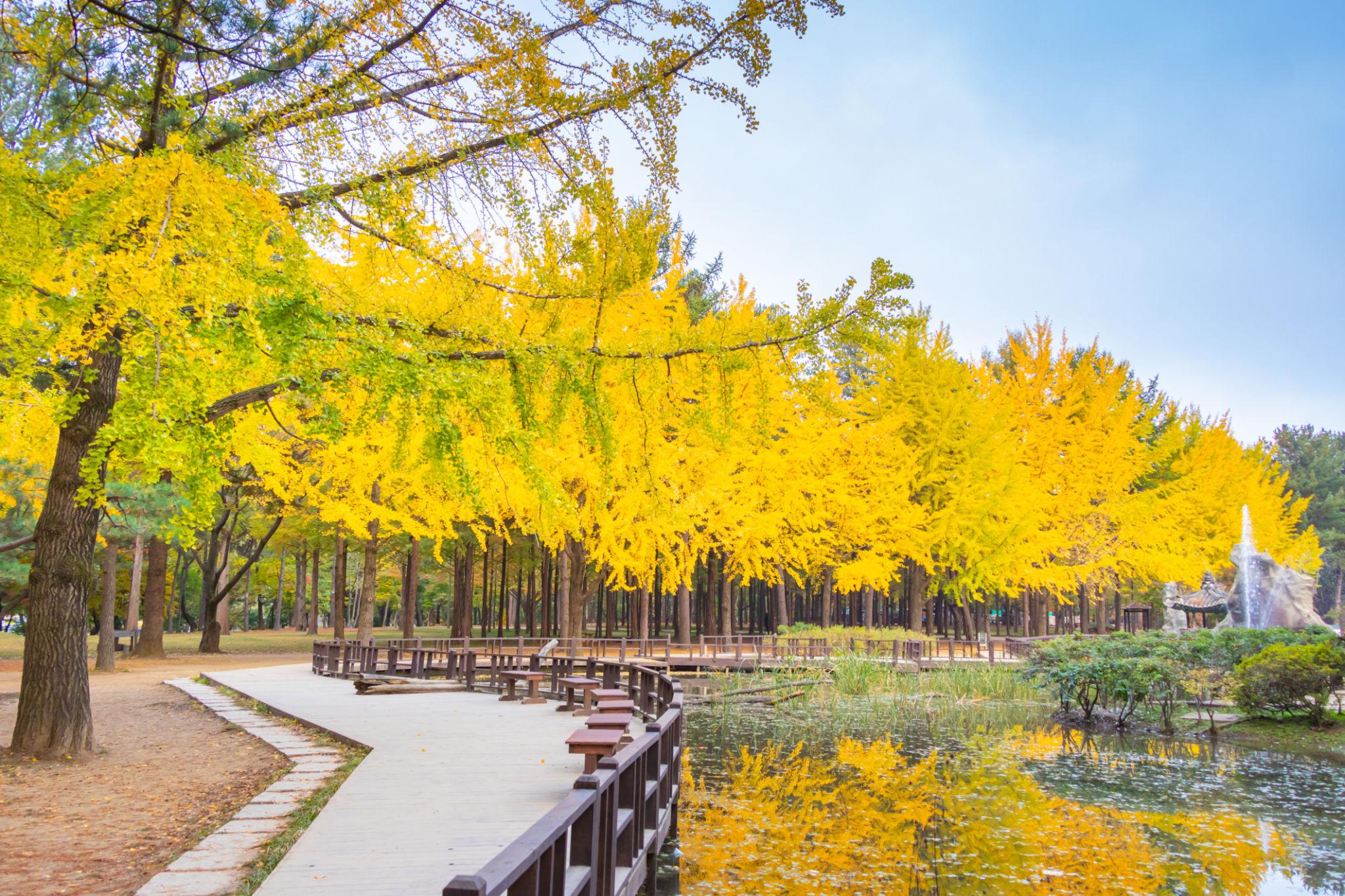
Nami Island (Namiseom) is a half-moon-shaped river island in the North Han River that became internationally famous after the 2002 Korean drama Winter Sonata was filmed here. The island is a park of exceptional natural beauty — famous for its tunnels of tall poplar and ginkgo trees that create cathedral-like corridors of gold in autumn and green in summer. The island is officially registered as the Nation of Nami — a self-declared micronation with its own flag, currency, and passport stamp. Year-round activities include zip lines, cycling, horseback riding, and archery. Beautiful in all seasons but especially breathtaking in October for autumn colours and in winter when the tree tunnels are dusted with snow.
 Attraction
Gyeonggi-do
Petite France
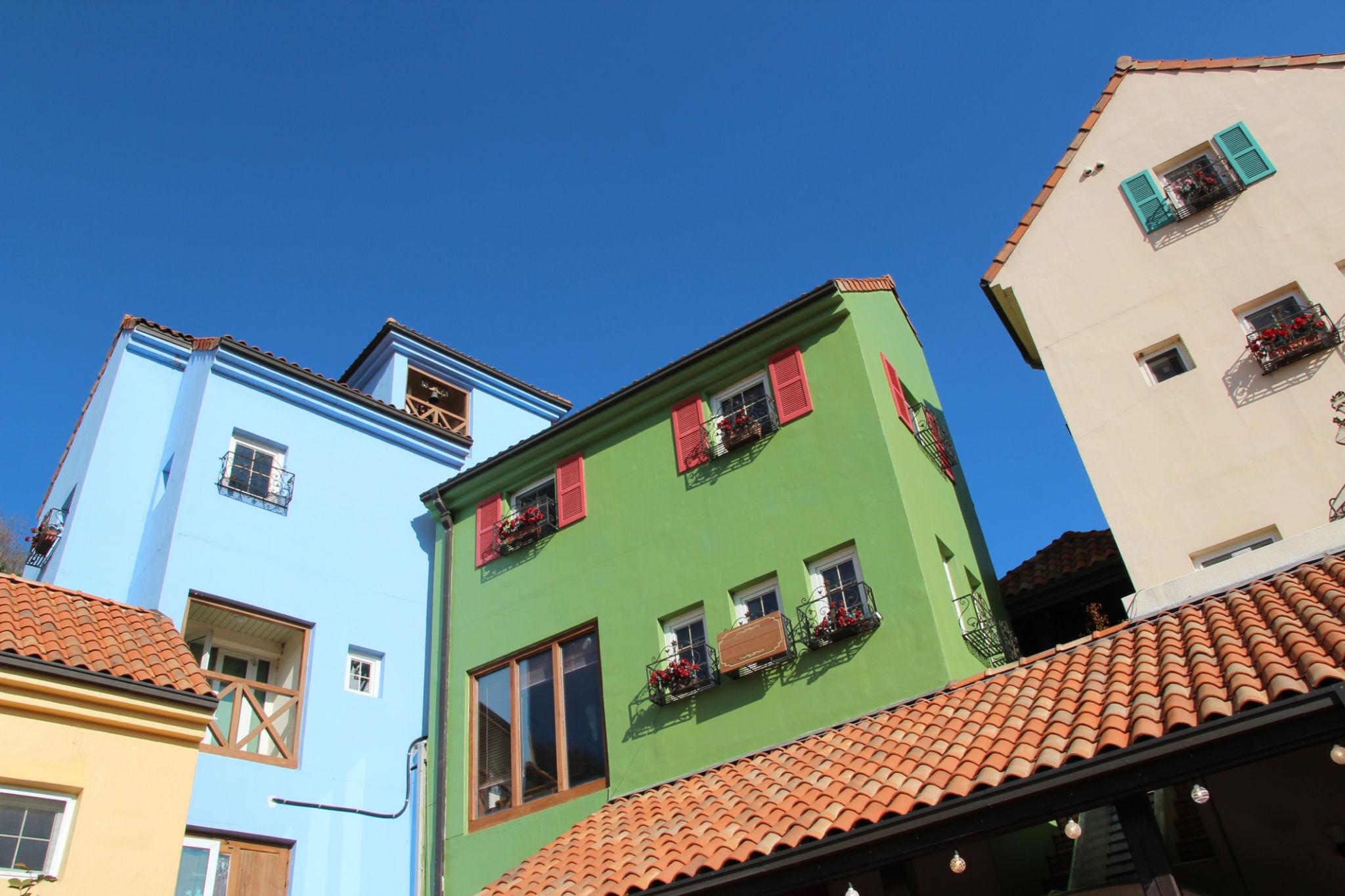
Petite France is a French cultural village perched above Cheongpyeong Lake in Gapyeong County — a charming theme park of pastel-coloured French-style buildings, formal gardens, and cultural exhibition spaces. The village became famous worldwide as a filming location for the Korean drama My Love from the Star (2013-2014). The grounds contain a dedicated Le Petit Prince (The Little Prince) exhibition with extensive memorabilia and installations. Traditional French puppet shows and exhibitions on French art are staged regularly. The elevated position above Cheongpyeong Lake with mountain views is particularly scenic.
 Nature
Seoul
Garden of Morning Calm
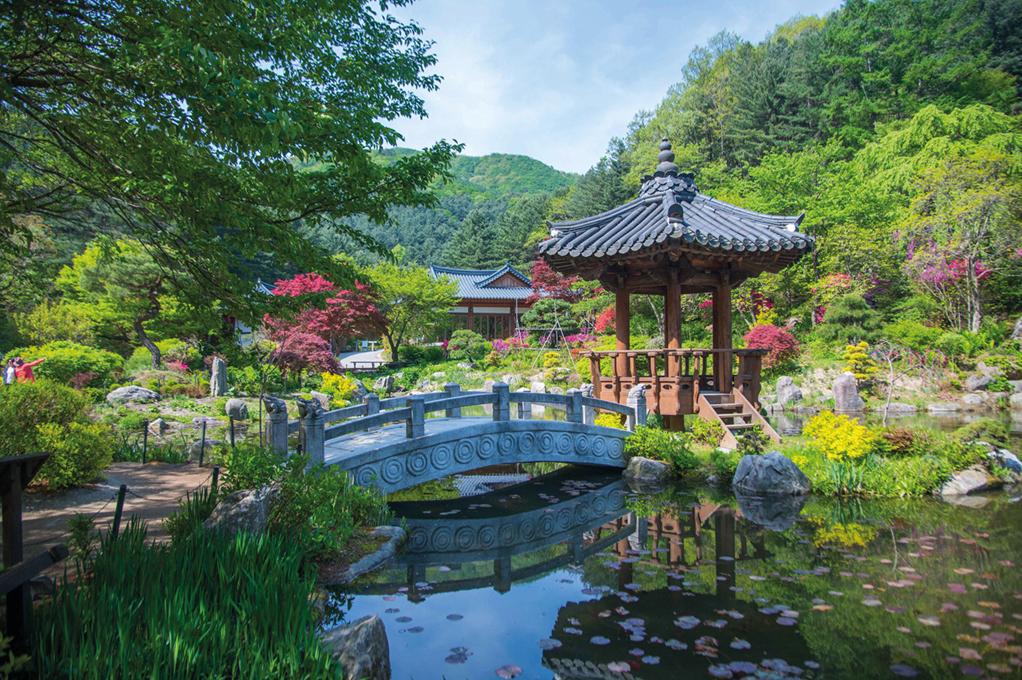
The Garden of Morning Calm (Achim-goyun Sukmogwon) is Korea's oldest private garden, established in 1996 in Gapyeong County — a 330,000 square metre botanical garden featuring 5,000 plant varieties arranged in 20 themed garden sections including an Alpine Garden, English Garden, and Fragrant Garden. The garden is equally renowned in all four seasons: spring cherry blossoms and tulips, summer hydrangeas, autumn foliage, and the spectacular Winter Lighting Festival (December-March) when the entire garden is illuminated with millions of twinkling lights. The name references a poem by Tagore who called Korea the Land of the Morning Calm.
 Nature
Jeju City
Seongsan Ilchulbong (Sunrise Peak)
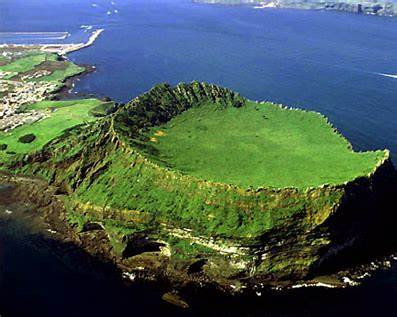
Seongsan Ilchulbong — Sunrise Peak — is a UNESCO World Natural Heritage site on the eastern tip of Jeju Island, an extraordinary tuff cone crater formed by a hydrovolcanic eruption approximately 5,000 years ago. The 182-metre peak rises dramatically from the sea, its enormous circular crater (600m wide) filled with grass and wildflowers. The rocky crater walls feature 99 distinctive spire-shaped pinnacles. The Seongsan Haenyeo (Women Divers) give daily demonstrations of traditional free-diving and seafood gathering at the base of the peak. One of Korea's premier sunrise viewing locations.
 Nature
Jeju City
Hallasan National Park
Hallasan, South Korea's highest mountain at 1,950 metres and a dormant shield volcano, is the centrepiece of Hallasan National Park — a UNESCO World Natural Heritage site. The mountain defines Jeju Island's landscape, its slopes covered in distinct ecological zones from subtropical forest at the base to alpine scrub near the summit. The summit crater lake, Baeknokndam, is a sacred mirror-like alpine lake of haunting beauty. Multiple hiking trails lead to the summit — Seongpanak and Gwaneumsa trails reach the summit, while the shorter Eorimok and Yeongsil trails access the spectacular Witseoreum plateau rich in endemic plant species.
 Nature
Jeju City
Manjanggul Cave
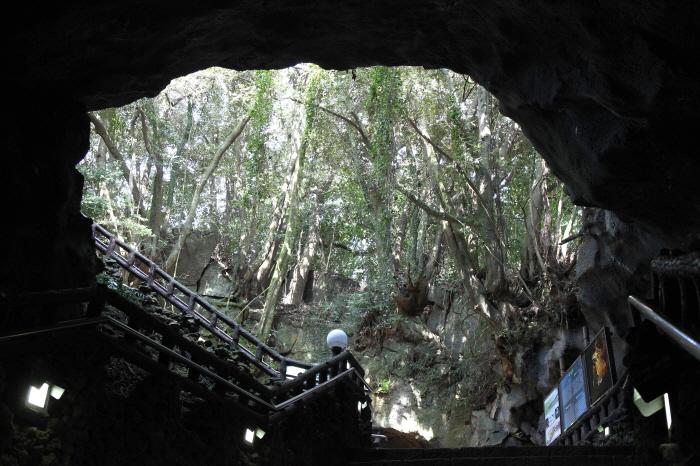
Manjanggul Cave is one of the finest lava tube caves in the world — a UNESCO World Natural Heritage site stretching 13.4 km in total length (1 km open to visitors) with chambers up to 23 metres high and 18 metres wide. Formed approximately 300,000 years ago by lava flows from Hallasan, the cave contains extraordinary lava stalactites, stalagmites, lava bridges, lava shelves, and the world's largest lava column (7.6 metres) at the end of the accessible section. The cave maintains a constant temperature of 11 degrees Celsius year-round — a cool refuge in summer.
 Nature
Jeju City
Cheonjiyeon Waterfall
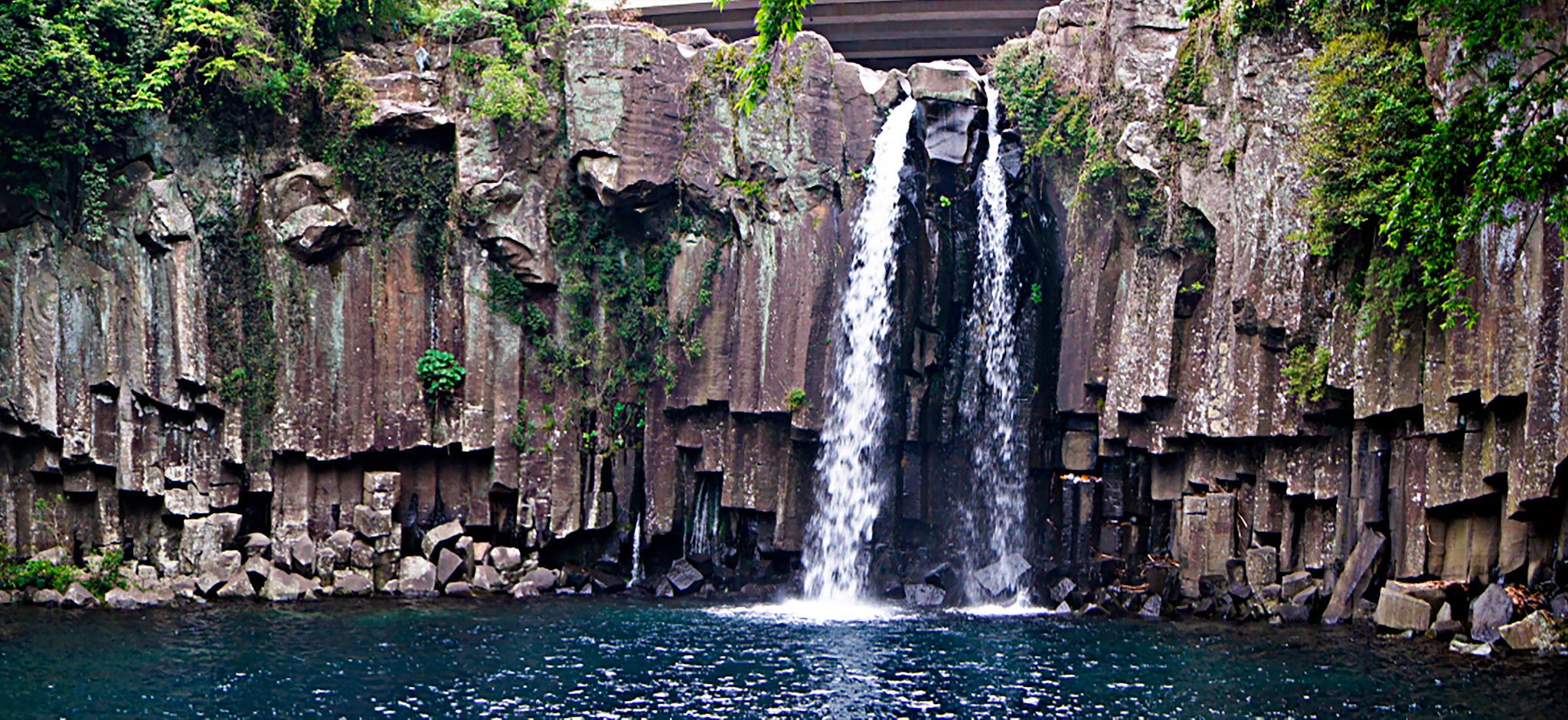
Cheonjiyeon Waterfall — Heaven and Earth Pond — is a stunning three-tier waterfall near Seogwipo City on Jeju's south coast, where water drops 22 metres into a deep pool surrounded by subtropical forest. The approach through a subtropical forest trail passes exceptionally lush vegetation including the Segorok plant found only on Jeju Island. The pool at the base glows a deep translucent turquoise-green. The adjacent Seonim Bridge is the only habitat of the endangered Hallasan Plume moth. The walking trail continues along the stream to reveal three separate waterfall cascades each with their own character.
 Nature
Jeju City
Jusangjeolli Cliffs
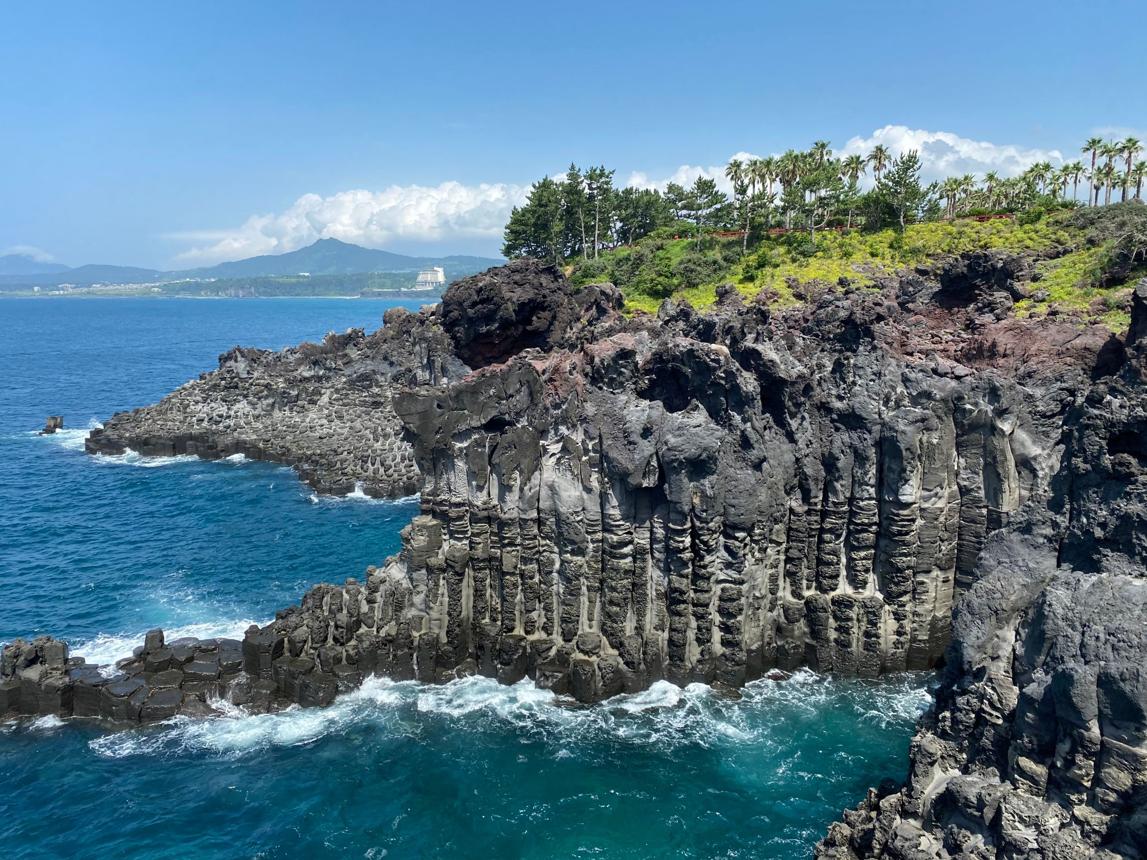
Jusangjeolli Cliffs are a dramatic formation of hexagonal basalt columns standing in geometric rows along the coast near Jungmun on Jeju's south coast — created by lava from Hallasan Volcano cooling as it flowed into the sea approximately 250,000 years ago. The columns, ranging from 30 to 40 metres in height and stacked in near-perfect hexagonal prisms, create a natural wonder comparable to the Giant's Causeway in Northern Ireland. The columns rise directly from the crashing sea, constantly spray-washed by waves. A coastal walking path offers views from above and a platform at the base allows close inspection.
 Heritage Site
Jeju City
Jeju Folk Village Museum
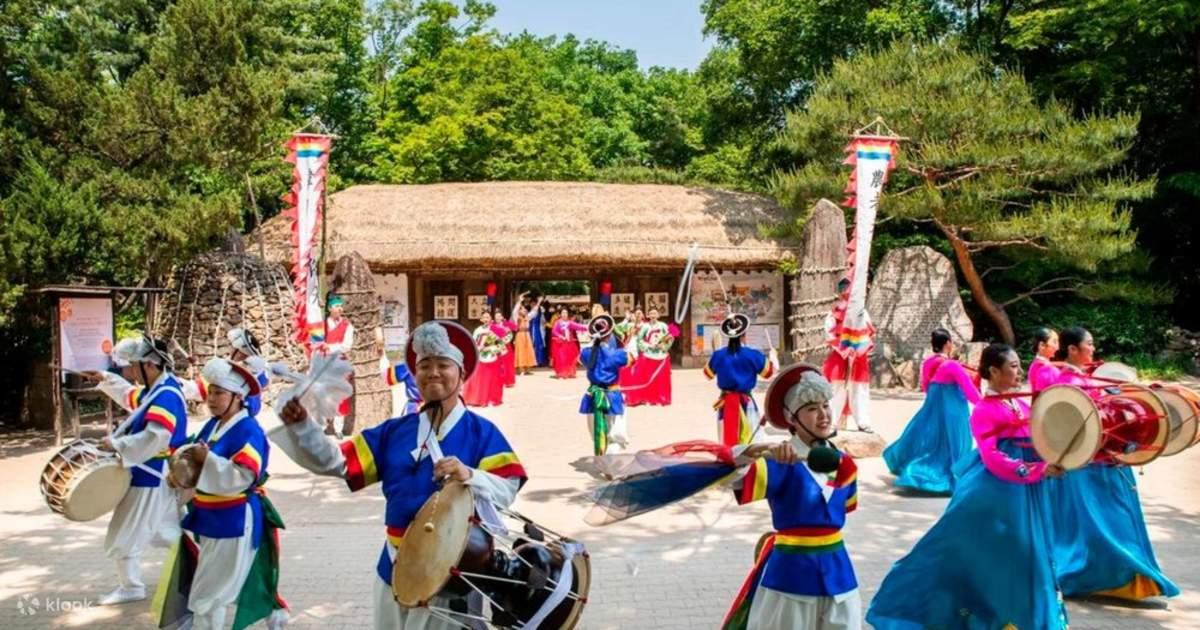
Jeju Folk Village Museum is the most comprehensive open-air museum of traditional Jeju culture — a 100,000 square metre site reconstructed from 100 original traditional Jeju houses relocated from across the island. The museum is divided into a Mountain Village, Fishing Village, and Merchant Village, each presenting different aspects of traditional Jeju life. Original household items, farming tools, and fishing equipment are displayed in authentic context. The island's unique three-no culture (no gates, no beggars, no thieves) is explained through the distinctive olmang (thatched-rope gate). Regular cultural performances include shamanic rites, farmers' music, and traditional games.
 Nature
Jeju City
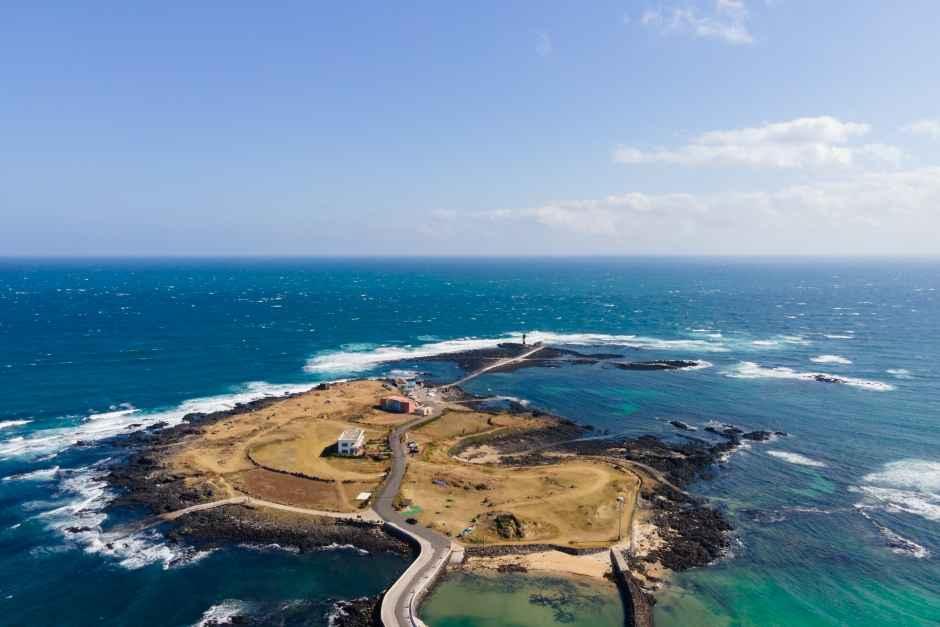
Hyeopjae Beach & Biyangdo Island
Hyeopjae Beach on Jeju's northwest coast is considered by many the island's most beautiful beach — famous for its extraordinary shallow turquoise-blue waters, pure white sand, and the photogenic view of the small volcanic cone island of Biyangdo rising from the sea just offshore. The beach's shallow water is brilliantly translucent and remains cool even in summer. The adjacent pine forest park provides welcome shade. A ferry runs from Hanrim Port to Biyangdo Island (15 minutes) — a peaceful volcanic island with walking trails around the crater rim and coastal bluffs.
 Heritage Site
Jeonbuk State
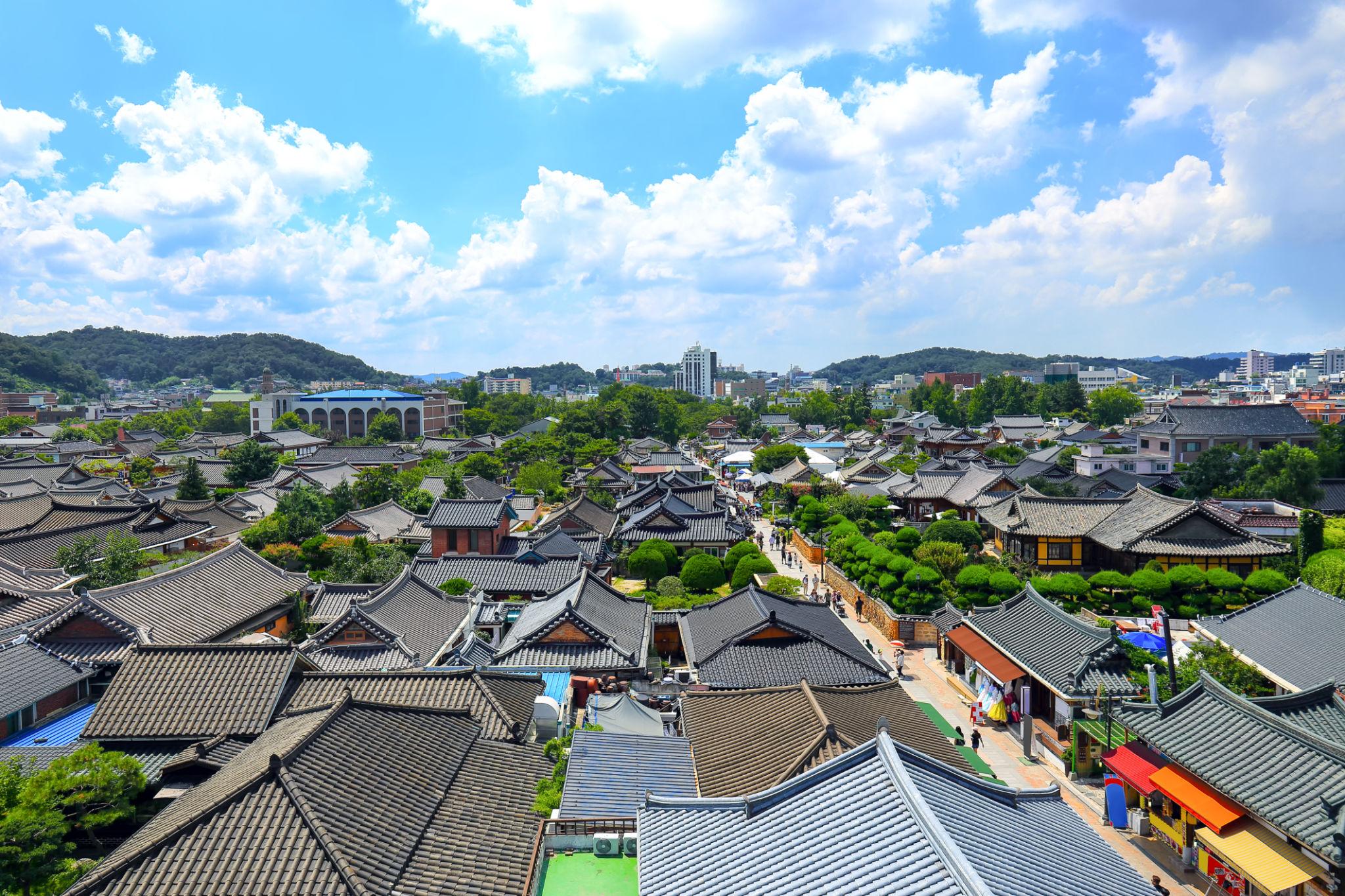
Jeonju Hanok Village
Jeonju Hanok Village is the best-preserved traditional Korean village in the country — a living urban district of approximately 800 traditional Korean hanok tile-roofed houses from the Joseon Dynasty, maintained within the modern city of Jeonju. Unlike most Korean heritage villages which are more museum-like, Jeonju Hanok Village is a fully functioning neighbourhood of residences, restaurants, cafes, guesthouses, shops, and cultural centres — all housed within traditional architecture. The village is the birthplace of the Joseon Dynasty and is the undisputed bibimbap capital of Korea. Cultural experiences include hanji (traditional paper) making, hanbok rental, and traditional music.
 Heritage Site
Jeonju
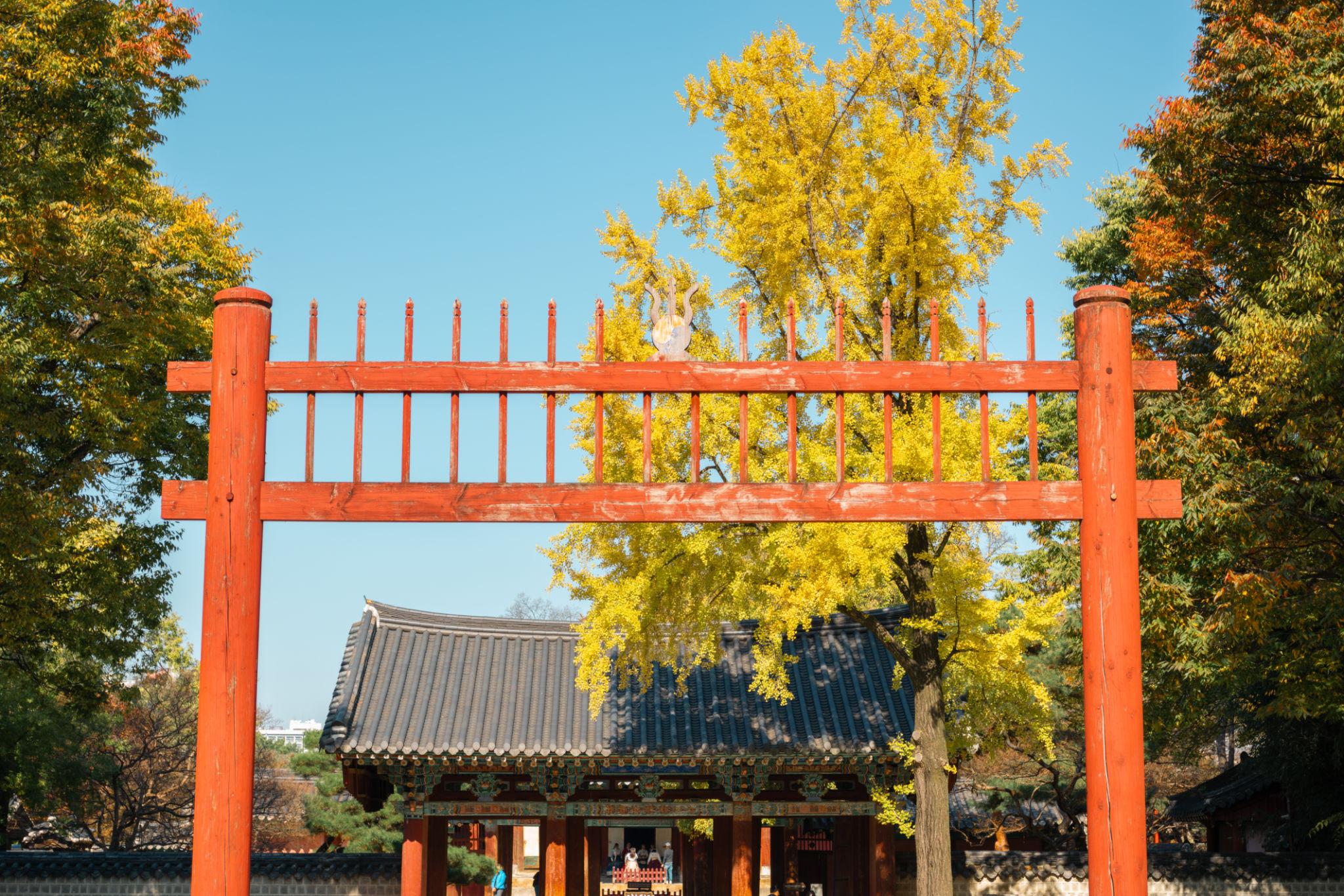
Gyeonggijeon Shrine
Gyeonggijeon is a royal shrine within Jeonju Hanok Village housing the official portrait of Yi Seonggye — the founder of the Joseon Dynasty. The shrine complex, built in 1410, consists of elegant buildings surrounded by ancient dense groves of bamboo and old trees, creating an atmosphere of profound calm. The artefacts on display include the Joseon Royal Family History Documents (a UNESCO Memory of the World, 1997) and the original Annals of the Joseon Dynasty. The Taejo Lee Historical Museum within the complex details the dynasty's founding.
 Attraction
Jeonju
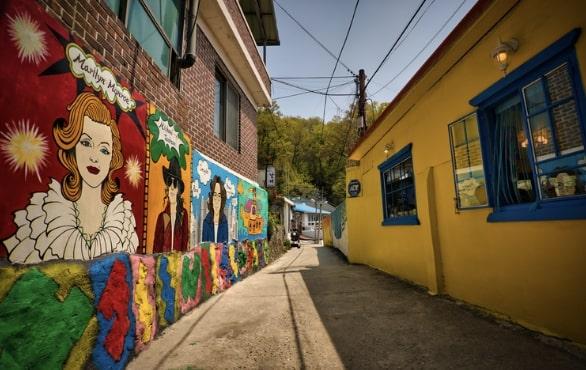
Jaman Mural Village
Jaman Mural Village is a colorful hillside art village located just beside Jeonju Hanok Village in Jeonju. Once a quiet refugee neighborhood formed after the Korean War, the village was transformed in 2012 through a public art project that covered walls, stairways, and alleyways with vibrant murals and street art. The village is filled with murals inspired by:
Korean cartoons
anime
Studio Ghibli-style artwork
fantasy themes
Korean pop culture
Korean cartoons
anime
Studio Ghibli-style artwork
fantasy themes
Korean pop culture
 Heritage Site
Gyeonggi-do
Hwaseong Fortress
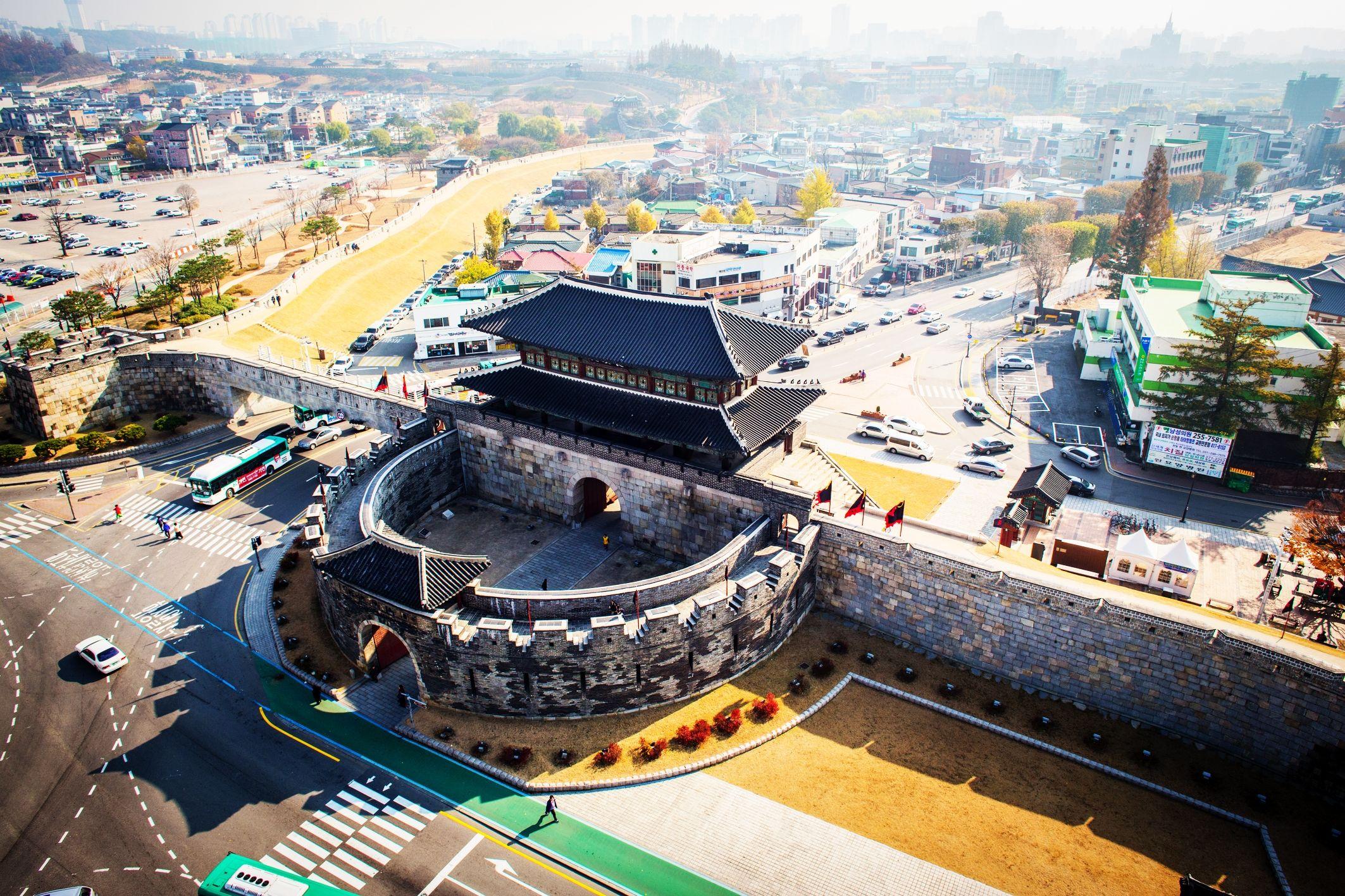
Hwaseong Fortress is a UNESCO World Heritage-listed city wall fortress encircling the old centre of Suwon, constructed between 1794-1796 by King Jeongjo of Joseon in memory of his father Crown Prince Sado. The fortress wall stretches 5.7 km in a continuous circuit incorporating four main gates, four command posts, two water gates, and numerous towers, bastions, and beacon fire stations. Hwaseong is distinguished by its incorporation of both Eastern and Western military engineering principles. The fortress wall walk along the elevated circuit offers panoramic views over modern Suwon. The annual Hwaseong Cultural Festival (October) includes a re-enactment of King Jeongjo's royal procession.
 Heritage Site
Gyeonggi-do
Korean Folk Village
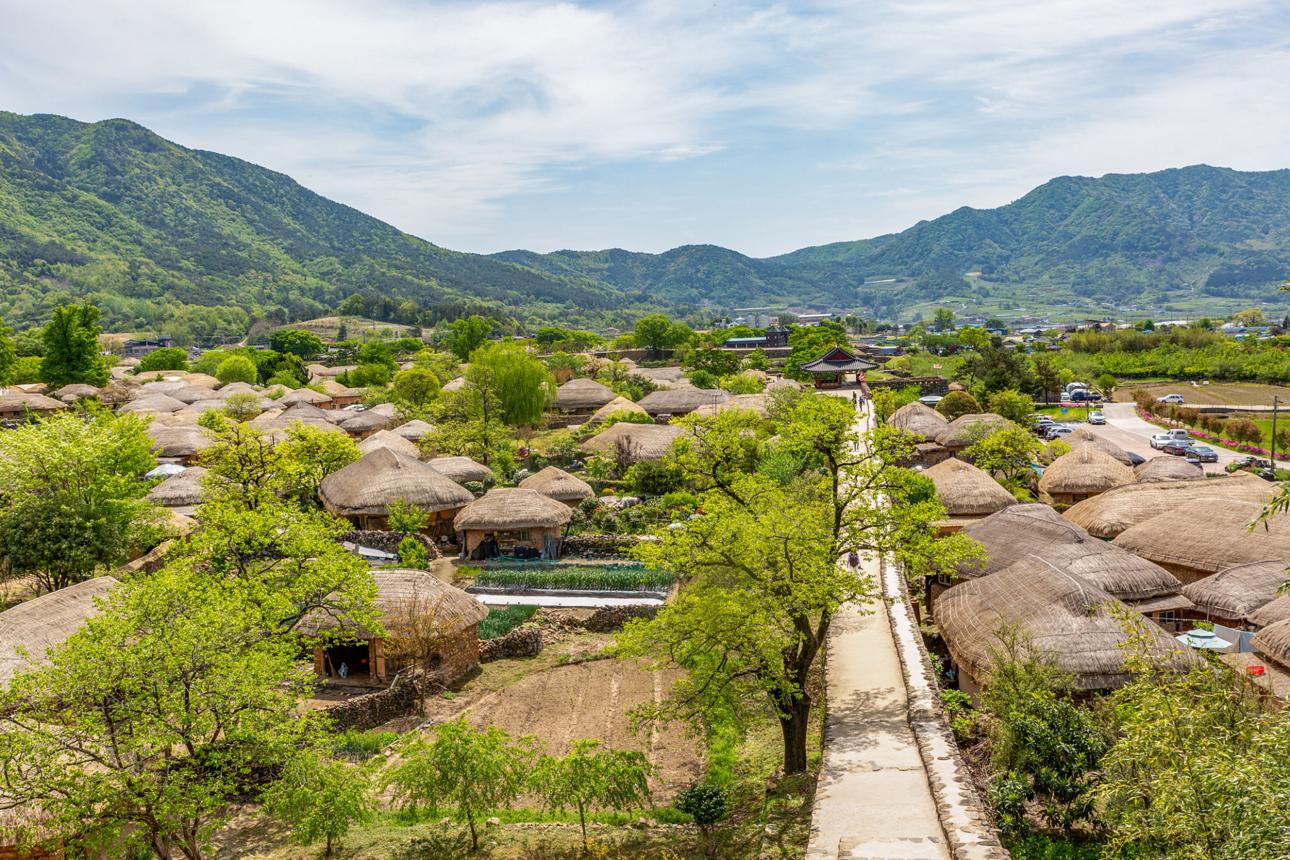
The Korean Folk Village in Yongin is the most comprehensive traditional village museum in Korea — a meticulously preserved open-air museum of over 260 authentic traditional buildings relocated from across Korea and reconstructed on a 98-acre site. The village represents the full social spectrum of Joseon Dynasty society, with houses ranging from thatched-roof farmer's cottages to nobleman's manors and government offices. Live demonstrations show traditional crafts including pottery, weaving, iron-forging, and papermaking. Traditional performances include tightrope walking (jultagi), farmer's dance (nongak), and horse acrobatics.
 Heritage Site
Incheon
Incheon Chinatown & Open Port Area
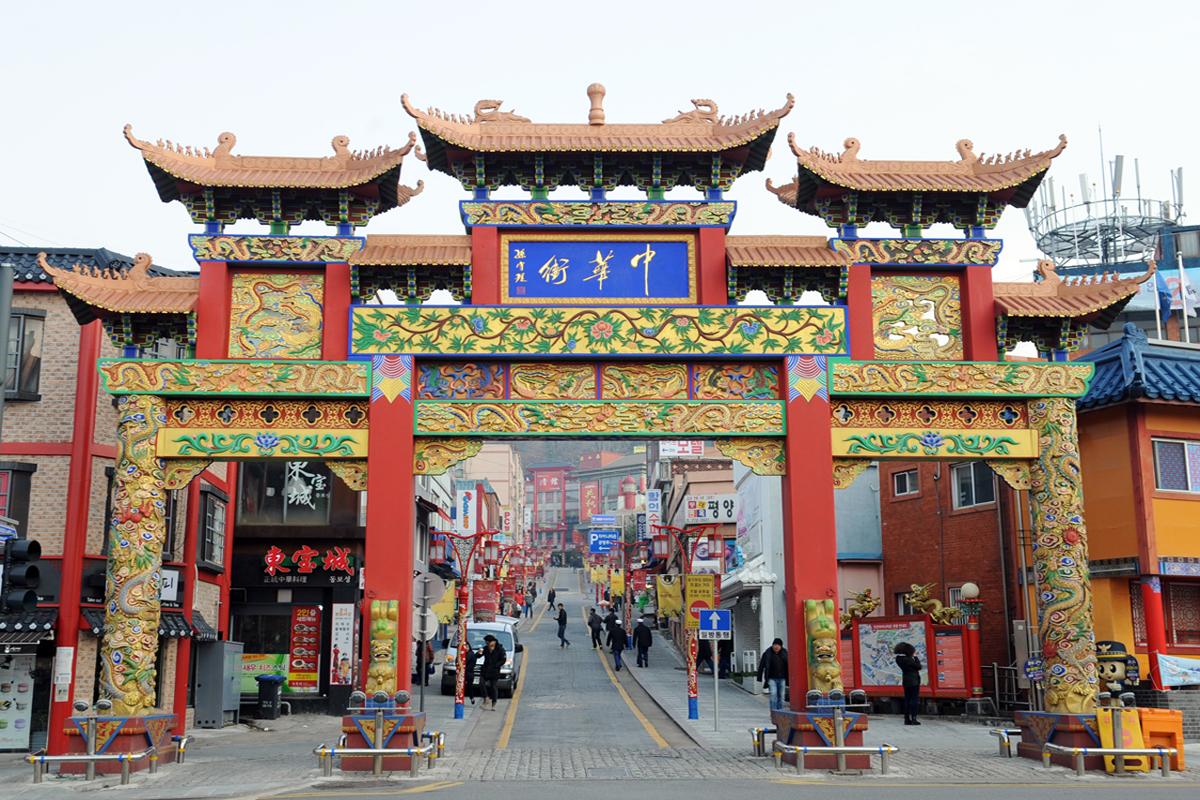
Incheon Chinatown is Korea's only official Chinatown, established in 1884 when Incheon became Korea's first open port to trade with China and the West. The streets are lined with red lanterns, ornate Chinese-style gates, and restaurants serving authentic Chinese-Korean cuisine including jjajangmyeon (black bean noodles) — a dish invented here by Chinese immigrants and now one of Korea's most beloved comfort foods. The adjacent Open Port Area preserves the original concession buildings of the Japanese, American, and British trading communities from the late 19th century.
 Heritage Site
Incheon
Ganghwa Island
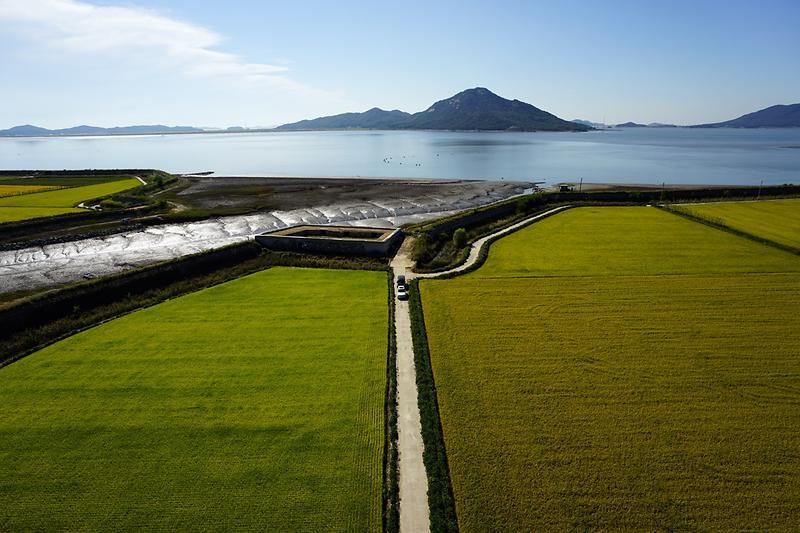
Ganghwa Island in the mouth of the Han River served as the temporary capital of the Goryeo Kingdom during the 13th-century Mongol invasions, and the outer fortification walls and palace sites from this period remain. The island is home to Ganghwasanseong Fortress, the Goryeo Royal Palace Site, and two magnificent ancient stone dolmen (megalithic tombs) designated UNESCO World Heritage sites. The famous Ganghwa Dolmen (Bugeun-ri Goindol) is a 6.4-metre-long table-type dolmen approximately 3,000 years old. Jeondeungsa Temple, founded in 381 AD, is one of Korea's oldest continuously operating temples.
 Museum
Gwangju
5.18 National Cemetery & Memorial
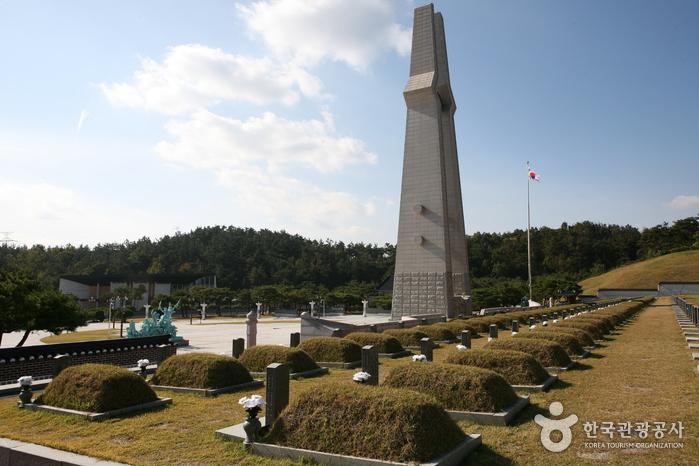
The 5.18 National Cemetery and Memorial is dedicated to the victims of the Gwangju Democratisation Movement (May 18-27, 1980) — a popular pro-democracy uprising against the military dictatorship that was brutally suppressed, leaving over 200 dead. The cemetery on the slopes of Mangwolsan Mountain contains the graves of 5.18 victims and is a deeply moving pilgrimage site for all Koreans. The adjacent 5.18 Memorial Hall documents the uprising with comprehensive exhibitions, video testimonies of survivors, and the names of those who died — one of the most important human rights memorials in Asia. The movement led ultimately to Korea's full democratic transition.
 Attraction
Gwangju
Asia Culture Center (ACC)
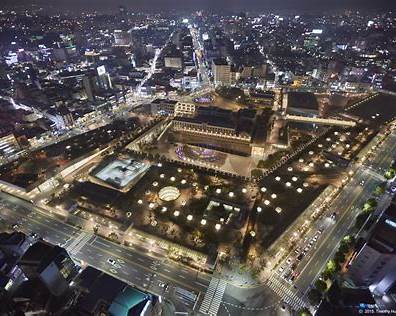
The Asia Culture Center (ACC) is a massive state-of-the-art cultural complex opened in 2015 in the heart of Gwangju — built around the former South Jeolla Province Government Building, the last bastion of the 1980 Gwangju uprising, which is preserved as a memorial within the complex. The ACC encompasses exhibition galleries, performance theatres, a children's museum, research facilities, and the ACC Library — all dedicated to promoting Asian culture and arts. Five underground pavilions are arranged around the preserved old building. The complex regularly hosts major contemporary art exhibitions and performances from across Asia.
 Nature
Gwangju
Mudeungsan National Park
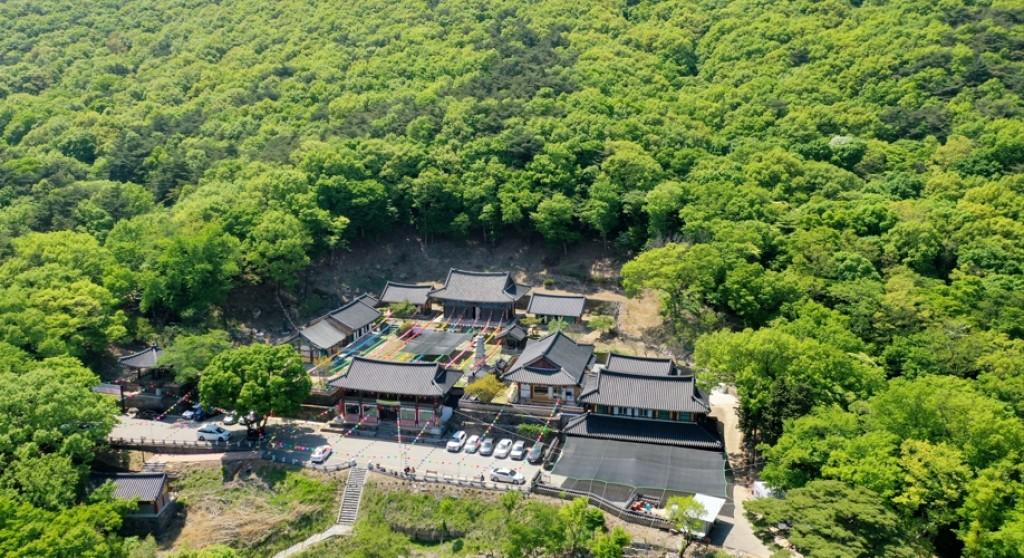
Mudeungsan (meaning peerless mountain) is a mountain national park rising above Gwangju to 1,187 metres — the symbol and backdrop of the city. The mountain's most distinctive feature is the Seoseokdae and Ipseokdae columnar joint formations — natural basalt columns creating castle-like ramparts at the upper reaches. Dense forest of deciduous and conifer trees covers the slopes with excellent hiking trails. Ancient temples including Jeungsimsa are scattered through the forest. The mountain is particularly beautiful during tea season — the slopes produce some of Korea's finest green tea.
 Market
Gwangju
Gwangju Yangdong Market
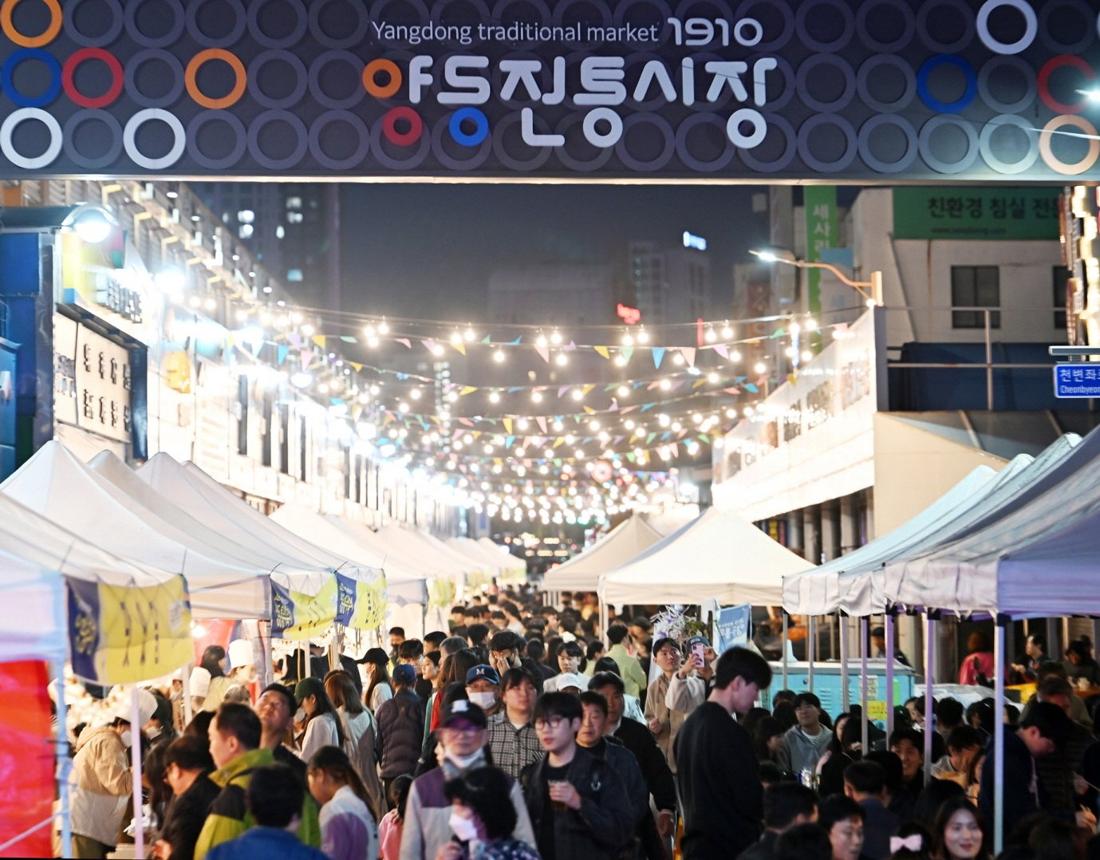
Yangdong Market is Gwangju's largest and most beloved traditional market — a sprawling complex of covered alleys packed with hundreds of vendors selling fresh produce, seafood, traditional Korean snacks, fabrics, and household goods. Established over 60 years ago, the market is the culinary heart of Gwangju and the gateway to the rich food culture of Jeolla Province — considered Korea's finest regional cuisine tradition. The market is especially famous for its rice wine (makgeolli) alleys, raw fish stalls, and the vendors selling ttukbaegi (earthenware pot) dishes.
 Temple
Daegu
Donghwasa Temple
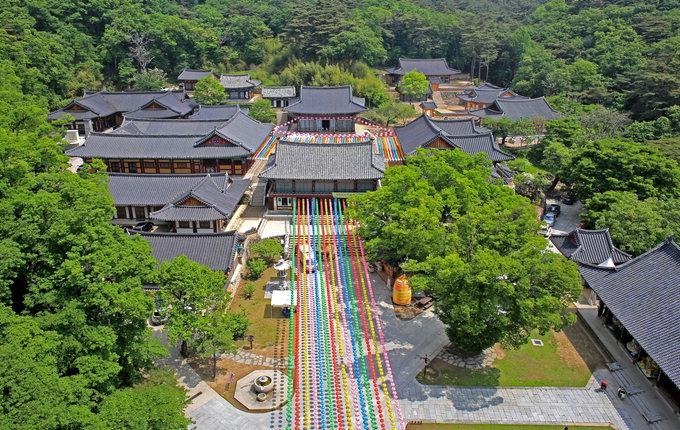
Donghwasa Temple, founded in 493 AD on the slopes of Palgongsan Mountain north of Daegu, is one of the most important Buddhist temples in the Gyeongsang region. The temple complex contains numerous halls and hermitages spread across a deep mountain valley. The most dramatic feature is the 33-metre seated stone statue of the Unification Medicine Buddha (Tongil Yaksa Yeorae Daebul), completed in 1992 — the world's largest stone Medicine Buddha. The temple's main hall, Daeungjeon, houses remarkable gilt bronze statues. The surrounding Palgongsan Provincial Park offers excellent hiking trails including routes to Gatbawi Rock — a Buddha wearing a stone hat said to grant one wish.
 Market
Daegu
Seomun Market
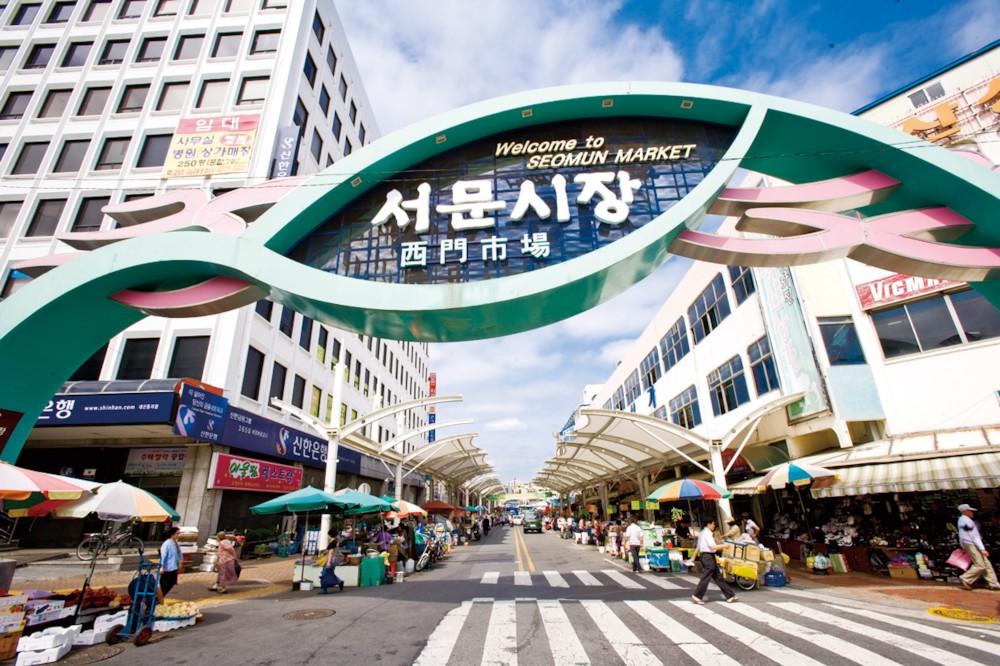
Seomun Market is one of Korea's three great traditional markets, established over 400 years ago during the Joseon Dynasty when Daegu was the commercial hub of the Gyeongsang region. The covered market complex extends over six districts housing over 4,000 shops and stalls trading in textiles, clothing, dried goods, fresh produce, and street food. Daegu is Korea's fabric and textile capital, and Seomun Market's vast textile trading halls are a spectacle in themselves. The night market (operating Thursday-Sunday evenings) is one of Korea's best — with dozens of street food stalls and live performances in the outdoor plaza.
 Museum
Daegu
Daegu Modern History Museum
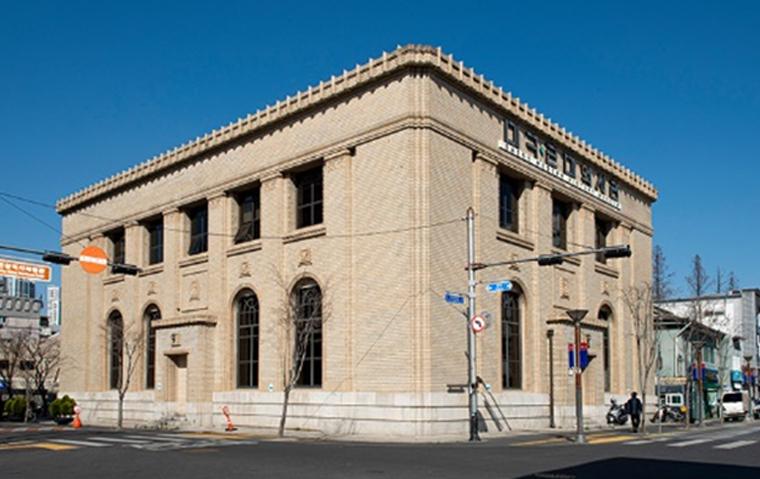
The Daegu Modern History Museum, housed in a beautifully restored colonial-era building that served as the former Japanese colonial government building of North Gyeongsang Province (built 1932), presents the modernisation and independence struggle of Daegu and the Gyeongsang region from the late 19th century to the mid-20th century. The museum's permanent collection includes artefacts from the 1907 National Debt Redemption Movement (launched in Daegu), photographs documenting the transformation of the city under Japanese rule, and exhibits on daily life during the colonial period.
 Nature
Daegu
Apsan Park & Cable Car
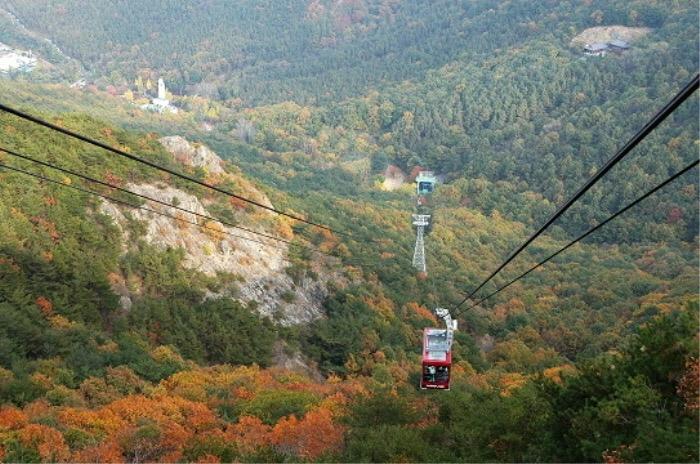
Apsan Park is Daegu's most beloved natural escape — a wooded mountain park rising to 660 metres on the southern edge of the city. The park's cable car ascends the mountain for panoramic views of Daegu city, the surrounding mountains, and on clear days, as far as the sea to the south. The summit area has walking trails along the ridgeline and a small fortress (Apsan Mountain Fortress) with historical watchtowers. The park is famous for its maple and ginkgo trees which turn brilliant colours in autumn — the cable car ascent through autumn foliage is one of Daegu's signature experiences.
 Nature
Pohang
Homigot Sunrise Square
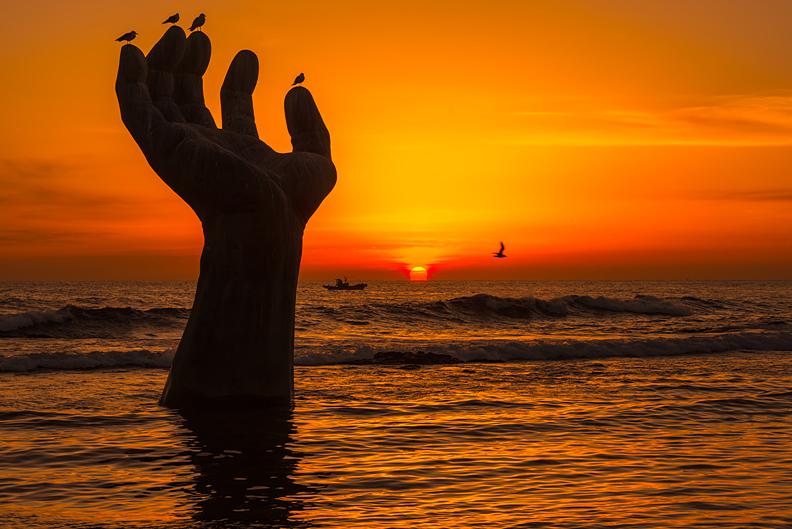
Homigot is the geographic eastern tip of the Korean mainland — a dramatic promontory jutting into the East Sea where the first rays of each new year's sunrise touch Korean soil. The Homigot Sunrise Square features the iconic Hand of Harmony (Sangsaengui Jageun Son) installation — two enormous cast-iron hands emerging from the land and sea, symbolising harmony between the land and ocean, and between the past and present. The plaza is surrounded by coastal walking paths, a lighthouse museum, and seafood restaurants. Homigot is one of Korea's most visited New Year sunrise destinations, drawing hundreds of thousands on January 1.
 Nature
Pohang
Bogyeongsa Temple & 12 Waterfalls
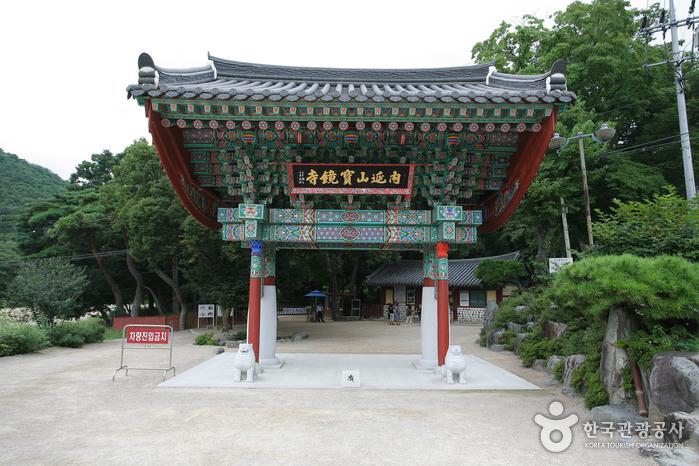
Bogyeongsa Temple in Naeyeonsan County Park is a beautiful Buddhist temple founded in 602 AD, set in a dramatic gorge where the valley stream creates a series of 12 named waterfalls along a 2 km walking trail. The gorge trail passing all 12 waterfalls is one of the most beautiful valley hikes in the Gyeongsang region. The temple complex contains fine traditional architecture including a large three-storey pagoda. The valley is renowned for summer cooling (the waterfall mist creates a natural air-conditioning effect) and for autumn foliage when the maple canopy turns crimson.
Naeyeonsan 12 Waterfalls
The Naeyeonsan Valley hiking trail is famous for its series of 12 waterfalls connected through forested mountain paths, wooden bridges, and crystal-clear streams. It is one of the most beautiful natural trekking areas in eastern Korea.
Naeyeonsan 12 Waterfalls
The Naeyeonsan Valley hiking trail is famous for its series of 12 waterfalls connected through forested mountain paths, wooden bridges, and crystal-clear streams. It is one of the most beautiful natural trekking areas in eastern Korea.
 Nature
Tongyeong Cable Car
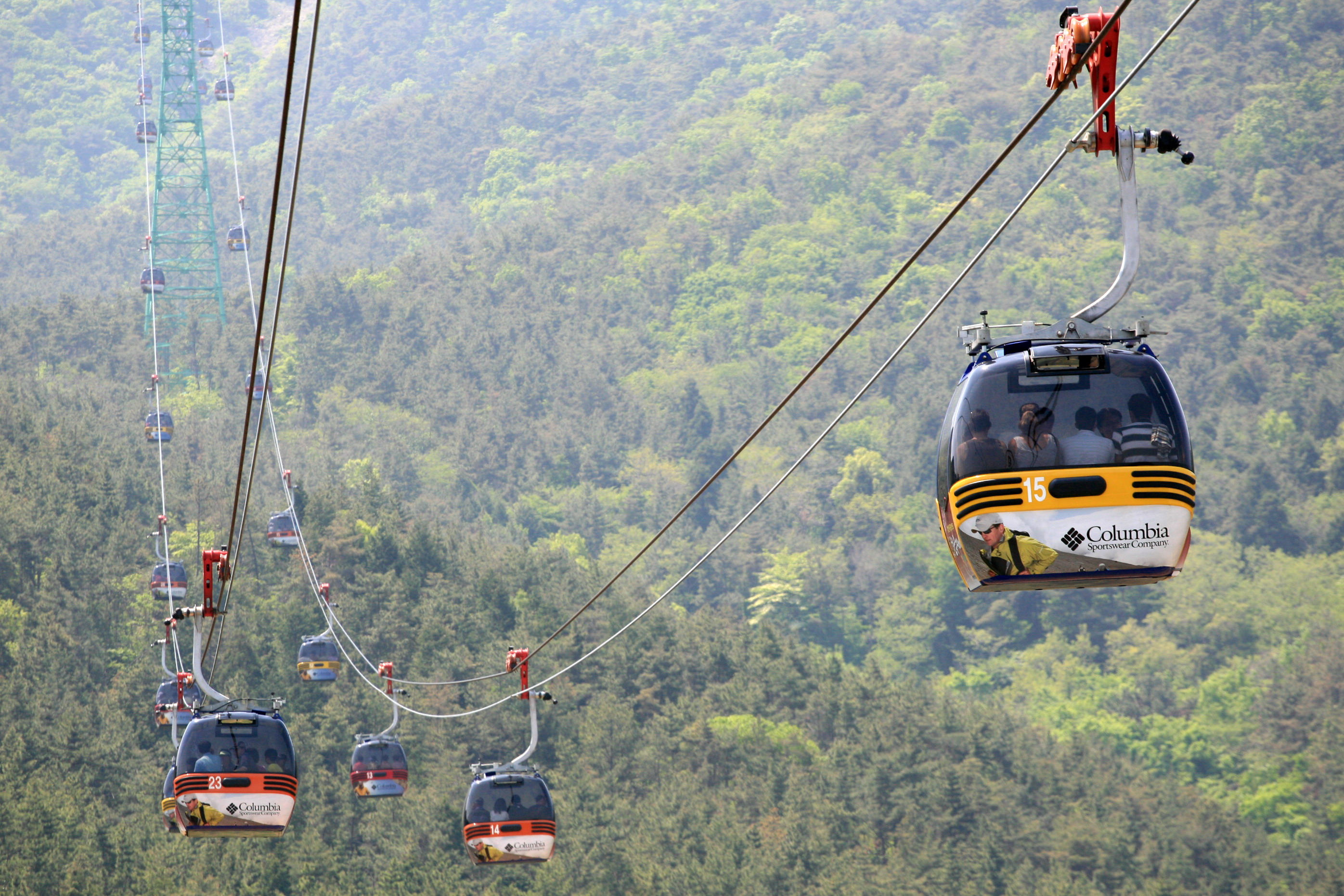
The Tongyeong Cable Car is Korea's longest cable car, ascending 1,975 metres up Mireuksan Mountain (461m) to offer the most panoramic views of the breathtaking Hallyeo Marine National Park — an archipelago of 570 islands scattered across the azure Korea Strait in one of the world's most beautiful enclosed sea channels. From the summit platform, the view encompasses a mosaic of islands, peninsulas, and the sailing boats of Tongyeong Marina below. The city of Tongyeong, known as the Naples of Korea for its beautiful coastal setting, is further accessible by walking trails from the top station.
 Museum
Hansando Island & Yi Sun-sin Memorial
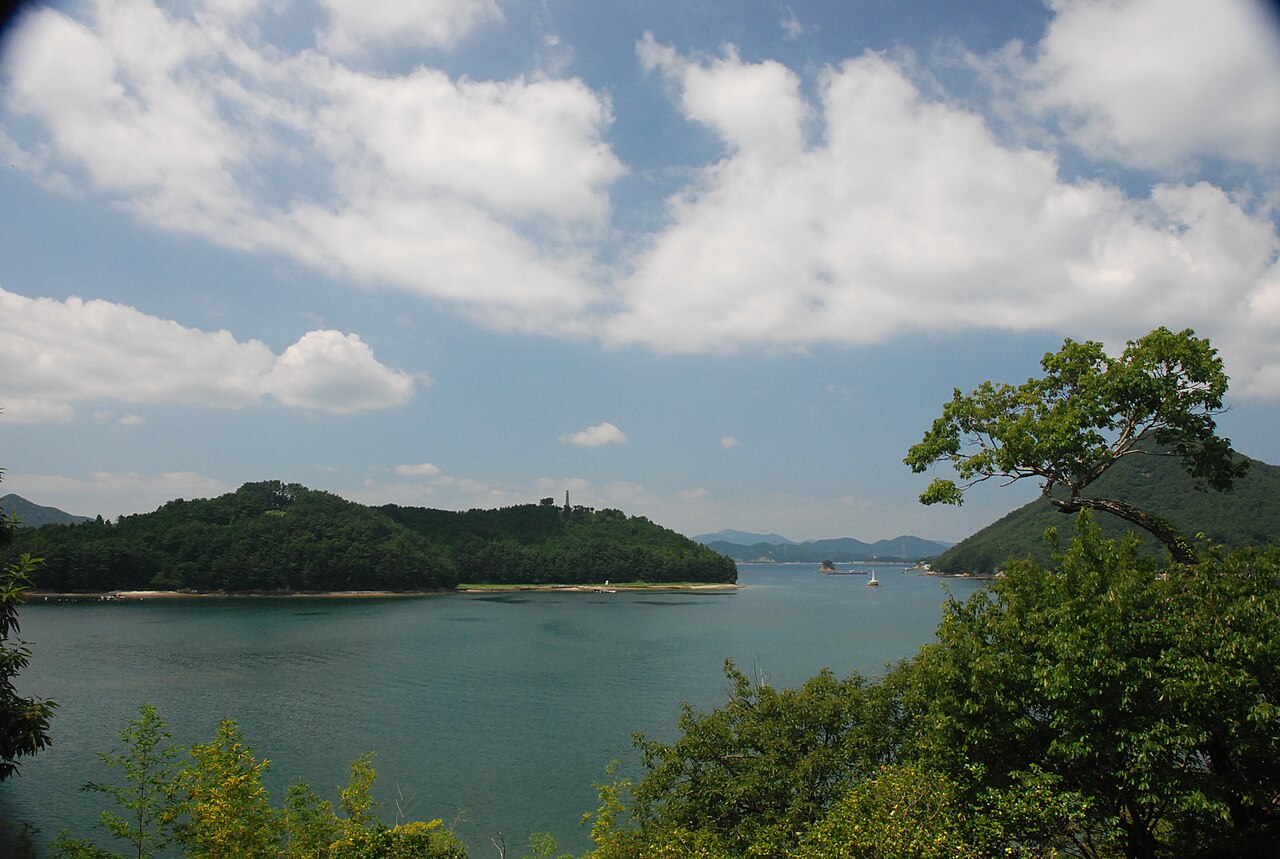
Hansando Island, accessible by ferry from Tongyeong, is where Admiral Yi Sun-sin achieved one of the most decisive naval victories in history — the Battle of Hansan Island (1592), where his famous turtle ships and crane-wing battle formation destroyed over 70 Japanese warships and halted the Japanese invasion of Korea. The island contains the Jeseungdang Memorial Hall (housing Yi's original battle diary Nanjung Ilgi, a UNESCO Memory of the World), a commanding fortress (Hansando Fortress) around the island's perimeter, and a large statue of Yi Sun-sin. The ferry journey through the beautiful Hallyeo waterway archipelago is itself a highlight.
Tongyeong Undersea Tunnel
The Tongyeong Undersea Tunnel, completed in 1931 during the Japanese colonial period, was Asia's first undersea road tunnel when constructed — a remarkable engineering achievement connecting the Tongyeong peninsula to Mireukdo Island under the narrow waterway. The 483-metre tunnel, now converted into a pedestrian walkway, is a beloved local landmark. The tunnel descent under the water, with the curved brick-lined interior illuminated by period-style lighting, is an evocative historical experience. The Tongyeong waterfront above the tunnel entrance is one of the most scenic harbours in Korea.
Dadohae Haesang National Park
Dadohae Haesang (South Sea Islands) National Park encompasses over 1,700 islands and islets scattered across the South Sea off the southwestern coast of Korea — the world's most densely island-scattered marine park. The park is renowned for its scenic rias coastline of drowned river valleys, its extraordinary biodiversity including migratory bird sanctuaries, and its traditional fishing village culture. The main access points are Wando Island (connected by bridge) and Mokpo city. Wando's Cheongsan Island is designated as a UNESCO Globally Important Agricultural Heritage System site for its traditional tidal flat farming.
 Museum
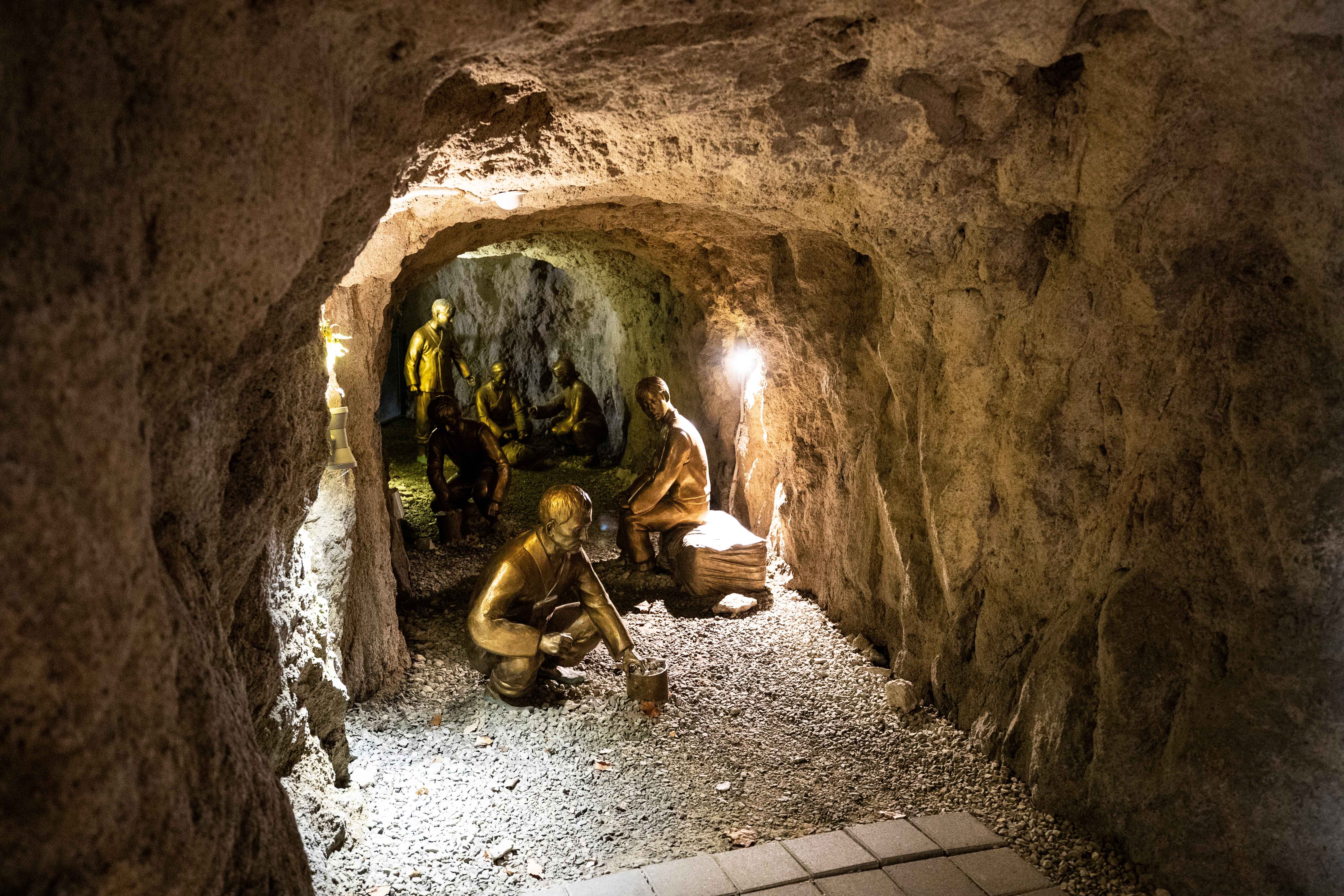
Mokpo Modern History Museum
Mokpo was one of the first open ports of the late Joseon Dynasty (opened 1897) and has preserved an exceptional concentration of Japanese colonial-era architecture, making it one of the richest colonial heritage towns in Korea. The Mokpo Modern History Museum occupies the former Japanese colonial government building (built 1900) and traces the city's transformation from a fishing village to a major colonial-era commercial port. The harbour front's colonial-era streetscape is one of the best-preserved in Korea. The nearby Gatbawi Sea Wall and the islands visible from Mokpo's coast provide stunning scenic backdrops.
Jeongdongjin Beach & Sunrise Park
Jeongdongjin is the world's closest train station to the sea — the Jeongdongjin Rail Station sits mere metres from the beach, and the sight of a train arriving against the backdrop of the East Sea is a uniquely Korean image. The beach is one of Korea's premier sunrise viewing spots, located precisely due east of Gyeongbokgung Palace (the name Jeongdongjin means directly east of Hanyang). The hillside above the beach is dominated by the Moana Ocean Cruise Ship Hotel — an actual cruise ship permanently moored in a landscaped park — and the famous Sun Cruise Resort. The giant Hourglass installation, which is turned over at midnight on New Year's Eve, is a national icon.
 Nature
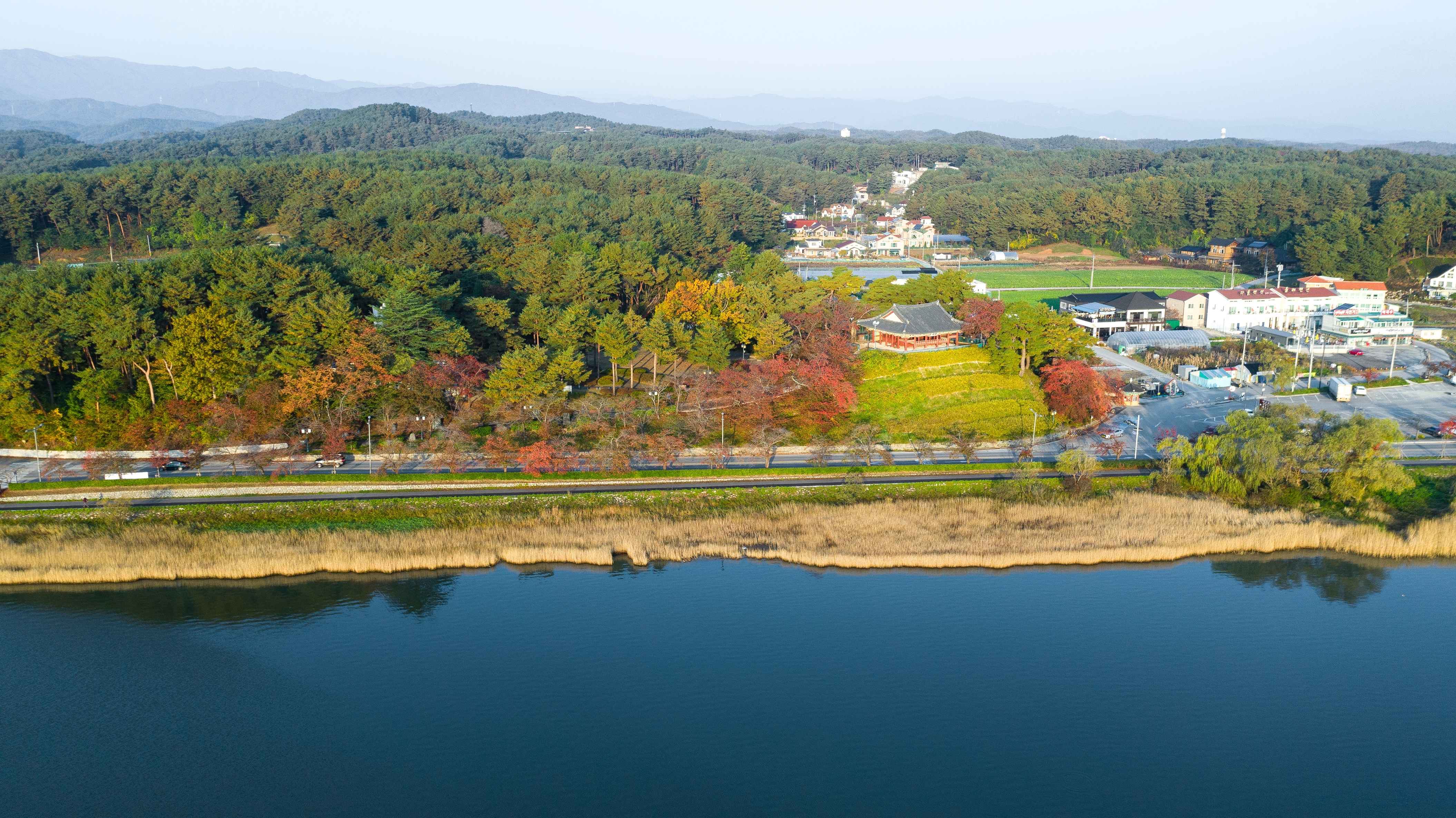
Gyeongpodae Pavilion & Gyeongpo Lake
Gyeongpodae Pavilion, erected in 1326 during the Goryeo Dynasty, stands on the shore of Gyeongpo Lake — one of Korea's most celebrated Confucian scenic viewpoints, famous for the legendary five moons: the moon reflected in the lake, the moon reflected in the wine cup, the moon in the East Sea, the moon in a lover's eyes, and the moon in the sky. The pavilion's commanding position above the lakeshore frames superb views of the lake and the pine forest beyond. The adjacent Gyeongpo Beach is a popular summer destination with good surf. The pine forest (Sonamuguk) surrounding the lake, with ancient twisted pines, is particularly beautiful.
 Heritage Site
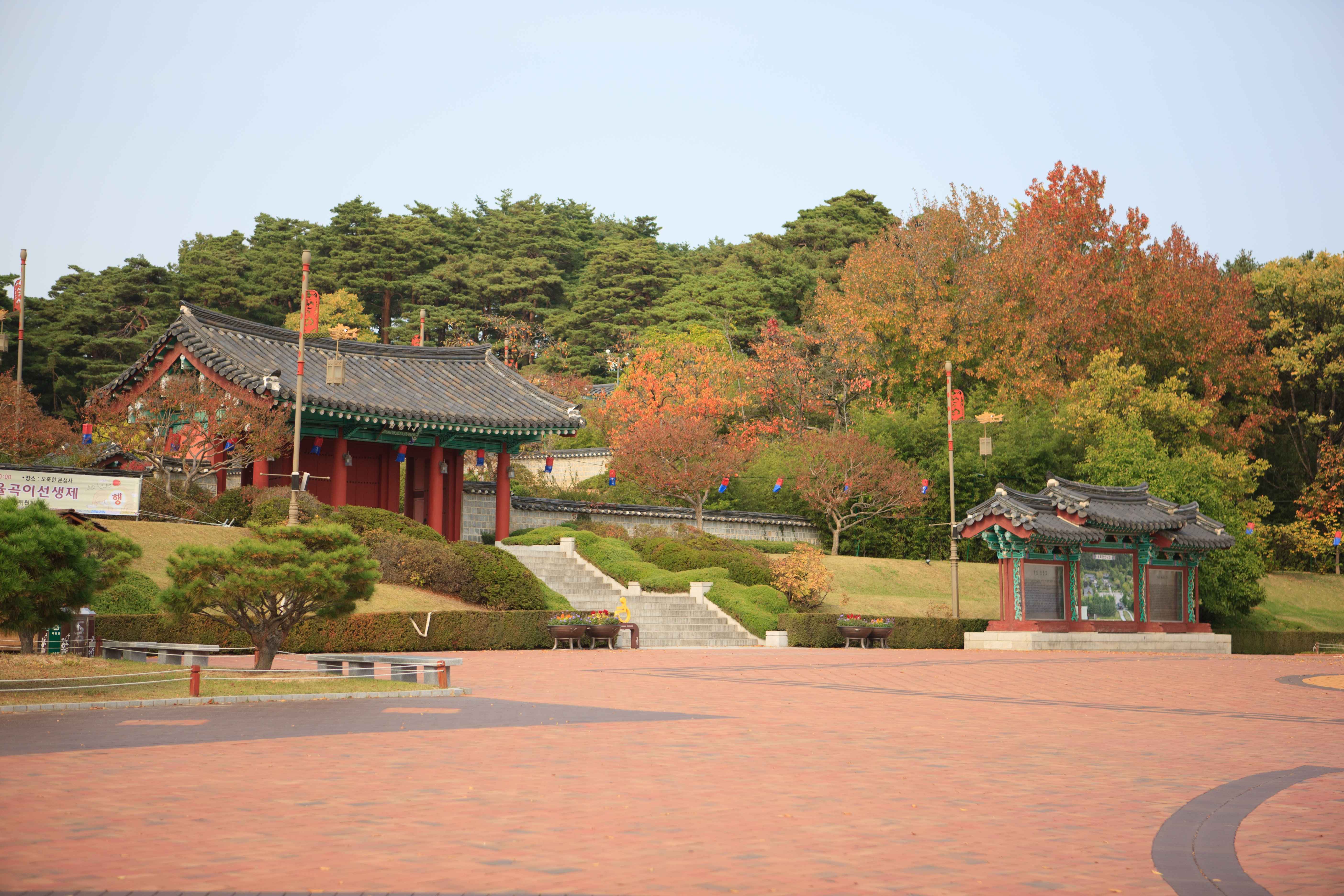
Ojukheon Shrine
Ojukheon Shrine is a 500-year-old ancestral home in Gangneung that is one of the oldest surviving wooden residential structures in Korea — the birthplace of the great Joseon scholar-philosopher Yi I (pen name Yulgok, 1536-1584) whose portrait graces the 5,000 Won banknote, and of his equally renowned mother, the painter-calligrapher Shin Saimdang (50,000 Won banknote). The complex includes the original Mongnyongsil room where Shin Saimdang dreamed of a black dragon before Yi I's birth. The bamboo grove surrounding the property (Ojukheon means black bamboo garden) is over 500 years old.
Cheongpungho Cultural Heritage Complex
The Cheongpungho Cultural Heritage Complex on the shores of Cheongpungho Lake was created to preserve historical buildings and cultural artefacts that were flooded when the Chungju Dam created the lake in 1985. Over 40 significant traditional buildings — including Joseon-era guesthouses, private academies, shrines, and gate towers — were painstakingly relocated from the floodzone and reassembled on the hillside above the new lakeshore. The result is an extraordinary collection of authentic traditional Korean architecture set against the dramatic backdrop of the vast lake and encircling mountains.
Danyang Eight Views & Dodam Three Peaks
Danyang in the Sobaek Mountains is famed for the legendary Danyang Eight Views — eight scenic spots along the South Han River gorge celebrated in Korean art and literature for centuries. The most famous is the Dodam Sambong (Three Peaks) — three rocky limestone outcrops rising from the middle of the river in a cluster, associated with the Joseon Dynasty official Jeong Do-jeon who spent his exiled years here. The Gosu Cave (a 1.7 km limestone cave system) and Ondal Cave are additional natural attractions. The river gorge is best experienced by cruise boat from Danyang Wharf.
 Heritage Site
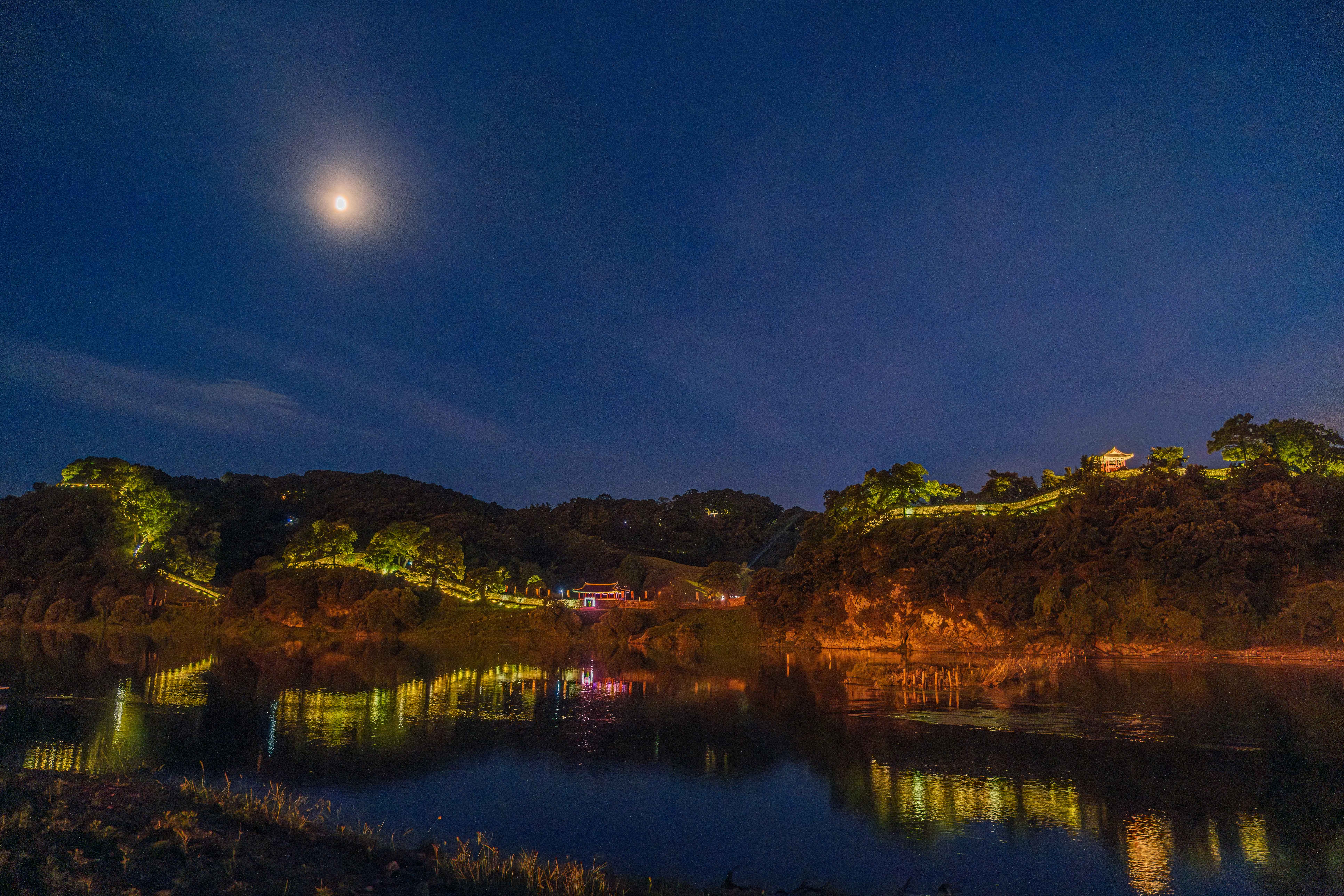
Gongsanseong Fortress & Baekje Royal Tombs
Gongju was the capital of the Baekje Kingdom (475-538 AD) and contains extraordinary royal tombs and palace sites from this era. Gongsanseong Fortress, built in the 5th century and a UNESCO World Heritage Site, is a beautifully preserved mountain fortress encircling the hilltop above the Geum River with panoramic views. The Muryeongwang Royal Tomb, discovered intact in 1971, yielded over 4,600 artefacts now displayed in the Gongju National Museum — including the magnificent gold crown and gold ornaments of King Muryeong. The Baekje Cultural Land theme park recreates the entire royal capital at 1:1 scale.
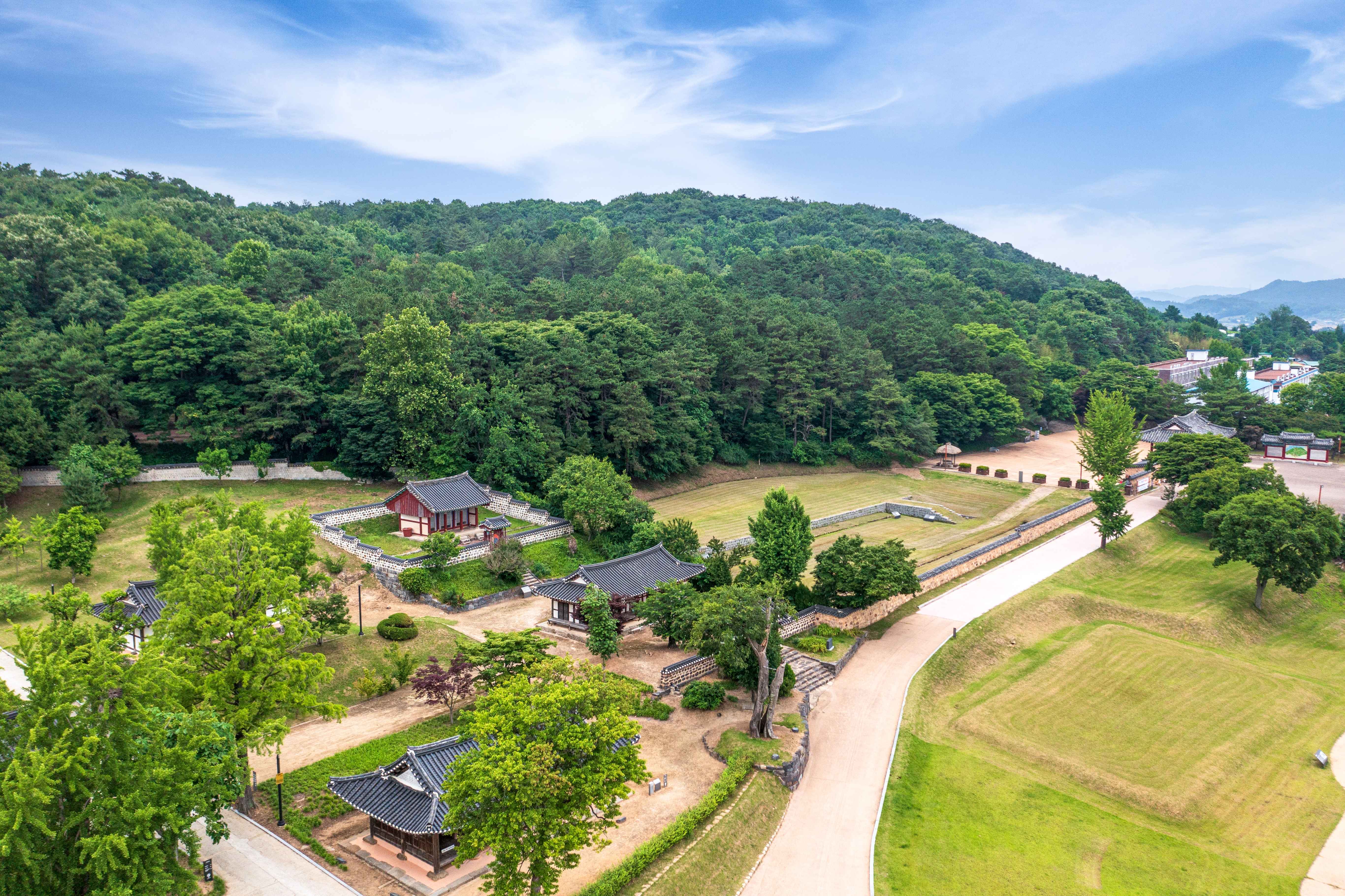 Heritage Site
Busosanseong Fortress & Nakhwaam Rock
Busosanseong Fortress in Buyeo was the royal citadel of the last Baekje capital (538-660 AD) — a UNESCO World Heritage Site set on a wooded hill above the Baengmagang River. The fortress contains the Yeongil Pavilion, the Banwollu (Half Moon Tower), and the legendary Nakhwaam (Falling Flowers Rock) — a cliff above the river from which Baekje palace ladies allegedly leaped to their deaths rather than surrender to the invading Silla-Tang forces in 660 AD. The river boat cruise under the cliff and around the river bend is one of the most romantically historically evocative experiences in Korea.
 Nature
Damyang Bamboo Forest (Juknokwon)
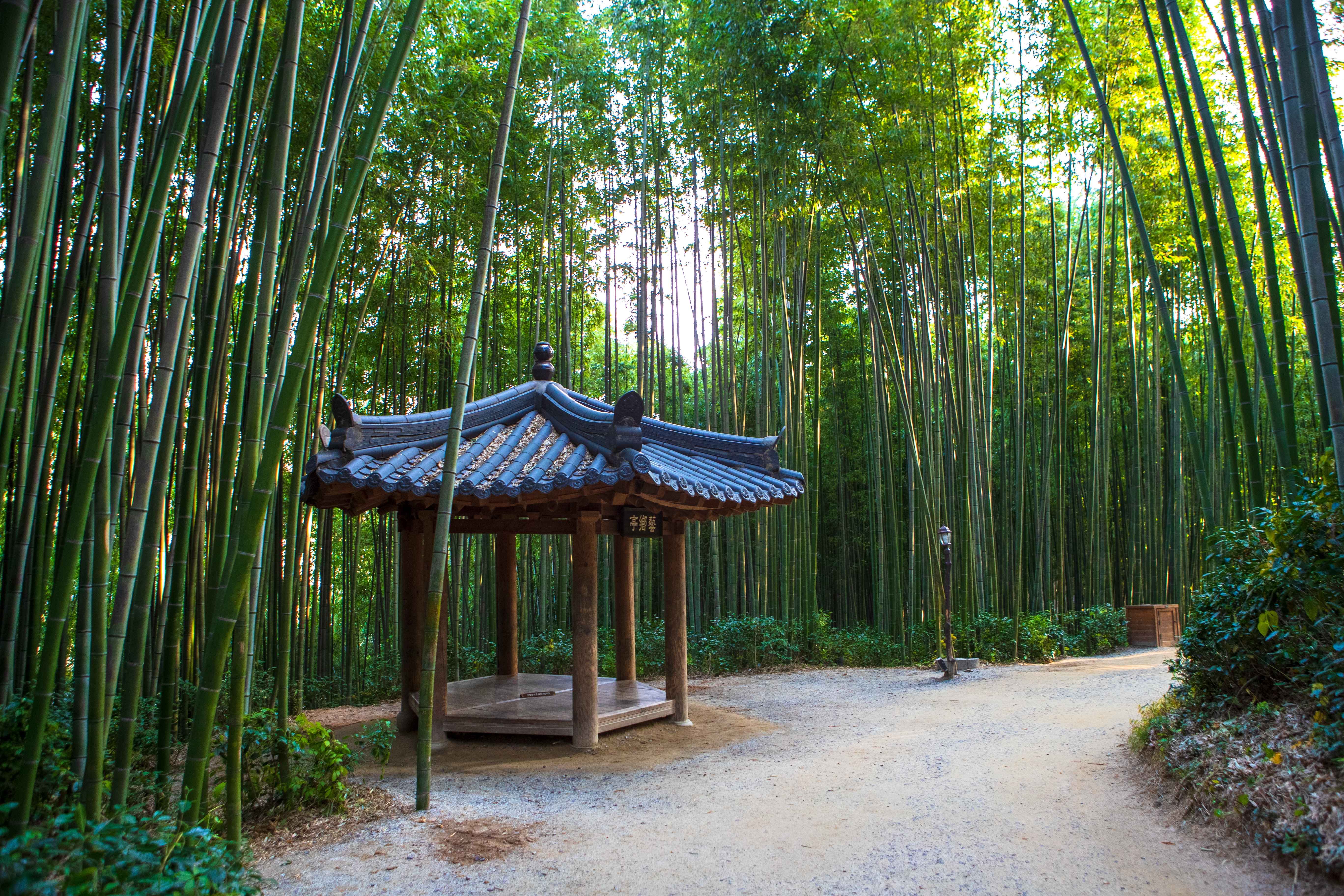
Juknokwon Bamboo Garden in Damyang is the most famous bamboo forest in Korea — a dense stand of giant Moso bamboo reaching 10-15 metres covering over 31 hectares of rolling hills. The towering bamboo groves create cathedral-like green corridors of extraordinary peace and beauty — the sound of wind through bamboo (the famous bamboo wind) and the cool green filtered light are deeply calming. The forest has multiple walking trails with viewing platforms and bamboo tunnels. Damyang is also the home of Metasequoia Road — a 9 km avenue of towering dawn redwood trees breathtaking in spring foliage and autumn colour.
 Nature
Boseong Green Tea Fields
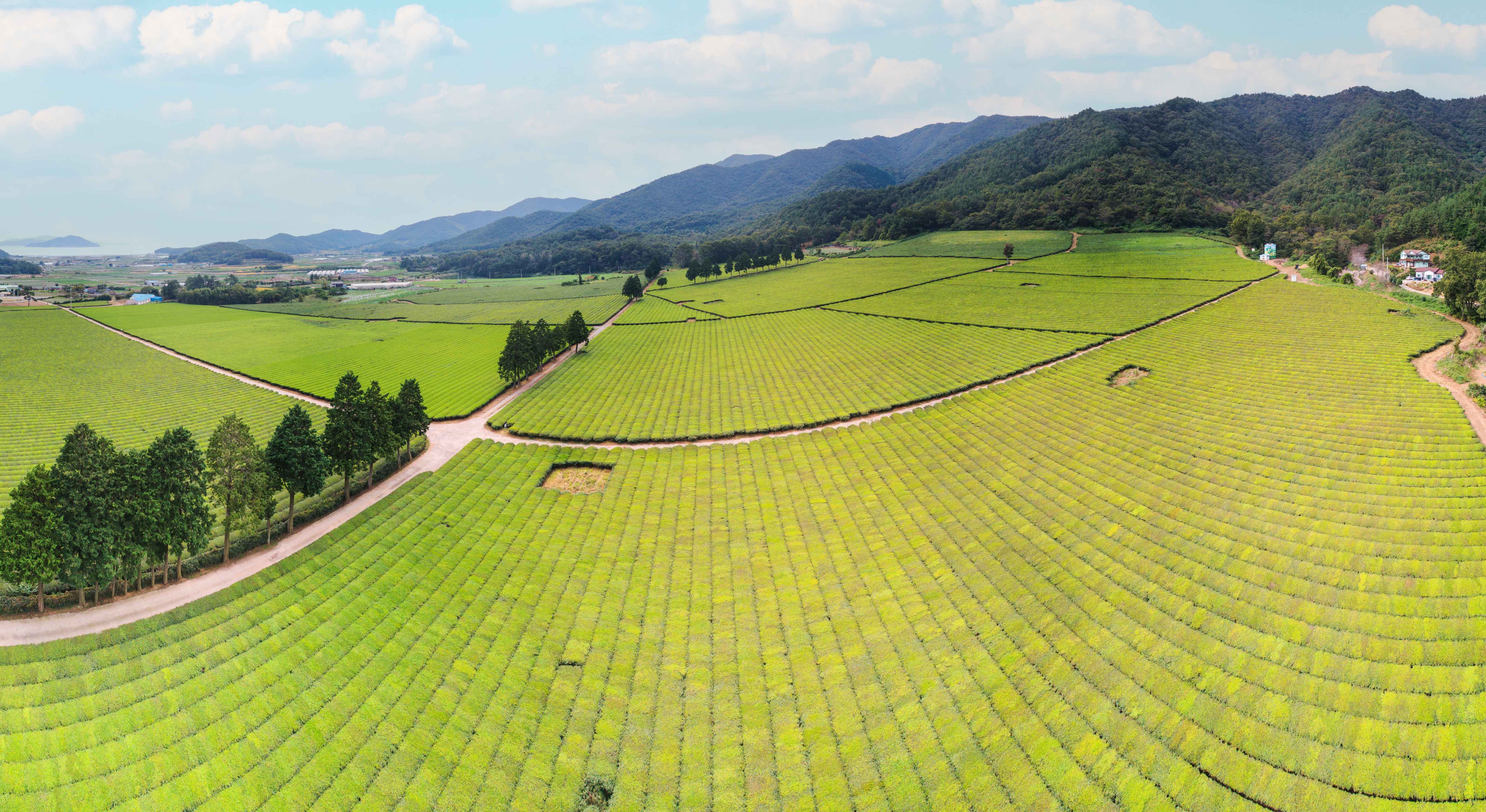
Boseong is the most famous green tea growing region in Korea — its gently rolling hills draped with perfectly manicured terraces of bright emerald green tea bushes create one of Korea's most photogenic and distinctive landscapes. The Daehan Dawon Tea Plantation, established in 1939, offers a visitor centre, green tea experience programmes (tea-picking in May-June, tea-tasting year-round), and scenic walks through the hillside tea terraces with forest backdrop. The best views are from the hilltop at the end of the upper walking trail where the full sweep of the tea terraces is visible against the forested mountains.
 Nature
Suncheon Bay Ecological Park & Reed Marshes
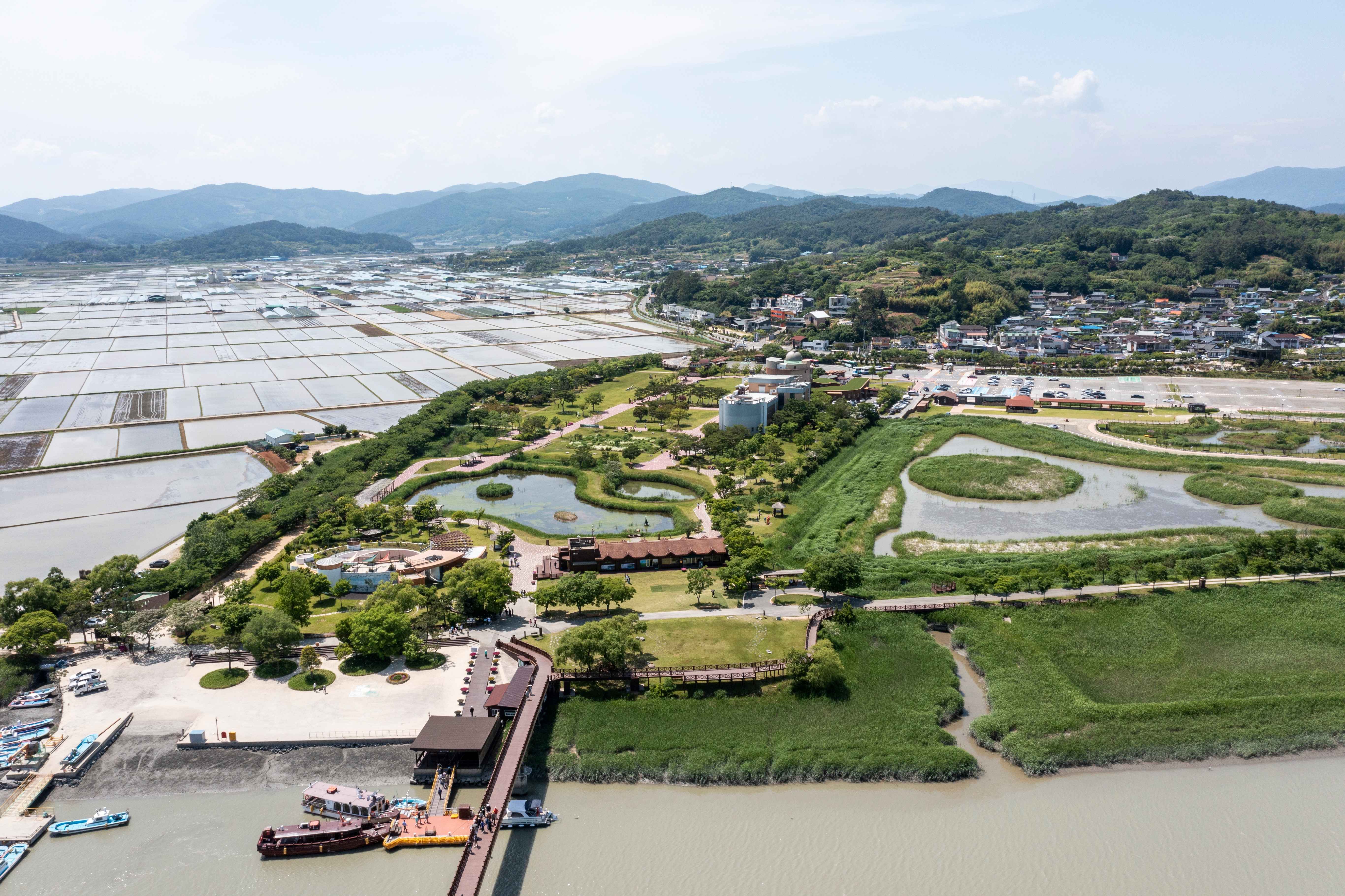
Suncheon Bay is one of the world's most significant coastal wetland ecosystems — a 28 square km tidal flat and reed marsh at the inner reaches of a scenic bay, supporting extraordinary populations of migratory birds including black-faced spoonbills, Chinese egrets, and hooded cranes. The Suncheon Bay Ecological Park allows visitors to walk elevated boardwalks through the vast reed beds to an observatory hill with panoramic views of the bay. The adjacent Suncheon Bay National Garden (opened 2013) is Korea's first state garden — 112 hectares of themed gardens from around the world with stunning Korean garden sections.
Yeosu Odongdo Island
Odongdo Island, connected to Yeosu by a 768-metre stone causeway, is Jeollanam Province's most famous landmark — a small forested island in the South Sea Bay of Yeosu surrounded by dramatic sea cliffs. The island is covered in dense subtropical forest of camellias (over 3,000 trees), bamboo, and monkey puzzle trees. The spectacular camellia blooms in mid-winter (January-March) against the blue sea are iconic. The island coastline has a circular walking path with dramatic cliff views. Yeosu city itself, rising in tiers above its beautiful harbour, was showcased to the world at the 2012 Yeosu World Expo.
Jirisan National Park
Jirisan National Park was Korea's first national park, established in 1967 — a vast mountain wilderness straddling the borders of three provinces. Jirisan (1,915m) is the highest mountain on the mainland of Korea. The park covers 483 square km of ancient forest, alpine meadows, dramatic ridgelines, crystal rivers, and some of Korea's most revered Buddhist temples. The Jirisan Ridgeline Trail (40 km from Nogodan to Cheonwangbong) is one of Korea's greatest multi-day mountain hikes, traversing the main ridge with stunning views in all directions. Hwaeomsa Temple (founded 544 AD) on the southern slopes is one of Korea's most important temples.
Haeinsa Temple & Tripitaka Koreana
Haeinsa Temple in the Gayasan Mountains is one of Korea's Three Jewel Temples and one of the most important Buddhist temples in East Asia. The temple is home to the Tripitaka Koreana — the world's most complete collection of Buddhist scriptures, carved onto 81,340 wooden printing blocks in the 13th century during the Mongol invasions. The Tripitaka is stored in the magnificent Janggyeong Panjeon depository hall complex (a UNESCO World Heritage Site) — a 15th century ventilation-regulated timber structure that has preserved the blocks perfectly for 700 years. Both the Tripitaka and the depository hall are National Treasures.
Tongdosa Temple
Tongdosa Temple in the foothills of Yeongchuksan Mountain is the largest of Korea's Three Jewel Temples — a sprawling network of over 65 buildings spread across three interconnected valley sections. Remarkably, the main worship hall (Daeungjeon) contains no Buddha statue — instead, worshippers face a window looking out to the outdoor Diamond Ordination Platform where Buddha relics brought from India are enshrined. The temple was founded in 646 AD by Monk Jajang. The extensive complex includes hermitages tucked into the forested mountainside, ancient stone lanterns, and exceptional collections of Buddhist art.
Naejangsan National Park
Naejangsan (Inner Treasure Mountain) National Park is Korea's most celebrated autumn foliage destination — a shallow caldera of rounded mountains covered in maple, zelkova, and ginkgo trees that explode into crimson, orange, and gold from mid-October to early November. The park's name comes from the belief that the mountain contains inner treasures — a phrase that describes the extraordinary beauty hidden within the park's bowl-shaped valley. The main valley walk passes picturesque Wongjeokam Hermitage and the spectacular Rainbow Valley to the summit of Seoraebong (724m). Baegyangsa Temple, one of Korea's most historic temples dating from 632 AD, is a short drive from the main park area.
Gyeryongsan National Park
Gyeryongsan (Chicken Dragon Mountain) National Park near Daejeon is a low but dramatically beautiful mountain range named for its profile resembling a dragon with a rooster's comb. The park is famous for three things: Gapsa Temple (founded 420 AD), Magoksa Temple (a UNESCO World Heritage Site as a Mountain Monastery of Korea, founded in 640 AD), and a concentration of new religious movements drawn to the mountain's shamanistic power. The Tonghaksa Temple valley and its waterfall are beautiful in spring cherry blossoms and autumn maple season.
Namhansanseong Mountain Fortress
Namhansanseong (South Han Mountain Fortress) is a UNESCO World Heritage Site mountain fortress located 25 km southeast of Seoul, perched on a 480-metre plateau that served as the emergency capital of Joseon and was constructed in its present form in 1624. The fortress walls stretch 12.4 km around the mountain plateau enclosing a walled mountain city complete with government buildings, temples, and command posts. The fortress is most famously associated with the Manchu invasion of 1636-1637, when King Injo sheltered here for 47 days before being forced to surrender. The panoramic views of Seoul from the west wall are outstanding.
Upo Wetlands
Upo Wetlands is Korea's largest and oldest natural inland wetland — a shallow lake and reed marsh system covering 8.54 square km in the Nakdong River basin of South Gyeongsang Province, believed to be over 140 million years old. The wetland is a National Natural Monument and Ramsar Convention site, supporting 28 species of nationally protected birds, 62 fish species, and over 1,500 species of invertebrates. The famous dawn mist rising from the Upo water surface in early morning is one of Korea's most photographed natural phenomena. Reed boat tours and bird-watching walks on the surrounding earthen embankments are the primary visitor activities.
Seorak Waterpia Hot Springs
Seorak Waterpia is the largest hot spring water park in Gangwon Province, located at the foot of Seoraksan Mountain — combining natural hot spring mineral baths with outdoor and indoor water slides and pools. The facility uses geothermal spring water that emerges naturally at 58 degrees Celsius and is diluted to bathing temperatures. The outdoor hot spring pools facing the dramatic Seoraksan peaks are particularly magnificent in winter when the mountain is snow-covered and the warm mineral water steams in the cold air. Several different temperature pools with varying mineral concentrations are available, as well as traditional Korean jimjilbang (heated sauna) rooms.
Jeju Olle Trail (Selected Sections)
The Jeju Olle Trail is a network of 437 km of coastal and mountain walking trails divided into 26 named courses that circuit the entire island of Jeju and its surrounding smaller islands. The trails pass through every landscape type on Jeju — volcanic beaches, coastal cliffs, tea fields, orange orchards, rural villages, wind-swept heathland, and forested volcanic cones (oreum). The most celebrated individual sections include Course 1 (Siheung-ri to Gwangchigi Beach), Course 7 (stunning coastal cliffs), and Course 10 (through the famous Gapado Island over-seas ferry). The trails are superbly waymarked with iconic pony and tumbleweed symbols.
Jeju Olle Market (Seogwipo Maeil Olle Market)
The Seogwipo Maeil Olle Market (Every-day Olle Market) is Jeju's best traditional market and one of Korea's most beloved food markets — a covered daily market in central Seogwipo packed with vendors selling Jeju-specific produce, street food, and prepared dishes. The market is the best place on Jeju to try authentic island food including grilled Jeju black pork (heukhwadaegi), fresh haenyeo (women diver) seafood, hallabong mandarin desserts, and Jeju's unique black sesame tofu. The market's street food corridor is legendary. The adjacent Seogwipo Waterfall (Jeongbang) — one of Korea's only waterfalls flowing directly into the sea — is 200 metres away.
Gwangmyeong Cave
Gwangmyeong Cave is a repurposed gold, silver, copper, and arsenic mine excavated by the Japanese during the colonial period (1912-1972) that has been transformed into one of Korea's most creative cultural spaces. The 7.8 km of mine tunnels (2 km open to visitors) are now home to themed underground art installations, the Cave Wine Cellar (storing 10,000 bottles of international wine), the Cave Aquarium, a Cave Art Gallery, and a horror attraction. The constant underground temperature of 12 degrees Celsius makes it a cool summer destination. The mine's history of Japanese forced labour extraction gives the site historical weight beyond its entertainment value.
Hallyeo Haesang National Park & Namhae Island
The Hallyeo Marine National Park stretches across 545 square kilometres of the Korea Strait — an archipelago of 570 islands, submerged mountain ridges, and crystal-clear sea channels constituting one of Korea's most beautiful marine landscapes. Namhae Island, connected to the mainland by the dramatic Namhae Suspension Bridge, has traditional German Village (Dongilchon), Boriam Hermitage (a cliff-perched temple with spectacular sea views), and Daraengi Village (a UNESCO-recognised traditional terraced rice village). The island's coastal scenery of cliffs, beaches, and fishing villages is among the most picturesque in Korea.
Byeonsan Bando National Park
Byeonsan Bando (Byeonsan Peninsula) National Park on the West Coast encompasses Korea's only coastal-mountain composite national park — combining dramatic sea cliffs, pristine beaches, ancient pine forests, Confucian heritage, and Buddhist temples in a peninsula projecting into the Yellow Sea. The park's Chaeseokgang coastal area features extraordinary Cretaceous Era sedimentary rock formations carved by tidal erosion into layered platforms, grottos, and sea stacks. Naebyeonsan's rocky mountain interior contains the famous Gaeamsa Temple and its ancient forest. The 35 km coastal walking trail passes through traditional fishing villages, cliff tops, and sandy bays.
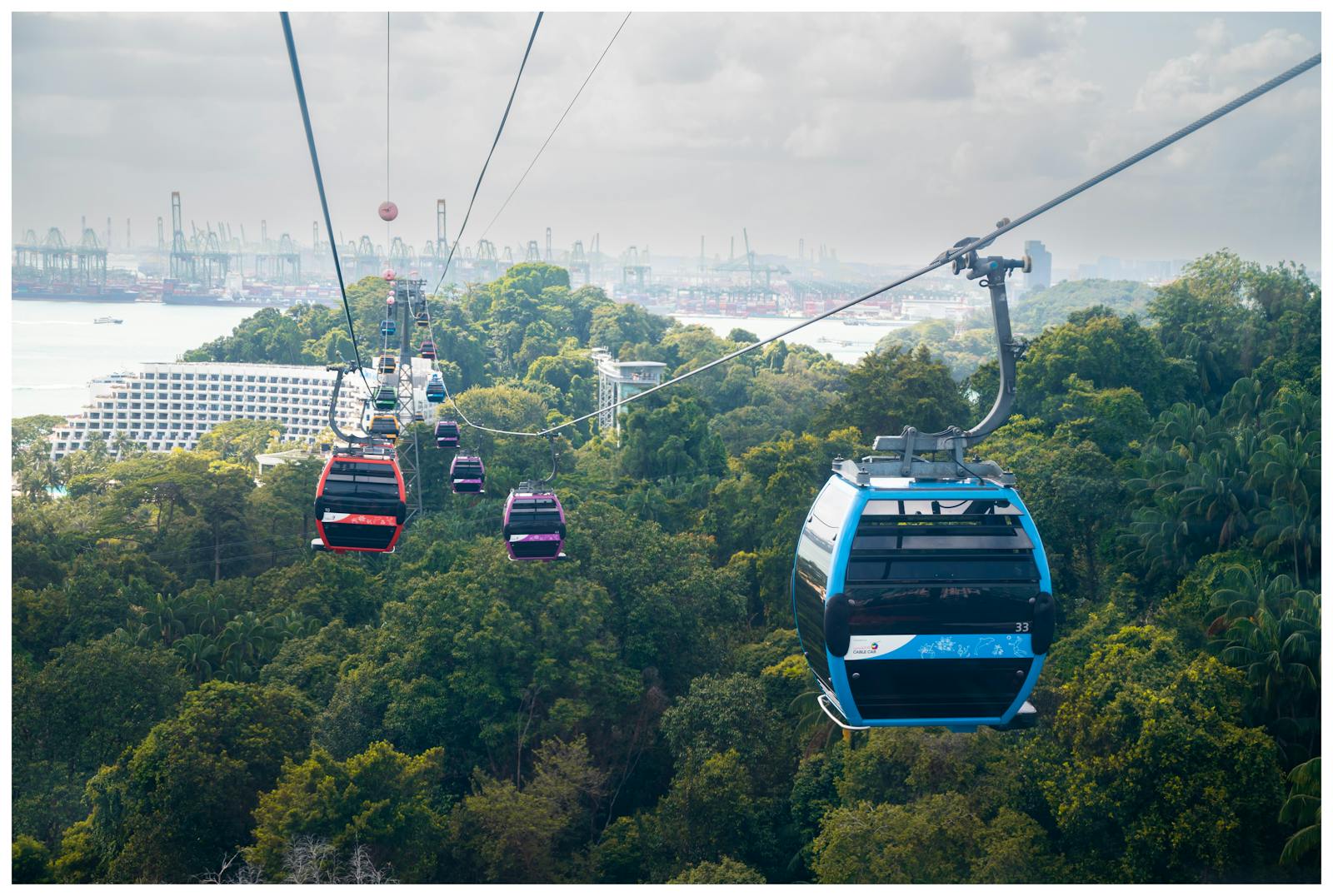 Heritage Site
Paju
Korean DMZ & JSA Tour
The Korean Demilitarised Zone (DMZ) separating North and South Korea is the world's most heavily fortified border and one of the world's most historically significant places — a 4 km-wide, 250 km-long buffer zone sealed since the 1953 armistice that has inadvertently become a wildlife sanctuary of global importance. The Joint Security Area (JSA) at Panmunjeom is the only point where South and North Korean soldiers stand face-to-face — visitors can step briefly into North Korean territory inside the blue UN huts. The Third Infiltration Tunnel (dug by North Korea) and the Dora Observatory (overlooking North Korea) are key tour stops.
Bibimbap Experience Class
Jeonju, the acknowledged capital of Korean food culture and the birthplace of bibimbap, offers authentic Korean cooking classes taught by licensed cultural experience instructors in traditional hanok settings within the Jeonju Hanok Village. The bibimbap cooking class covers all aspects of making this iconic rice dish — preparing and seasoning the individual vegetable namul components, making gochujang sauce, achieving the correct arrangement of toppings, and the proper method of mixing before eating. Classes also typically include preparation of traditional Korean side dishes (banchan) and finishing with Korean tea and sweets.
 Activity
Seoul
K-Pop Dance Class & Hallyu Experience
Seoul offers dozens of K-Pop dance academies and cultural experience centres, particularly in the Hongdae, Gangnam, and Sinchon neighbourhoods, where visitors can take K-Pop dance classes taught by professional choreographers. The Hallyu (Korean Wave) cultural experience has become one of the top reasons international tourists visit Korea. The SMTOWN Museum (COEX) and HYBE Insight (Yongsan) are dedicated entertainment experience centres for fans of BTS, EXO, and other major groups. The Hallyu Celebrity Walk of Fame in Cheongdam-dong showcases K-Pop stars.
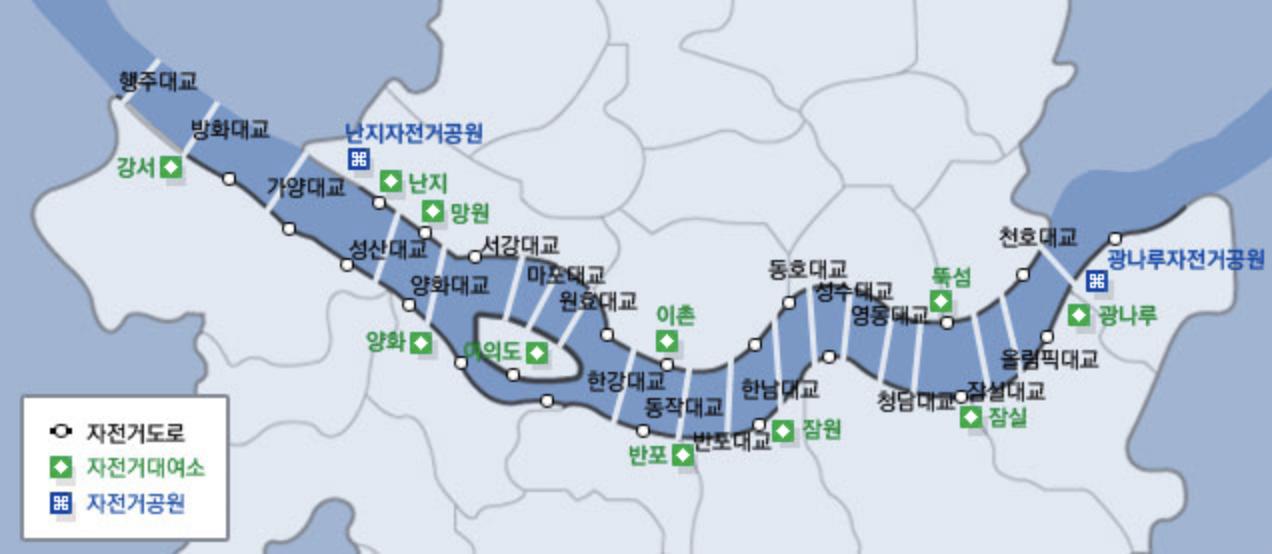 Activity
Seoul
Han River Parks & Cycling (Seoul)
The Han River Parks form a continuous network of 12 riverside parks and cycling paths stretching 41.5 km along both banks of the Han River through central Seoul — one of the world's great urban waterfront park systems. The parks offer cycling paths, inline skating, swimming pools (summer), water sports, camping sites, and spectacular views of the Seoul skyline and the Hangang bridges. The most scenic cycling section runs from Yanghwa Bridge east to Banpo Bridge — the latter famous for the Banpo Moonlight Rainbow Fountain, a curtain of illuminated water jets along the bridge balustrade that creates a rainbow by day and coloured cascades by night (hourly from April-October).
Seoul
Changgyeonggung Palace & Jongmyo Shrine
Changgyeonggung Palace was built in 1484 and once connected to Changdeokgung as part of the eastern palace complex. During the Japanese occupation it was degraded into a public zoo and botanical garden; the zoo has been removed and the original palace buildings restored. The grand botanical greenhouse (built 1909, Korea's first modern greenhouse) is a magnificent Victorian iron-and-glass structure now used for flower exhibitions. A covered walkway connects the palace directly to nearby Jongmyo Shrine — a UNESCO World Heritage Site containing the ancestral spirit tablets of all Joseon kings and queens, where the Jongmyo Jerye ritual (the world's oldest continuing royal ancestral rite) is performed every first Sunday of May.
Seoul
Bukaksan Fortress Wall Walk
The Seoul Fortress Wall (Hanyangdoseongsong), first built in 1396 to enclose the Joseon capital, runs 18.6 km in a circuit over the four guardian mountains of Seoul. The Bugaksan section, which follows the sheer northern cliff above the Blue House (Cheong Wa Dae — the presidential residence), was closed for 37 years for security reasons and reopened only in 2006 — offering the most dramatic stretch of the wall walk with vertiginous views north over Bukhansan and south over the entire Seoul basin. ID registration is required for the Bugaksan section. The entire circuit walk can be done in 8-10 hours.
Chiaksan National Park
Chiaksan National Park in Gangwon Province rises steeply to Birobong Peak (1,288m) — a rugged mountain of dramatic granite outcrops, ancient forests, waterfalls, and Buddhist temples including Guryongsa Temple at the mountain's foot, reached by a beautiful forest valley trail passing the Seryeom Waterfall. The mountain name means Pheasant's Mountain after a legend of a pheasant that sacrificed itself to save a drowning pilgrim. The peaks offer outstanding views across the Gangwon highland landscape. Chiaksan is known for its clean water, ancient tree specimens, and spectacular rocky ridge walks.
Songgwangsa Temple
Songgwangsa Temple in the Jogyesan Mountains of South Jeolla Province is one of Korea's Three Jewel Temples (representing the Sangha) — a pristine complex of beautiful traditional Korean Buddhist halls and dormitories nestled in a quiet mountain valley. The temple has been continuously inhabited by a community of monks for over 800 years and has produced 16 National Preceptors during its history. The temple complex retains a genuinely monastic and unworldly atmosphere. The adjacent forest and mountain walks are exceptionally beautiful. Templestay programmes at Songgwangsa are among the most highly regarded in Korea for authenticity.
Dongpirang Mural Village
Dongpirang (East Cliff) Mural Village is a hillside neighbourhood overlooking Tongyeong's beautiful inner harbour — transformed since 2007 into an outdoor gallery of vibrant murals painted on the walls of old village houses by artists from across Korea. The village was created as part of a community regeneration project and became one of the most popular mural villages in Korea, inspiring similar projects nationwide. The winding alleys climb steeply up the cliff with panoramic views of Tongyeong's harbour, the sailing boats, and the islands of the Hallyeo Marine National Park at every turn. The combination of mural art and extraordinary sea views makes Dongpirang one of the most photogenic coastal villages in Korea.
Anmok Coffee Street
Anmok Coffee Street in Gangneung is Korea's most celebrated artisan coffee destination — a 1 km stretch of coastal road lined with over 20 specialty coffee roasters and cafes, established from the 1980s when a local entrepreneur set up one of Korea's first drip coffee cafes. Gangneung has become synonymous with high-quality coffee culture and hosts the annual Gangneung Coffee Festival (May). The cafes face directly onto Anmok Beach and the East Sea — the experience of drinking exceptional artisan coffee while watching the waves on the East Sea coast is quintessential Gangneung. The coffee here is sourced from around the world and prepared with obsessive precision.
Taean Sea Kayaking & Clam Digging
The Taean peninsula coastline offers some of Korea's best coastal sea kayaking, paddleboarding, and clam digging (bajirak gogi) experiences — organised through numerous outdoor activity centres operating around the beaches of Taean Haean National Park. The shallow tidal flats at low tide become vast mudflat exploration areas where families dig for clams, crabs, and cockles in a traditional Korean coastal activity that remains one of the most enjoyable summer beach experiences. Sinduri Beach's famous sand dunes — the only significant sand dunes on Korea's west coast — offer sandboarding and dune walks.
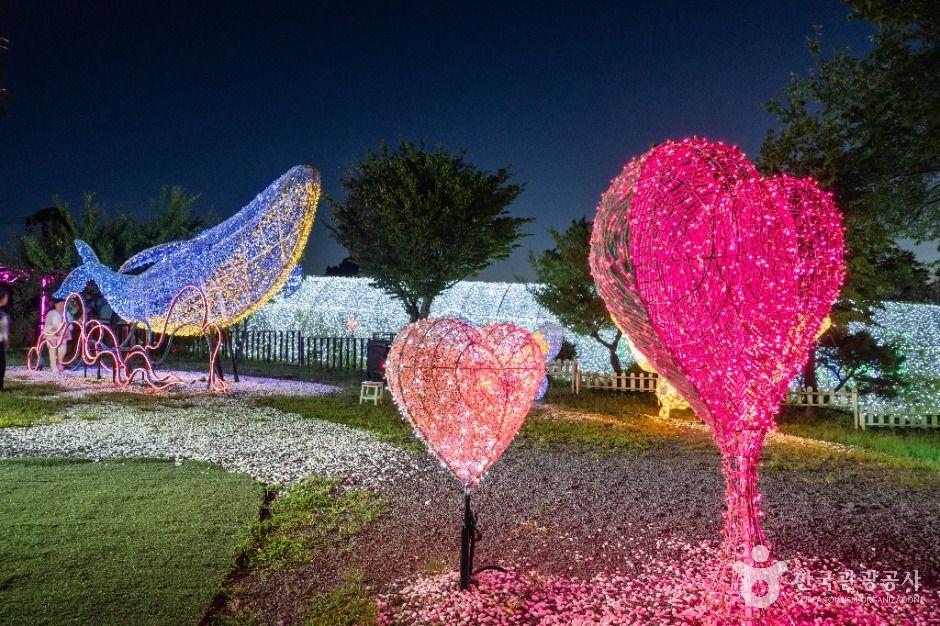 Attraction
Jeju City
Jeju Loveland
Jeju Loveland is an outdoor sculpture park on the outskirts of Jeju City containing 140 sculptures celebrating human sexuality and eroticism — a uniquely Korean cultural phenomenon that reflects Jeju's historical role as a honeymoon island. The open-air park, opened in 2004, has sculptures ranging from playfully abstract to explicitly realistic, all designed with artistic sensibility and a sense of humour. Surrounding the sculptures, the park contains winding garden paths, photo opportunity installations, and an indoor exhibition of historical erotic art from Korea, China, Japan, and Europe. An adult-only attraction (18+ only), Jeju Loveland attracts over 400,000 visitors annually and is one of Jeju's most distinctive cultural experiences.